Organic Modern Style: How to Get the Look Without Replacing Your Room
Learn what organic modern style is and how to create it with natural materials, curved silhouettes, warm neutrals, and pieces you already own.
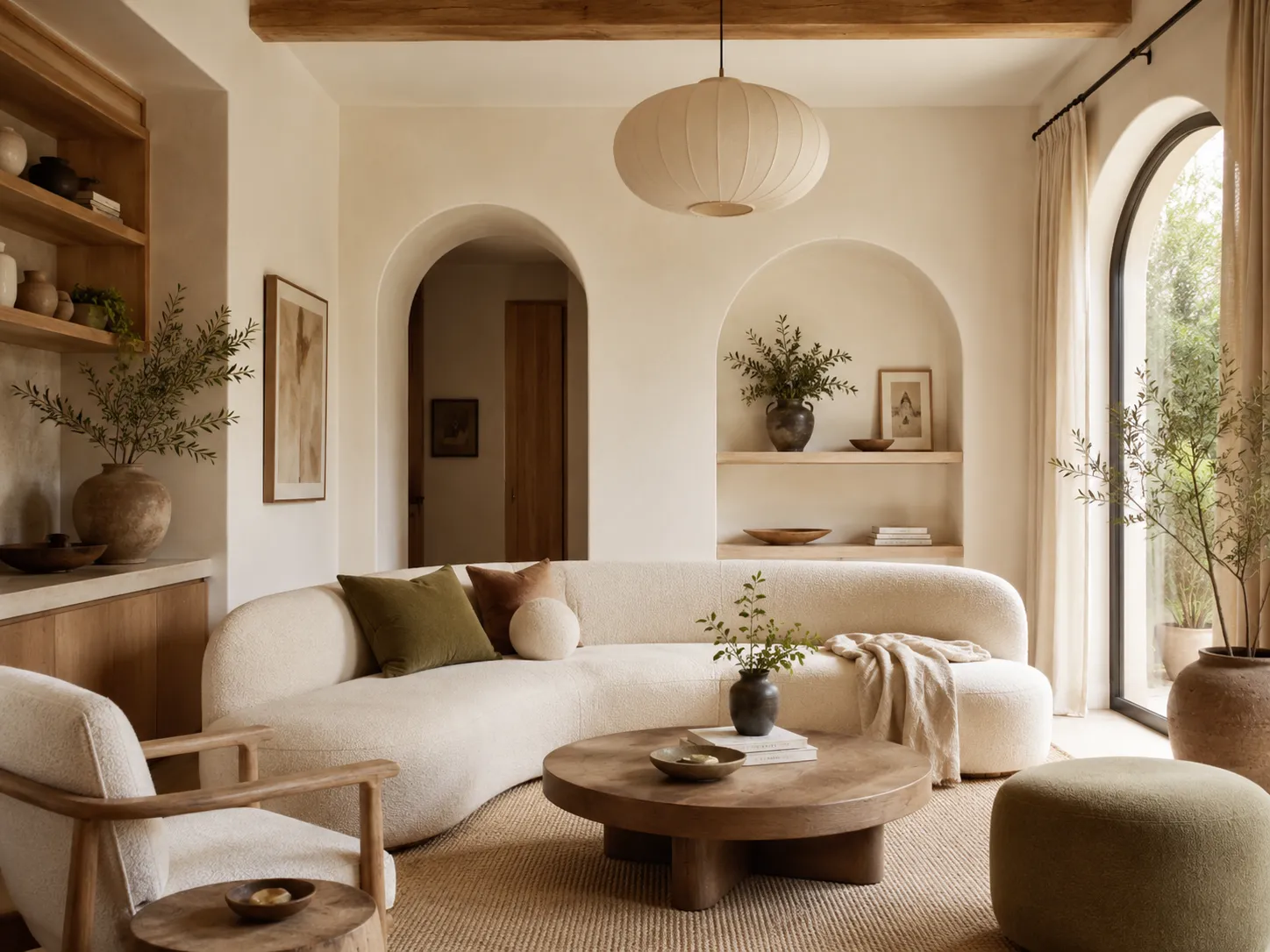
Organic modern is the style you have probably been saving without knowing its name. Warm whites instead of stark ones. Natural wood, soft curves, linen, and stone. Rooms that feel current but not trendy, and calm but not empty.
It is also one of the most forgiving styles to move toward, because it works with furniture you already own. If you want to see how far your room can go before buying anything, start with our guide to keeping existing furniture in an AI room redesign.
What Is Organic Modern Style?
Organic modern combines two ideas that sound like opposites.
The modern side gives you clean lines, open space, and restraint. The organic side softens all of it with natural materials, curved shapes, texture, and warmth.
The result is a room that feels designed but still human. Nothing shiny, nothing cold, nothing that looks like a showroom. Think warm plaster instead of flat white paint, a curved boucle chair instead of a boxy one, and a travertine or wood table instead of glass and chrome.
Organic Modern vs Japandi
These two styles are close cousins, and the difference is mostly about how much softness each one allows.
Japandi leans on Japanese restraint: low furniture, more negative space, and a quieter overall room. Organic modern is more relaxed and more textural. It welcomes curves, layered fabrics, sculptural lighting, and a little more decor on the shelves.
If Japandi feels slightly too disciplined for how your family actually lives, organic modern usually feels right. If you want to compare them directly, read our full guide to Japandi style and picture the same room both ways.
The Organic Modern Palette
The palette starts warm and stays warm. Cool gray is the fastest way to break the style.
- Warm white and cream as the base
- Sand, oat, and mushroom for larger furniture pieces
- Clay, terracotta, and rust in small doses
- Olive and sage as the quiet green accents
- Chocolate and walnut brown for depth
Contrast comes from texture and material, not from bold color. A room can be almost entirely neutral and still feel rich when plaster, wood, stone, and linen sit next to each other.
Materials and Shapes
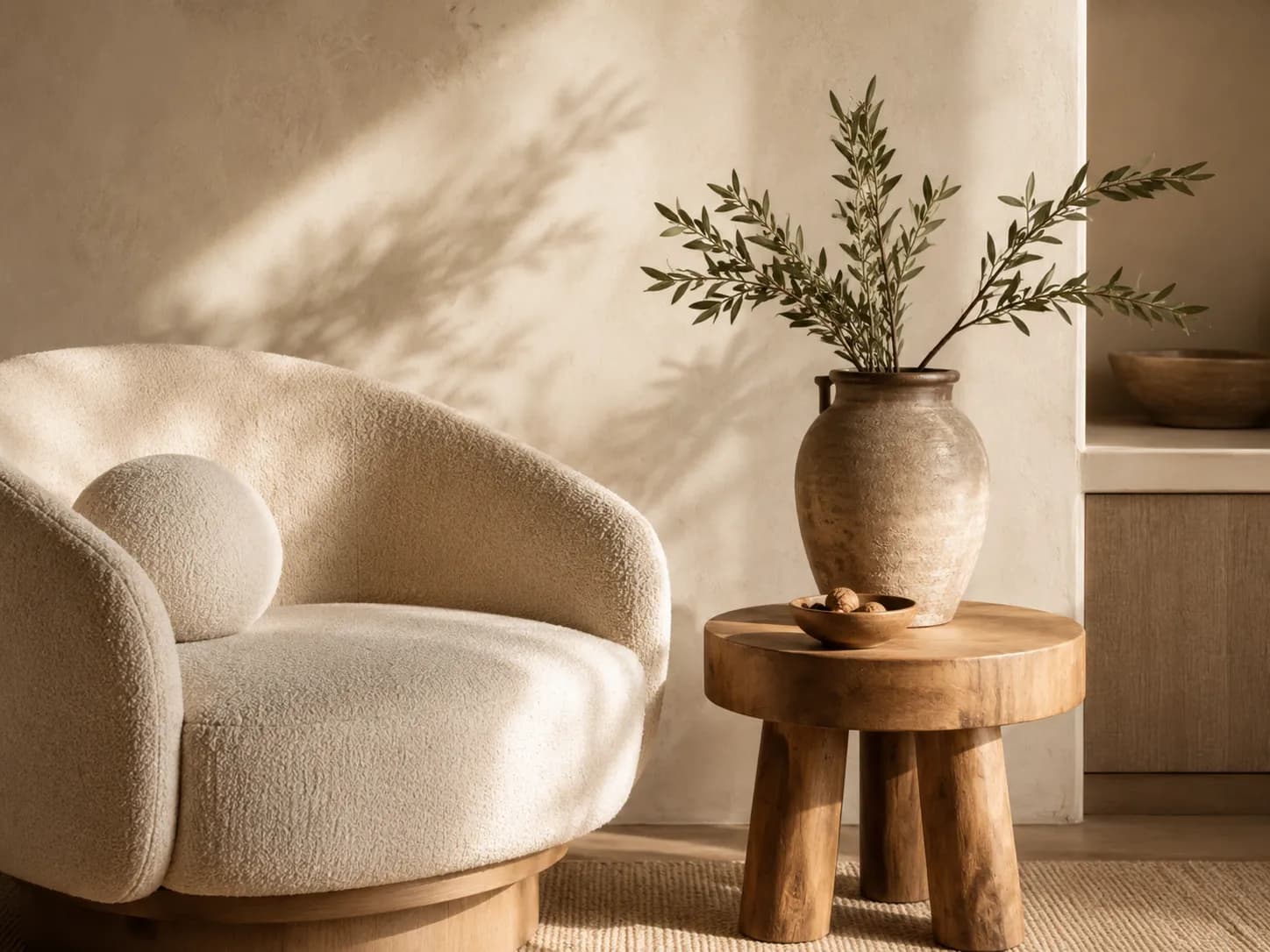
Materials do most of the work in this style. When you are choosing between two similar pieces, pick the one made of something that came from the ground or a plant.
- Natural wood with visible grain, in mid to warm tones
- Linen and cotton for curtains, bedding, and slipcovers
- Boucle and wool for seating and throws
- Travertine, limestone, and unglazed ceramic
- Rattan, cane, and paper for lighting and accents
Shapes matter just as much. Organic modern rooms mix straight-lined anchors, like a simple sofa or platform bed, with curved supporting pieces: a round coffee table, an arched mirror, a sculptural lamp, or a chair with soft radius edges. One or two curves per room is enough. When everything curves, the room starts to feel like a set.
Organic Modern, Room by Room
Living room
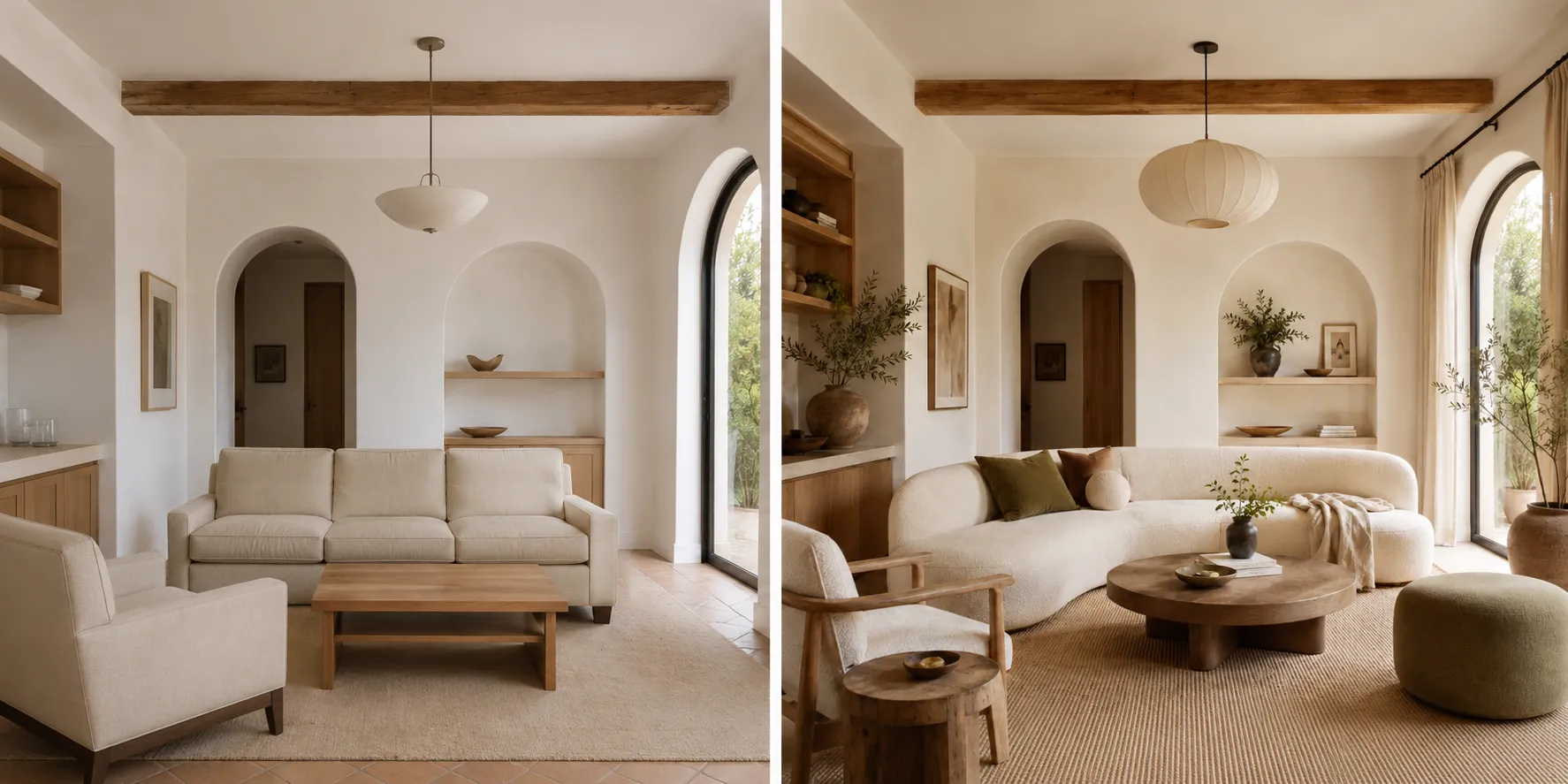
Anchor the room with the sofa you already have if it is a neutral color. Add one curved element, swap harsh white lighting for warm bulbs and a fabric or paper shade, and choose a rug in oat or sand with visible texture. Open shelf styling should be sparse: books, one plant, and one or two ceramic pieces.
Bedroom
Keep the bed. Change the bedding to washed linen in cream or oat, add a wood or cane headboard if the current one is metal or upholstered in a cool tone, and put a soft-glow lamp on each nightstand. A jute or wool rug under the lower two-thirds of the bed finishes it.
Dining room
A wood table is already halfway there. Mix in curved-back chairs, one pendant light in paper, linen, or rattan, and a single low arrangement of branches or dried stems. Resist the runner and the centerpiece cluster; empty wood surface is part of the look.
Getting the Look With What You Already Own
This is where organic modern is kinder than most styles. It does not require a matching furniture set; it actually looks better without one.
Walk your room and sort what you have into three groups. Wood pieces, neutral upholstery, and anything ceramic, stone, or woven can almost always stay. Shiny black or chrome pieces, cool gray textiles, and busy patterns are the things to phase out or cover. Everything else is undecided until you see it in context.
Seeing it in context is the hard part, and it is exactly what a preview solves. Upload one photo of your actual room to Room Foundry, ask for an organic modern direction, and you will see the style in your real layout, with your real windows and your real furniture, before you commit to anything.
If the big pieces work, a rug change or new lighting is often all the shopping the room needs.
If you are starting with the main room of the house, begin with a living room makeover preview.
What to Avoid
- Cool grays and stark whites, which read as a different style entirely
- Matching furniture sets, which flatten the collected feeling
- Too many curves at once
- Glossy finishes where a matte or natural one exists
- Filling every surface; organic modern needs breathing room
Final Thoughts
Organic modern earns its popularity honestly. It is warm enough to live in, restrained enough to stay calm, and flexible enough to build around the furniture you already own. Start with the palette, let materials and one or two curves do the work, and check the direction in a photo of your actual room before you buy a single new piece.
FAQ
Common questions
- What is organic modern style?
- Organic modern combines clean-lined modern design with natural materials and soft, organic shapes. It uses warm neutrals, wood, stone, linen, and curved silhouettes to create rooms that feel current, calm, and comfortable rather than cold or minimal.
- What is the difference between organic modern and Japandi?
- Japandi is quieter and more restrained, with low furniture and more negative space drawn from Japanese design. Organic modern is softer and more textural, welcoming curves, layered natural fabrics, and sculptural accents. Both share warm neutrals and natural materials.
- Is organic modern style expensive?
- It does not have to be. The style rewards fewer, better pieces and works with existing wood furniture and neutral upholstery. Many rooms get the look through bedding, lighting, a textured rug, and removing cool-toned or glossy items rather than replacing furniture.
- How do I try organic modern style in my own room?
- Upload a photo of your room to an AI room design tool like Room Foundry and ask for an organic modern direction. You can keep the furniture you already own, preview the style in your actual room, and refine details like lighting, textiles, and decor before buying anything.
Keep exploring
Related reading
Living Room Ideas
How to Make a Gray Couch Feel Warm, Intentional, and Current
Interior Design Styles
Japandi Style: How to Create a Calm, Minimal, and Warm Home
AI Room Design
Can AI Redesign a Room While Keeping Your Existing Furniture?
AI Room Design
AI Living Room Design From a Photo: A Practical Step-by-Step Guide
Small Spaces & Dorm Rooms
15 Modern Dorm Room Ideas for a Small College Bedroom
Small Spaces & Dorm Rooms
17 Coastal Dorm Room Ideas With a Rental-Safe Checklist
Try Room Foundry
See organic modern style in your own room.
Upload a photo of your actual room and explore a warm, natural redesign built around the space and furniture you already have.
Try your room free