15 Modern Dorm Room Ideas for a Small College Bedroom
Make a small dorm room modern and functional with rental-safe decor, smart storage, comfortable bedding, layered lighting, and a practical study zone.
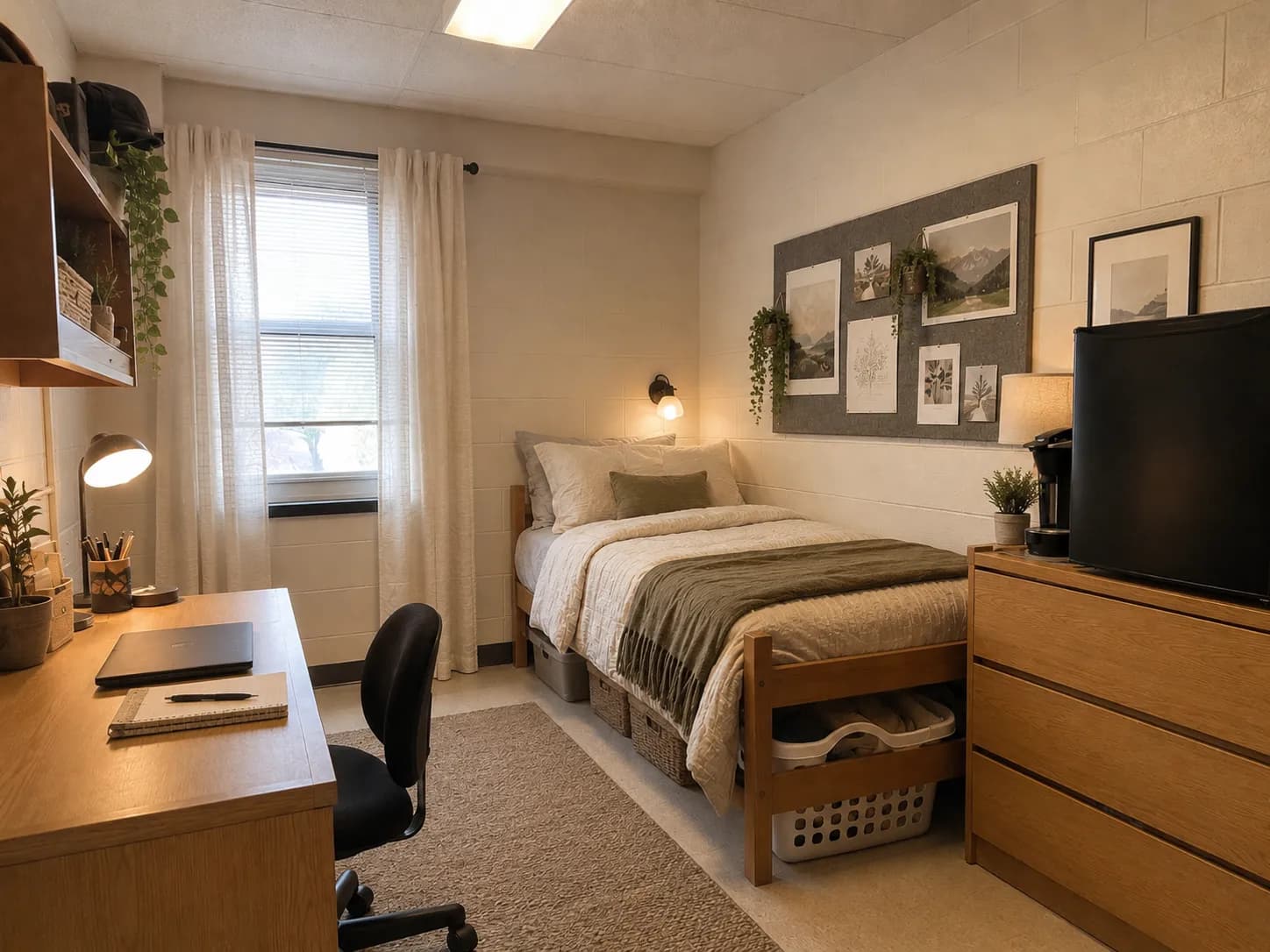
Dorm rooms are difficult to plan because they are small, temporary, and often unfamiliar until move-in day. A student may need the same few square feet to work as a bedroom, study space, storage zone, and place to relax, all without making permanent changes.
Modern dorm design is not about making the room cold, sparse, or expensive. It is about creating a calm visual hierarchy, choosing useful pieces, and making every purchase earn its place. A clear palette, comfortable bedding, organized storage, and better lighting can do more than a cart full of small decor.
The ideas below focus on rental-safe changes that can move with you: textiles, lighting, storage, desk organization, removable art, and flexible furniture. The real-room transformation later in this guide shows how those layers can change a recognizable dorm without pretending it has been permanently renovated.
What Makes a Dorm Room Feel Modern?
A modern dorm room feels intentional before it feels decorated. The eye should understand where to sleep, where to study, and where everyday things belong. That structure matters more in a small room because every unfinished surface and mismatched container stays visible.
- A clean visual hierarchy with one obvious focal point
- A restrained palette repeated across bedding, storage, and art
- Useful furniture and storage sized to the actual room
- Layered lighting for work, general visibility, and winding down
- Fewer accessories chosen with more intention
- A defined sleep zone and a focused study zone
If you like modern rooms that still feel warm, the natural materials in Japandi style and the softer forms in organic modern design are both useful references for a small college bedroom.
15 Modern Dorm Room Ideas
1. Choose One Restrained Color Palette
Pick two or three main colors before buying anything. Warm white, oatmeal, olive, charcoal, muted blue, or soft terracotta can create a modern foundation without making the room feel impersonal. Repeat those colors in the bedding, rug, storage bins, and art so unrelated purchases read as one room.
2. Let the Bedding Anchor the Room
The bed is usually the largest uninterrupted surface in a dorm, so its color and texture set the direction. Start with comfortable sheets, a washable duvet or comforter, and one practical throw. Two or three pillows are enough; an overloaded bed creates daily work and quickly turns into clutter.
3. Add Texture Instead of Visual Clutter
A room can feel layered without filling every shelf. Combine a woven blanket, a low-pile rug, a fabric shade, and one or two natural-looking baskets. Texture adds warmth while preserving the calmer surfaces that make a small room feel larger.
4. Use Removable Wall Treatments
Use only products allowed by the residence hall. Approved removable hooks, poster strips, pinboards, and lightweight framed art can create a focal wall without paint or holes. Test removable products in an inconspicuous place and follow removal instructions; no adhesive is universally damage-free.
5. Maximize Under-Bed Storage
Measure the clearance before ordering containers. Shallow rolling bins work for clothing and linens, while one open basket can hold items used every day. If bed risers are permitted, confirm the approved type and height with the school rather than assuming any riser is safe.
6. Use Vertical Space Carefully
A slim over-door organizer, freestanding shelf, or approved closet system can move storage upward without crowding the floor. Keep heavier objects low, avoid unstable towers, and never cover vents, sprinklers, detectors, or required clearances.
7. Build a Focused Study Zone
Treat the desk as a work surface, not the room's default storage shelf. Keep the laptop area clear, put pens and charging cables in one organizer, and give textbooks a nearby vertical file or shelf. A small tray for keys and everyday items stops them from spreading across the study zone.
8. Layer Task and Ambient Lighting
Overhead fluorescent light is rarely enough. Add an adjustable desk lamp for coursework and a warm table, clip, or floor lamp for ambient light, following school rules for fixture type and bulb wattage. Plug lighting directly into approved outlets or permitted surge protectors; many residence halls prohibit certain extension cords and decorative lights.
9. Use One Mirror to Expand the Room Visually
A single full-length or medium wall mirror can reflect daylight and make the room feel less enclosed. Position it where it is useful for getting ready and where it does not create glare at the desk. Use a freestanding or approved hanging method rather than improvising a heavy wall mount.
10. Choose Flexible Seating
If space permits, choose seating that can move or serve two purposes: a small storage ottoman, folding floor chair, or compact pouf. Avoid buying a large lounge chair before seeing the room dimensions. Clear walking paths matter more than squeezing in another seat.
11. Use Matching Bins and Organizers
Matching does not have to mean expensive. Repeating one bin color and material reduces visual noise, even when the containers come from different stores. Label closed bins discreetly so organization stays useful after the first week of classes.
12. Keep the Desk Surface Simple
Limit the permanent desk setup to the equipment used every day: lamp, laptop stand if needed, pencil cup, and one catchall. Store backup supplies in a drawer or bin. A clear working surface makes the room feel more orderly and makes it easier to begin studying.
13. Add Personal Art Without Damaging Walls
Choose a small group of meaningful photos, prints, or postcards and arrange them as one composition. A pinboard already supplied by the school is ideal. If you bring frames, use lightweight materials and approved hanging hardware so personality does not become a repair charge.
14. Create One Focal Point
Let one area lead: the bed with layered textiles, the pinboard with a tidy gallery, or the window with simple permitted curtains. When every wall competes for attention, a small room feels busier. One focal point gives the rest of the space permission to stay quiet.
15. Preview the Room Before Buying Decor
A visual plan helps separate useful purchases from attractive objects that do not fit. Start with a photo of the room, test the palette and major textiles together, and compare the result against real dimensions and housing rules before ordering.
Room Foundry can help you redesign a room while keeping existing furniture, which is useful when the school-issued bed, desk, dresser, and shelving must stay.
A Real Dorm Room, Reimagined
This Room Foundry preview begins with a real dorm room and keeps the fixed shell recognizable: the same bed and desk locations, window, block walls, school furniture, pinboard, and compact footprint. It is an AI-generated design concept, not a photograph of a completed installation.
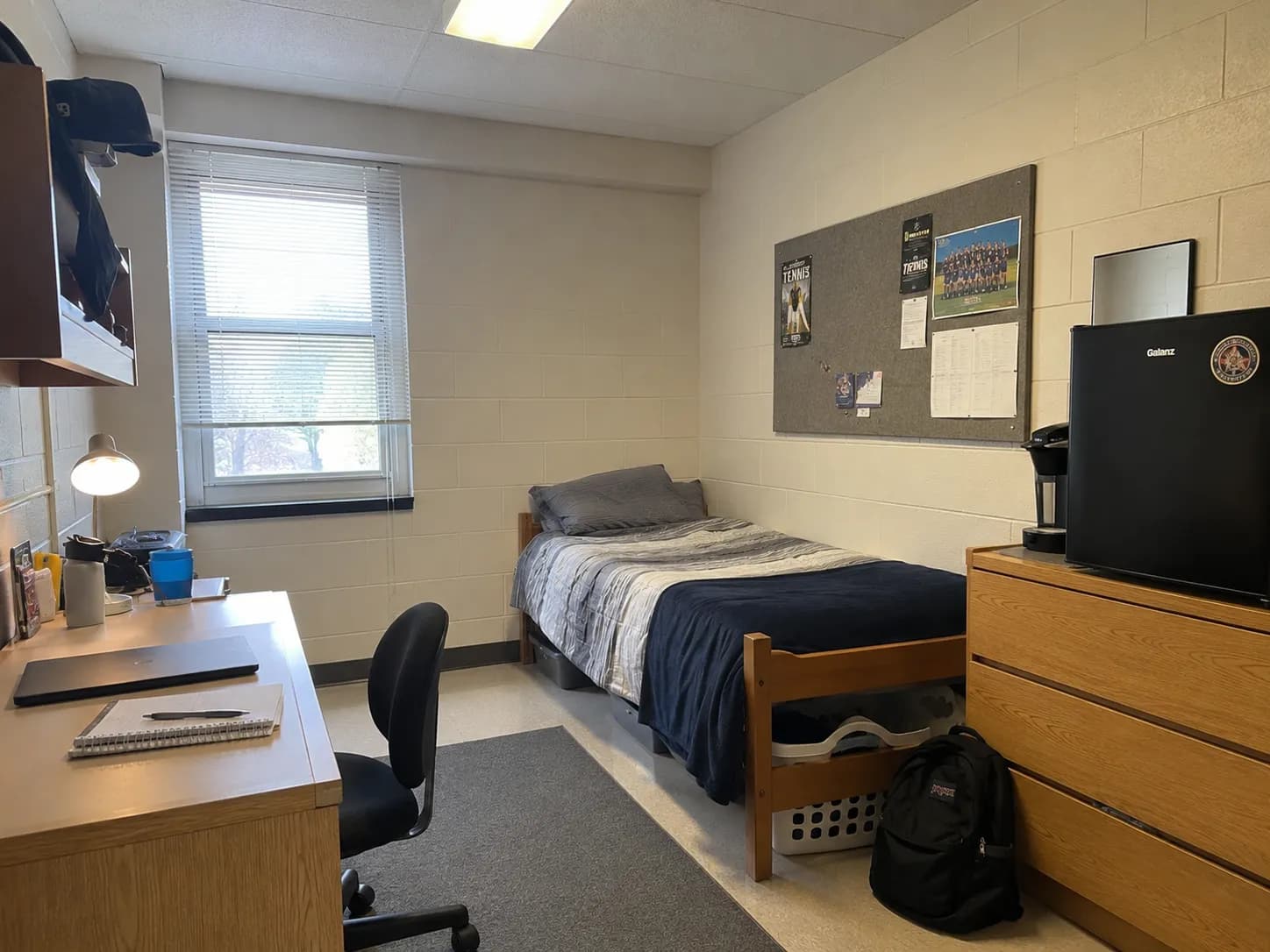 beforeafter
What stayed recognizable: the room dimensions, window placement, bed, desk, dresser, mini refrigerator, overhead light, pinboard, and circulation path. Those constraints make the concept useful rather than turning it into a different room.
What changed: lighter bedding, a restrained olive-and-cream palette, approved curtain and wall-art concepts, warmer task lighting, consistent under-bed containers, desk organization, and a small amount of greenery. Every idea is reversible, but the student would still need to confirm curtain, lighting, plant, and hanging rules with the residence hall.
What to Buy First
Buy in the order that makes the room comfortable and functional first. Waiting on small decor also gives you time to learn how you actually use the space.
- Bedding: sheets, mattress protection, comforter or duvet, and a practical throw
- Lighting: one useful desk lamp and one permitted warm ambient light
- Storage: containers chosen only after measuring under-bed, closet, and shelf clearances
- Rug: a washable, low-profile size that does not block doors or create a trip hazard
- Desk organization: one cable solution, one supply holder, and one file or shelf system
- Art and small decor: the final layer, added only after the room already works
When applicable, a completed Room Foundry design can include curated shopping ideas for visually similar products. Recommendations are starting points rather than exact guarantees, so verify measurements, residence hall policies, materials, and current product details before purchasing.
For a softer warm-neutral direction, explore the materials and palette in the organic modern style guide.
Modern Dorm Room Mistakes to Avoid
- Buying storage or furniture before checking the room's actual dimensions
- Adding too many small accessories that create clutter without adding function
- Relying entirely on overhead lighting and forgetting the study desk
- Blocking the chair, outlets, drawers, or walking path around the study zone
- Buying under-bed and closet storage that does not fit the available clearance
- Treating a temporary dorm like a permanent renovation instead of following school rules
If you want to test the broader bedroom direction first, the bedroom makeover preview shows how Room Foundry works from an actual room photo.
Final Thoughts
A dorm room can feel modern, personal, and functional without paint, construction, or a large decorating budget. Start with the essentials, repeat a restrained palette, organize the surfaces you use every day, and add only the details that support sleeping, studying, and settling in.
A preview cannot replace real measurements or residence hall rules, but it can help you see the room as one complete idea before you make a long list of disconnected purchases.
FAQ
Common questions
- How can I make a dorm room look modern?
- Use a restrained palette, coordinated bedding, a few intentional accessories, matching storage, and separate lighting for studying and relaxing. Modern dorm decor should make the room feel calmer and more useful rather than simply adding more objects.
- What should I buy first for a dorm room?
- Start with bedding, then add task lighting and storage sized to the actual room. A rug, desk organizers, and removable art can follow once the essential sleep and study zones work.
- What dorm decor is rental-safe?
- Freestanding lamps, textiles, removable hooks used according to housing rules, tension rods where permitted, framed art on approved hanging systems, and furniture that does not attach to the building are common rental-safe choices. Always check the residence hall policy first.
- How do I add storage to a small dorm room?
- Measure the space under the bed, inside the closet, and beside the desk before buying anything. Use a small number of matching bins, under-bed drawers, vertical organizers, and one accessible place for everyday items.
- Can Room Foundry redesign a dorm room from a photo?
- Yes. Room Foundry can use a photo of the actual dorm room to create a visual redesign preview while keeping the room's recognizable layout and fixed features. The result is an AI-generated concept, so residence hall rules and real measurements still need to guide purchases.
Keep exploring
Related reading
Try Room Foundry
See a more finished version of your dorm room.
Upload one photo, choose a style, and preview a practical redesign shaped around your actual space.
Preview your dorm room free