Fall 2026 Living Room Ideas: 9 Warm, Collected Updates to Preview First
Explore nine fall 2026 living room ideas using warm color, deeper wood, layered texture, collected accents, and lighting—without replacing your room.
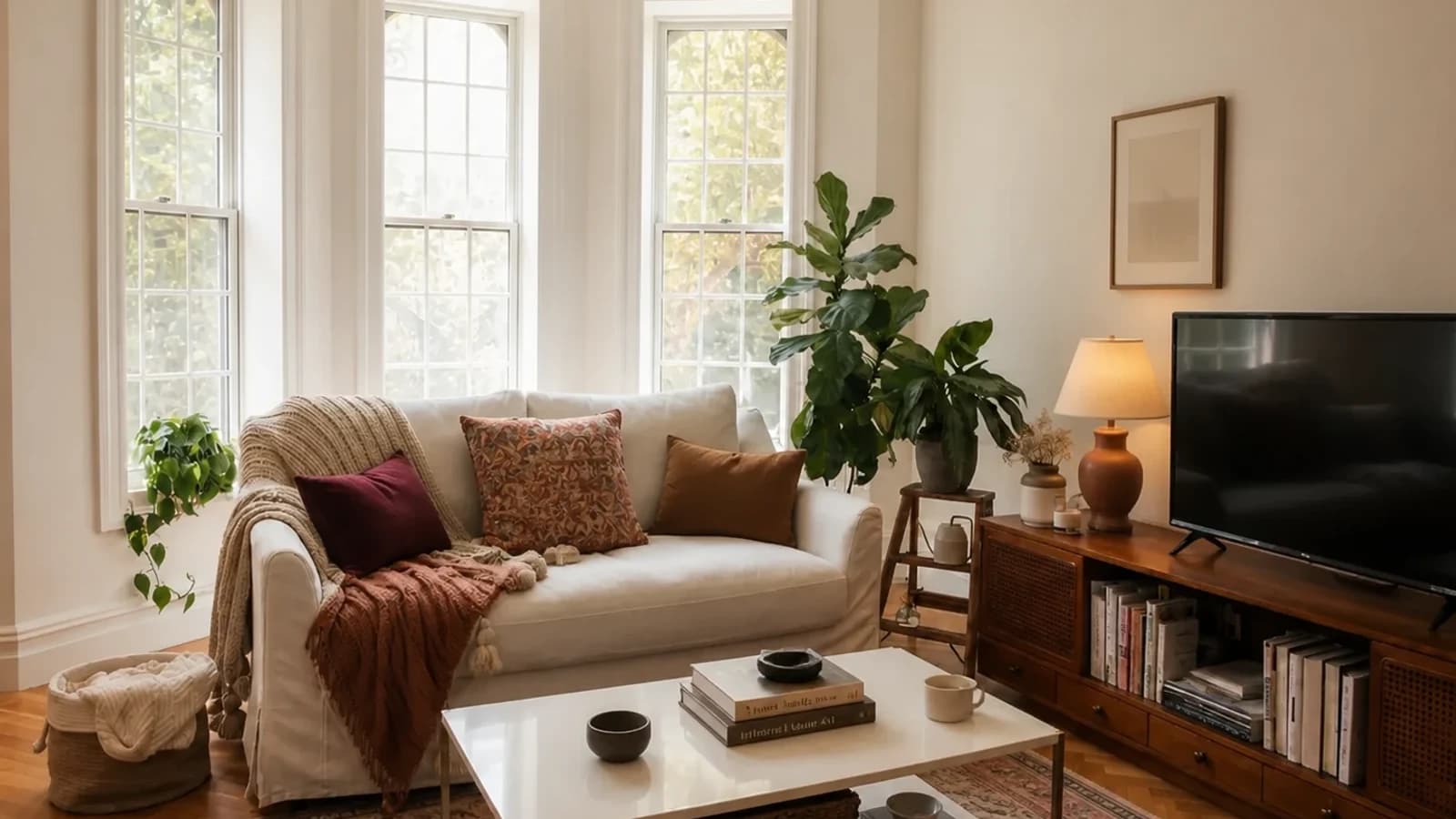
The strongest fall 2026 living rooms feel warmer, deeper, and more personal—not temporarily themed. Keep the sofa, layout, architecture, and useful storage. Then preview one controlled direction using richer color, deeper wood, layered textiles, collected art or objects, and lower pools of light. Start with reversible changes such as pillow covers, a throw, lampshade, rug direction, and shelf edit; measure and sample before buying anything permanent.
What fall 2026 looks like in a living room
The useful through-line across current coverage is not one prescribed aesthetic. It is a move toward rooms with warmth, visible texture, individuality, and pieces that do not look purchased as a matching set. ELLE Decor's January 13, 2026 living-room forecast highlights vintage, coordinated pattern, tufted and fringed accents, mixed metals, statement lighting, and rooms that feel personal and lived-in.
The 2026 living-room forecast from ELLE Decor is evidence of an editorial direction, not a requirement to replace upholstered furniture. Its smaller ideas—patterned covers, a fringed shade, a collected metal accent, and more intentional light—are easier to test.
Houzz's January 1, 2026 forecast describes warm and medium wood tones, including walnut and cherry, beside olive, terra-cotta, cream, warm gray, and other nature-led colors. Its broader point is useful for a seasonal refresh: wood can supply depth without turning every textile orange.
The Houzz 2026 home-design trend report supports warm wood and earthier palettes. Use a tray, frame, stool, lamp base, or existing cabinet before treating new flooring or millwork as a seasonal decision.
For the season itself, Homes & Gardens' August 17, 2026 color report identifies chocolate brown, oxblood, bottle green, and smoky violet among the current directions. Its designers also describe using richer tones through textiles, lampshades, accessories, and decorative objects when a lighter commitment makes sense.
The current Homes & Gardens fall 2026 color report is a palette source, not proof that a named paint, fabric, or product will look the same in your room. Sample in the actual daylight and lamplight.
Choose one fall direction before collecting ideas
| Direction | Palette | Texture and finish | Lowest-commitment test |
|---|---|---|---|
| Burnished Earth | Oxblood, tobacco, muted terra-cotta, cream | Wool, faded pattern, walnut, dark ceramic | Two covers, one throw, warmer lamp shade |
| Olive Library | Olive, forest, camel, parchment | Woven wool, aged brass, natural wood, books | Olive covers, camel throw, restyled shelf |
| Plum and Amber | Smoky plum, dusty blue, amber, warm white | Velvet-like nap, faded rug pattern, bronze, glazed ceramic | Plum covers, amber throw, one warm lamp |
Pick the row that relates best to the things that cannot or should not change. A cool gray sofa often needs a bridge color and warm material rather than a pile of orange accessories; the deeper process is in the guide to warming a gray couch. A cream sofa can carry more saturated pillows, but still needs the floor and wood tones to connect the palette.
If gray upholstery is the fixed anchor, use the sample-first framework in how to warm up a gray couch before choosing the seasonal accent.
One real room, three fall directions
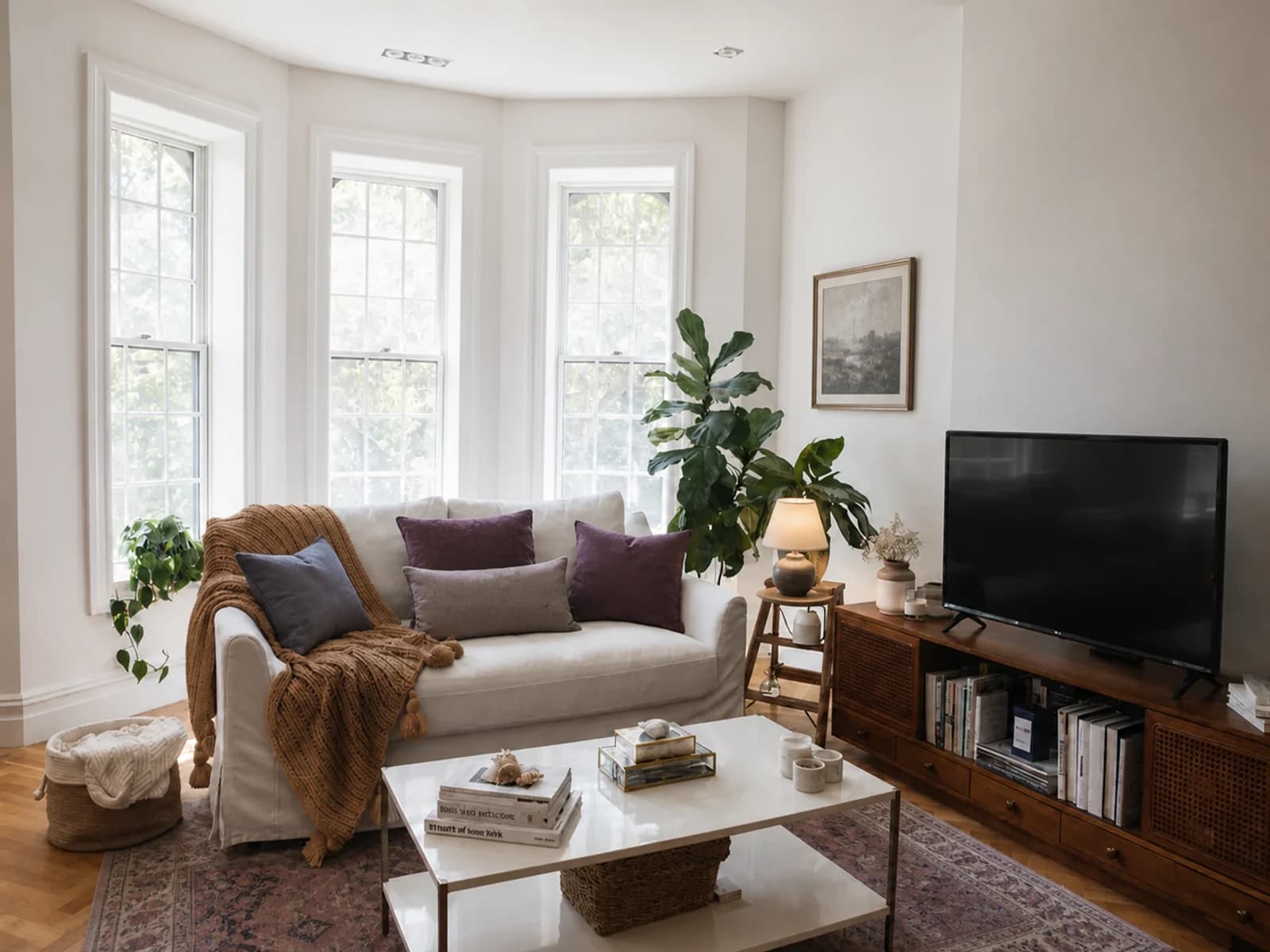
The source below is a Room Foundry-owned living-room photograph. The three matched seasonal versions were created with an external image generator for this editorial comparison, not with Room Foundry. They are inspiration studies only. Each direction keeps the recognizable white sofa, TV, walnut media cabinet, white coffee table, bay windows, wood floor, plants, room shell, and broad furniture relationship.
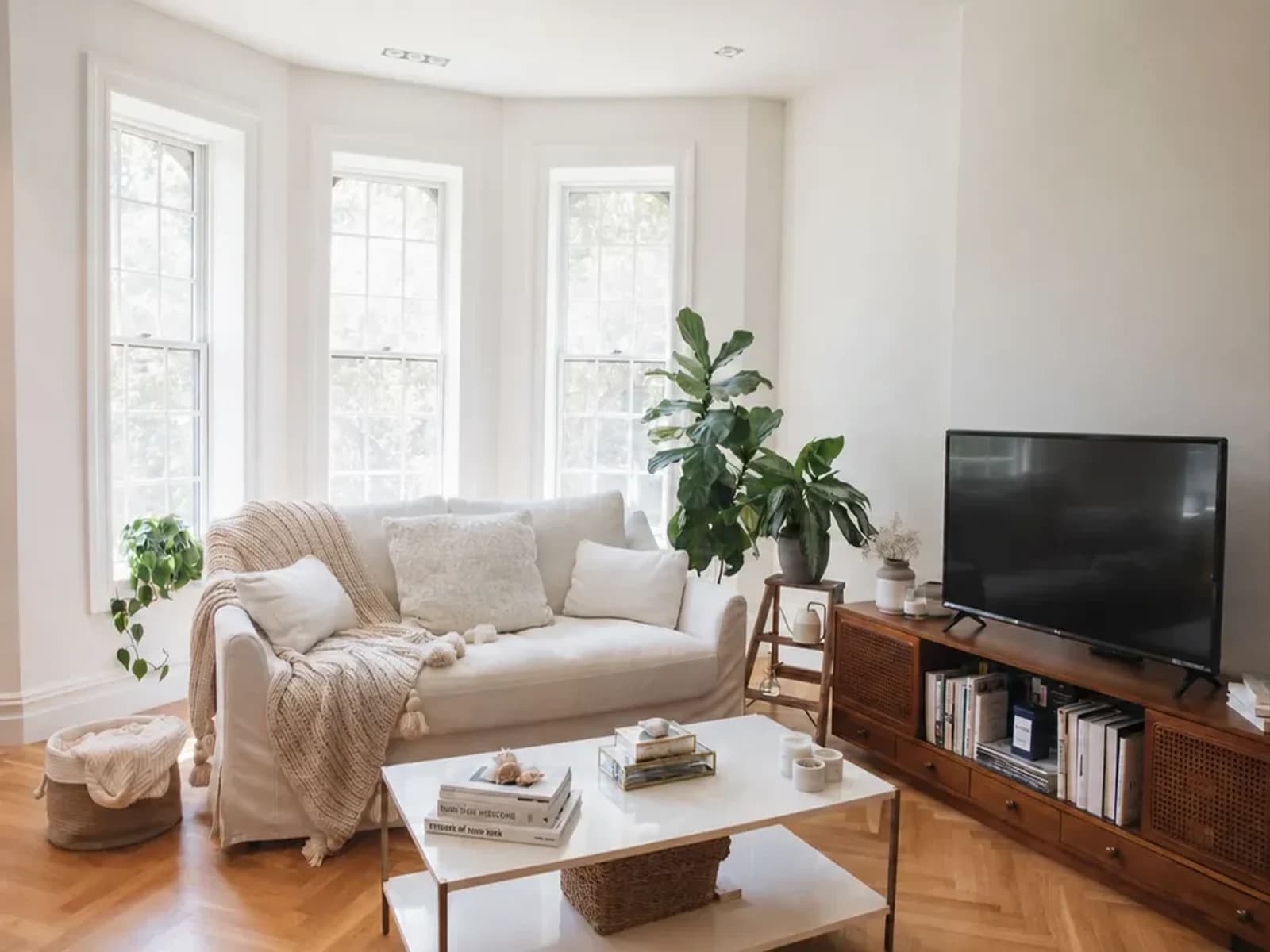
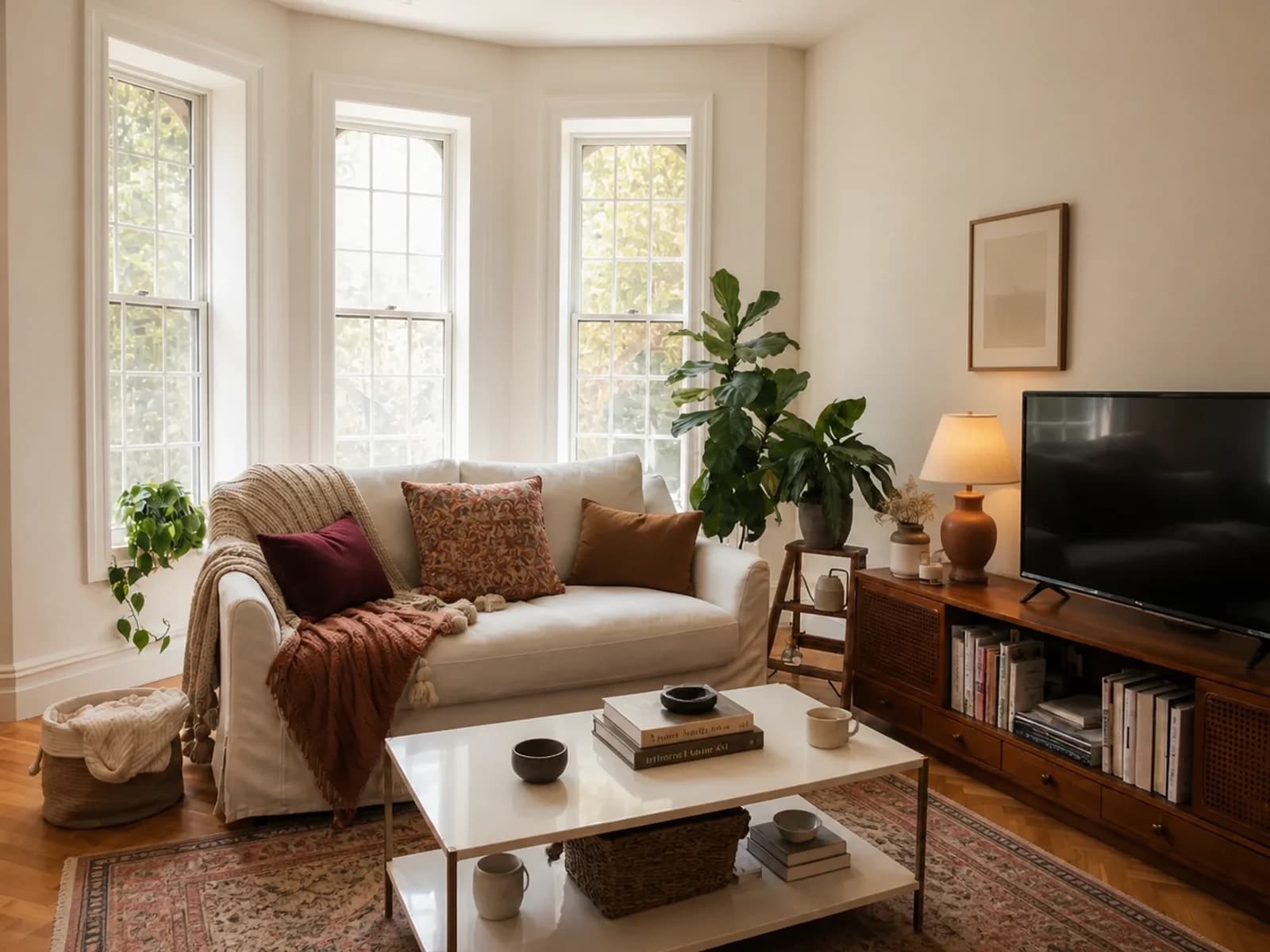
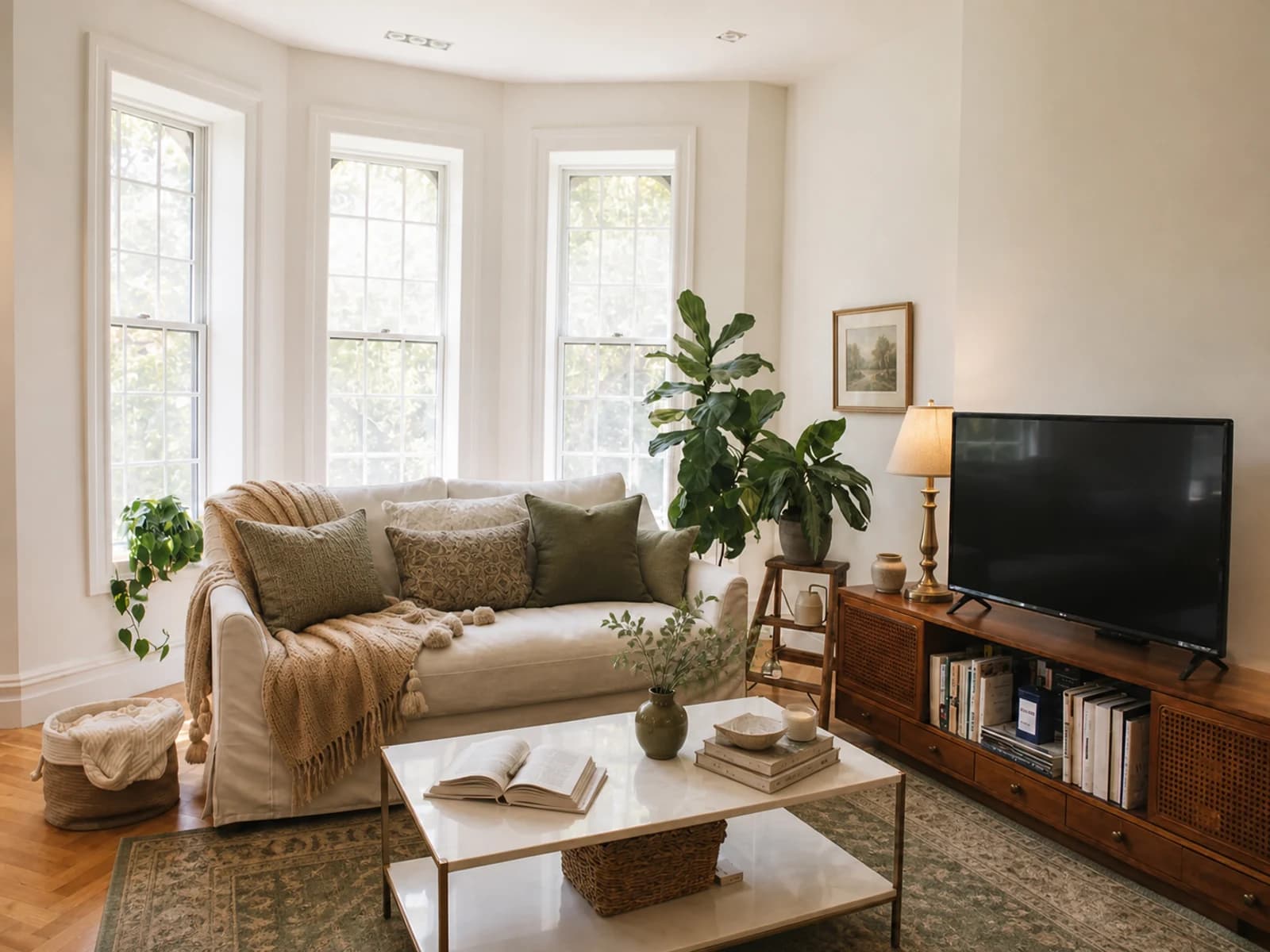
What stayed
The room remains recognizable through the three tall bay windows, curved wall, white slipcovered sofa, hardwood floor, television, long walnut-and-cane media cabinet, white two-level coffee table, plants, basket, recessed ceiling lights, camera position, and circulation. These anchors make the color comparison meaningful.
What changed
The editorial versions vary pillow covers, throws, patterned rugs, small lamps, framed art, ceramics, books, and warm color balance. The generator also altered some accessory details and framing. Those shifts are evidence to audit, not products to identify or copy exactly.
What to verify
Measure the sofa, rug area, coffee-table clearance, media surface, lamp footprint, outlets, cord route, and artwork location. Compare real fabric, rug, wood, metal, and paint samples in daytime and evening light. Verify product identity, dimensions, stock, price, care, returns, safety, mounting, permissions, and installation separately. Reject a concept that changes a non-negotiable feature.
9 warm, collected updates to try first
1. Replace seasonal orange with one deeper grounding color
Choose oxblood, bottle green, chocolate, or smoky plum, then repeat it two or three times. A pillow, a stripe in the rug, and a small artwork are enough. Keep a warm neutral between saturated notes so the color reads as deliberate, not scattered.
2. Use deeper wood in one small, useful place
Before buying furniture, notice the wood already present. Clear and restyle a walnut cabinet, bring forward a darker frame, or test a small tray or stool. One deeper note can ground pale upholstery; several unrelated stains can make a compact room busier.
3. Layer texture at three different scales
Use one broad texture, one midscale weave, and one finer detail—for example, a faded rug pattern, a wool throw, and a ribbed ceramic. Repeating the same chunky texture everywhere flattens the effect. Check shedding, care, allergies, pets, children, and real material performance.
4. Let one pattern lead
A vintage-style rug, floral pillow, or striped shade can set the palette. Support it with quieter companions instead of adding three equal patterns. Photograph the room from the doorway; if the pattern becomes the only thing you see, reduce scale or contrast.
5. Add collected character without adding clutter
Choose one object with meaning or age—a framed work, ceramic, small box, book group, or inherited piece—and give it visual space. Collected does not mean filling every shelf. Edit first, group related items, and leave enough clear surface for the room to function.
6. Lower the light to where people sit
Use a table or floor lamp near reading and conversation rather than depending on one overhead source. A warmer-looking shade can soften the composition even before bulb changes. Use compatible, listed products; follow wattage and manufacturer instructions; keep cords out of traffic; and use qualified help for hardwired work.
Evaluate the room twice: once while daylight still reaches the seating area and once after dark with the lamps you actually use. A fabric that looks earthy at noon can turn muddy under a warm bulb, while smoky plum can read cooler beside a television screen. Take the same photograph in both conditions, compare the palette against the sofa and floor, and change one variable at a time. The goal is not universally warm color; it is a balanced room during the hours you occupy it.
7. Warm the sofa with covers, not a replacement
Keep the useful sofa and test removable pillow covers in the chosen palette. Mix a smooth solid, a restrained pattern, and one tactile cover. Leave some upholstery visible so the sofa still anchors the room. If the entire plan depends on replacing it, use the sofa-first redesign process before shopping.
The guide to redesigning a living room around an existing sofa shows how undertone, rug, tables, lighting, art, and pillows can respond to one retained anchor.
8. Edit and rearrange before buying decor
Remove out-of-season objects, return books and baskets to useful jobs, pull a lamp closer to the seat that needs it, and protect the route between doors. This makes the remaining gaps visible. In a small room, a clearer sightline often contributes more warmth than another basket.
Use the inventory and circulation sequence in small living room ideas with existing furniture if the room feels crowded before the seasonal layer begins.
9. Create a transition that can stay through winter
Favor color, texture, light, wood, art, and useful objects over literal signs of the season. A bottle-green pillow or amber lamp can remain after autumn; a pile of themed objects has a short life and needs storage. The best fall update earns its place beyond one month.
Preview first, then buy in a controlled order
- Photograph the room in clear daylight from a position you can repeat.
- List fixed architecture and the furniture, flooring, rug, art, or media equipment that must remain.
- Choose one direction and make one low-commitment digital test; do not mix all three.
- Audit what stayed, changed, drifted, and remains physically unknown.
- Recreate the palette with real samples beside the sofa, floor, and wood in daylight and lamplight.
- Measure exact footprints, openings, paths, cord routes, and mounting conditions.
- Buy or borrow the smallest reversible layer first, then reassess before adding the next.
If you rent, review the lease and restoration requirements before anything touches a surface. The renter-friendly living-room guide separates freestanding, surface-contact, fastened, and fixture-level changes so a seasonal idea does not become a move-out problem.
Use the permission ladder in the renter-friendly living room makeover before applying adhesive, installing window treatments, mounting art, painting, or changing a fixture.
Frequently Asked Questions
The fall 2026 rule: deepen the room, do not disguise it
A current fall living room does not need to look newly purchased or temporarily themed. Keep the architecture and useful anchors, choose one deeper palette, combine a few distinct textures, reveal richer wood, add one collected note, and place warm light where life happens. Preview the direction in the recognizable room, then confirm every physical fact with measurements, samples, current product information, permissions, and appropriate installation.
FAQ
Common questions
- What colors are trending for fall living rooms in 2026?
- Current 2026 coverage emphasizes richer chocolate and oxblood, forest or bottle green, dusty yellow, terra-cotta, warm neutrals, and smoky blue-violet. Treat that as a menu, not a mandate: choose one color family that works with your fixed sofa, flooring, wood, and daylight.
- How can I make my living room feel like fall without buying new furniture?
- Keep the layout and major furniture, then edit clutter, move light closer to seating, swap a few pillow covers, add one throw, restyle books and existing objects, and test a rug or art direction. Those layers can change the room's mood without replacing the sofa or media cabinet.
- How many fall colors should I use in one living room?
- A practical starting point is one grounding color, one supporting color, and the room's existing neutral. Repeat them at different scales and textures. This is a design framework rather than a rule; sample the colors in the room's daytime and evening light.
- Does a fall living room need pumpkins or seasonal signs?
- No. Deeper color, tactile fabric, richer wood, warmer light, and a few personal objects can create an autumnal mood without literal seasonal symbols. A restrained room is also easier to carry into winter.
- Can an AI room preview confirm which rug, lamp, or paint will work?
- No. A preview can help compare visual direction, but it cannot confirm dimensions, clearances, true color, material, product identity, stock, price, electrical suitability, mounting, or installation. Measure, sample, and verify current product information before purchasing.
Keep exploring
Related reading
AI Room Design
AI Living Room Design From a Photo: A Practical Step-by-Step Guide
Living Room Ideas
How to Redesign a Living Room Around an Existing Sofa
Living Room Ideas
How to Make a Gray Couch Feel Warm, Intentional, and Current
Living Room Ideas
Small Living Room Ideas That Do Not Require New Furniture
Living Room Ideas
A Renter-Friendly Living Room Makeover You Can Undo
Preview your living room
Test the fall layer before you buy it.
Upload your real living room, keep the pieces that anchor it, and compare a warmer direction in the same recognizable space. Your first Room Foundry preview is free.
Upload a photo and preview free