How to Make a Gray Couch Feel Warm, Intentional, and Current
Warm up a gray couch by reading its undertone, then choose a bridge palette, rug, wood, curtains, and lighting with a sample-first decision table.
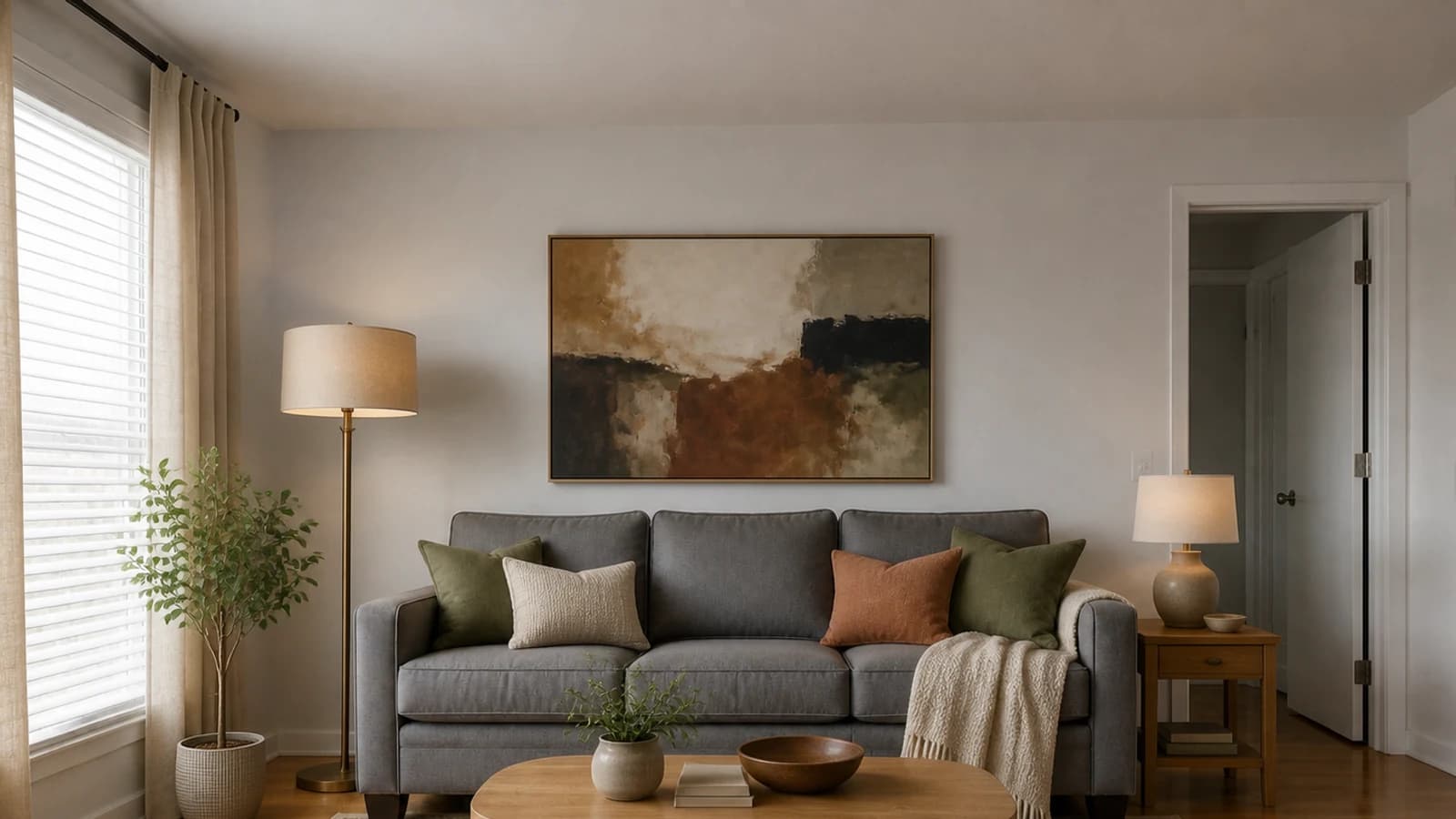
To warm up a gray couch, keep the sofa as the quiet anchor and change the room around it in a deliberate order: identify whether the upholstery leans warm, cool, or neutral; choose a rug with warm bridge colors; repeat natural wood; soften the windows; layer warm-looking light; and distribute two or three accent colors through art and textiles. The goal is not to hide every trace of gray or turn the room beige. It is to give the gray a supporting role inside a richer material palette.
| Layer | Warm direction | Check before buying |
|---|---|---|
| Gray sofa | Treat its undertone and value as fixed | Daylight and evening appearance |
| Rug | Ivory, camel, rust, olive, brown, restrained pattern | Measured footprint, sample, pile, care |
| Wood | Medium oak, walnut, or another repeated warm finish | Real finish beside sofa and floor |
| Curtains | Flax, oatmeal, warm ivory, muted color | Length, opacity, operation, mounting |
| Lighting | Ambient, task, and accent layers | Bulb appearance, glare, outlets, controls |
| Art and accents | Two or three repeated warm notes | Scale, mounting, material samples |
1. Read the gray before adding warmth
| If the gray reads | Compare first | Verify |
|---|---|---|
| Blue or violet | Warm ivory, camel, muted rust, and medium oak; keep a small slate or charcoal note | Samples beside the sofa, floor, and wall in daylight and evening light |
| Green | Oatmeal, muted olive, tobacco, and walnut; repeat the green once | Real fabric, wood, and rug samples together |
| Brown or taupe (greige) | Cream, clay, olive, and walnut; add clean charcoal for contrast | That the warm layers do not make the sofa look muddy |
| Neutral or unclear | One warmer sample stack and one cooler stack | Move both around the room; keep the combination that leaves sofa and floor clear |
A gray couch may lean blue, green, violet, brown, or close to neutral. You do not need to name the undertone perfectly; you need to see how it behaves beside likely companions. In daylight and again after dark, hold warm ivory, oatmeal, camel, olive, rust, charcoal, and a real wood sample against the upholstery. Keep the combinations that make both materials look clear. Remove combinations that make one suddenly appear dingy, purple, or green.
Also record the sofa's value and visual weight. A pale gray sofa can disappear against a pale cool wall, while a charcoal sectional may dominate a small room. Warmth is only one part of the correction: the room may also need contrast. Instead of surrounding a medium-gray sofa with five similar grays, give it a lighter rug, a darker line in the artwork, and middle-value wood so its outline reads intentionally.
2. Choose a bridge palette, not a pile of warm accessories
A bridge palette contains one tone that relates to the sofa, one that relates to the room's warmer finish, and one accent that can repeat in small doses. This is especially useful when a cool-gray couch sits on honey oak or beside cream walls. Keep the sofa's cool note in charcoal, slate, or a small amount of muted blue, then connect it to the floor with ivory, oak, olive, clay, or brown. The controlled mix looks deliberate because neither temperature is pretending the other does not exist.
| Palette | Colors | Best with | Use it on |
|---|---|---|---|
| Oak + olive | Warm ivory #EEE5D4Medium oak #B17C4EMuted olive #6F7450Charcoal #3F4140 | Cool or neutral medium gray; honey or medium oak floor | Rug base, table, pillows, art line |
| Camel + rust | Oatmeal #D1C0A4Camel #B77A45Muted rust #A45E43Slate #596068 | Blue-gray or charcoal sofa; warm white walls | Curtains, leather or wood, rug, artwork |
| Walnut + clay | Flax #D8CBB5Walnut #684A38Soft clay #B4745DMushroom #8B8174 | Warm gray or greige sofa; cream or taupe shell | Table, frames, pillows, woven texture |
| Tobacco + deep green | Cream #F0E7D6Tobacco #8A5D3BDeep olive #4F5944Graphite #393A3C | Dark gray sofa in a room needing richer contrast | Rug, chair or leather accent, art, lamps |
Treat these hex values as on-screen planning references, not purchasing specifications. Fabrics, woods, rugs, paints, and displays shift color. Build a portable sample stack and view it beside the sofa, floor, and wall at the times when you actually use the room.
3. Let the rug do the largest warming job
The rug sits directly between the gray upholstery and the floor, so it can resolve more of the palette than a collection of pillows. Look for a warm light ground with restrained camel, rust, brown, olive, or charcoal. A quiet pattern can contain both warm and cool notes without turning the room into a theme. If the sofa is dark, keep enough light area in the rug to create separation; if the sofa is pale, a mid-tone pattern can prevent the seating group from floating.
Choose the footprint from the measured seating relationship, not from color alone. Use the living-room rug size guide to compare all-legs, front-legs, and sectional layouts before ordering.
4. Repeat warm wood in two or three meaningful places
Wood brings color variation and grain that flat gray rooms often lack. A medium-oak coffee table, a walnut side table, or warm wood frames can connect the sofa to an existing floor. The pieces do not need to be a matching suite. Repeat a related family at least twice, then allow small differences in tone and grain so the room feels collected. If the floor is already strongly orange or red, compare quieter oak, walnut, or brown finishes rather than adding another loud undertone.
For the full dependency order around any retained sofa, follow the guide to redesign a living room around an existing sofa.
5. Soften the wall with curtains before filling it with decor
Short blinds and bare cool walls can make a gray sofa feel isolated. Full-height curtain panels in warm ivory, oatmeal, flax, muted olive, or a restrained woven pattern add a broad vertical field of softness. Relate the curtain to the wall and rug rather than matching the sofa. Confirm the real window operation, radiator or vent location, privacy, opacity, finished length, hardware, and mounting surface before buying.
6. Warm the room with layered light, not an orange filter
A single bright ceiling source flattens texture. Add ambient light for the room, task light where someone reads, and a smaller accent layer near art or a dark corner. ENERGY STAR describes lower correlated color temperatures around 2700–3000K as warmer in appearance, but the number alone does not guarantee that a bulb will flatter your sofa, rug, skin tones, and paint. Test the actual bulb and shade at night, control glare from seated positions, and use qualified help for hardwired changes.
For the technical distinction between warmer and cooler light appearance, see the current ENERGY STAR color-temperature criteria.
7. Use art and accent colors to distribute warmth
Choose art after the rug and curtain direction are stable. One adequately scaled piece or a controlled group can carry ivory, clay, umber, olive, and charcoal across the wall above the sofa. Then repeat only two or three of those notes in pillows and a throw. Vary texture—linen, wool-like weave, brushed cotton, wood, ceramic—rather than adding many unrelated colors. Leave enough seat space that the sofa still functions.
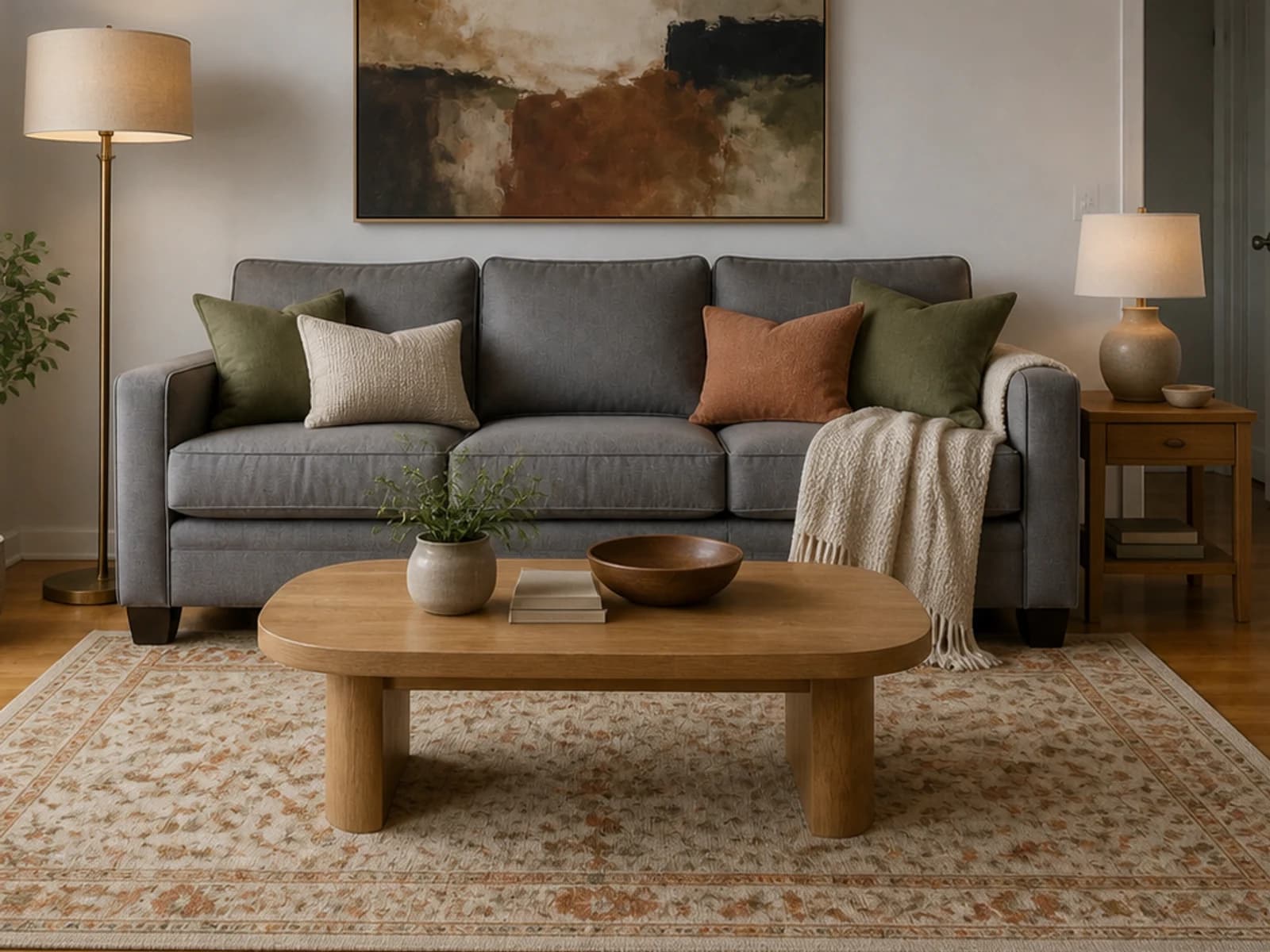
8. A controlled before-and-after with the same gray sofa
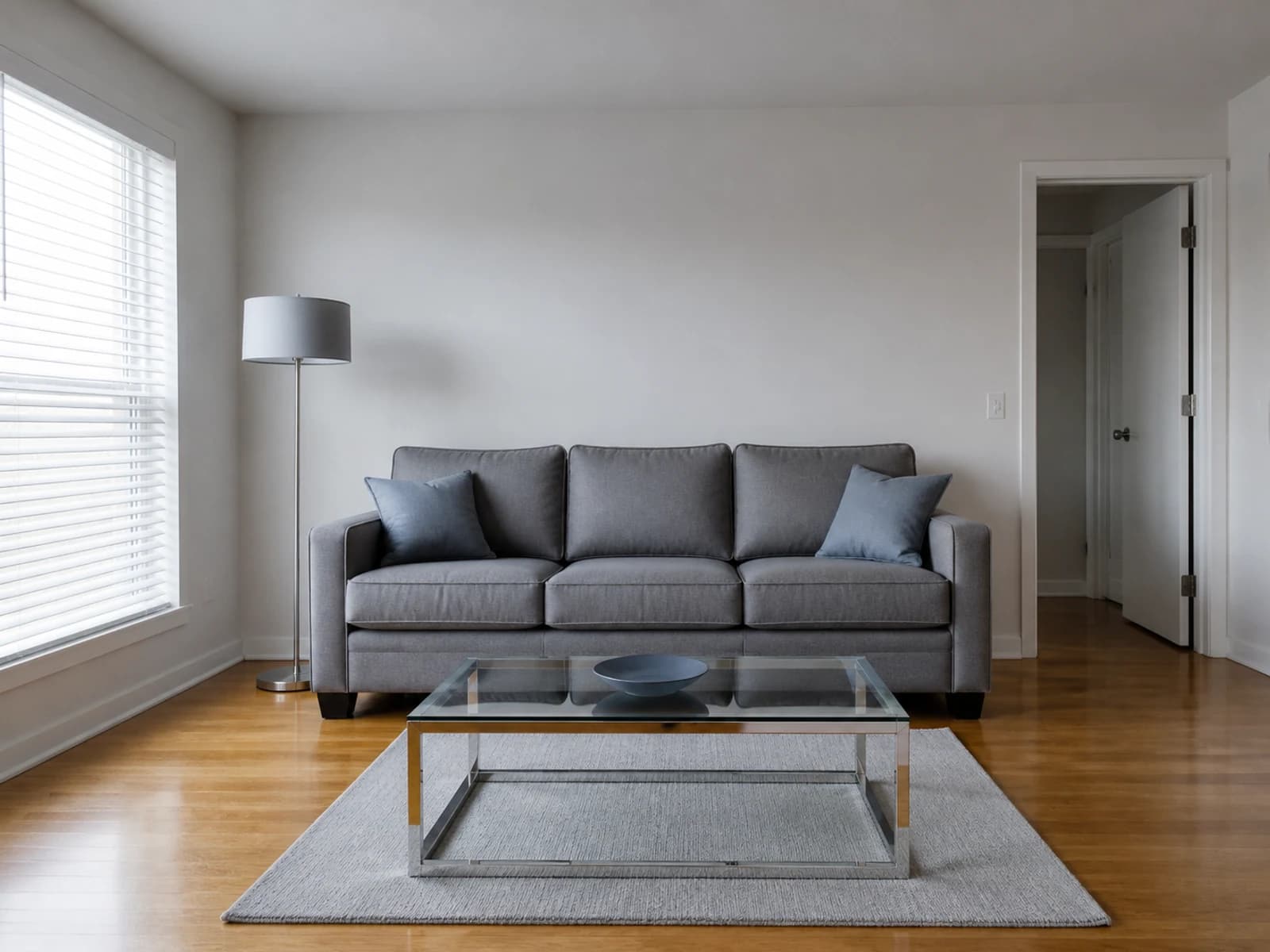 before
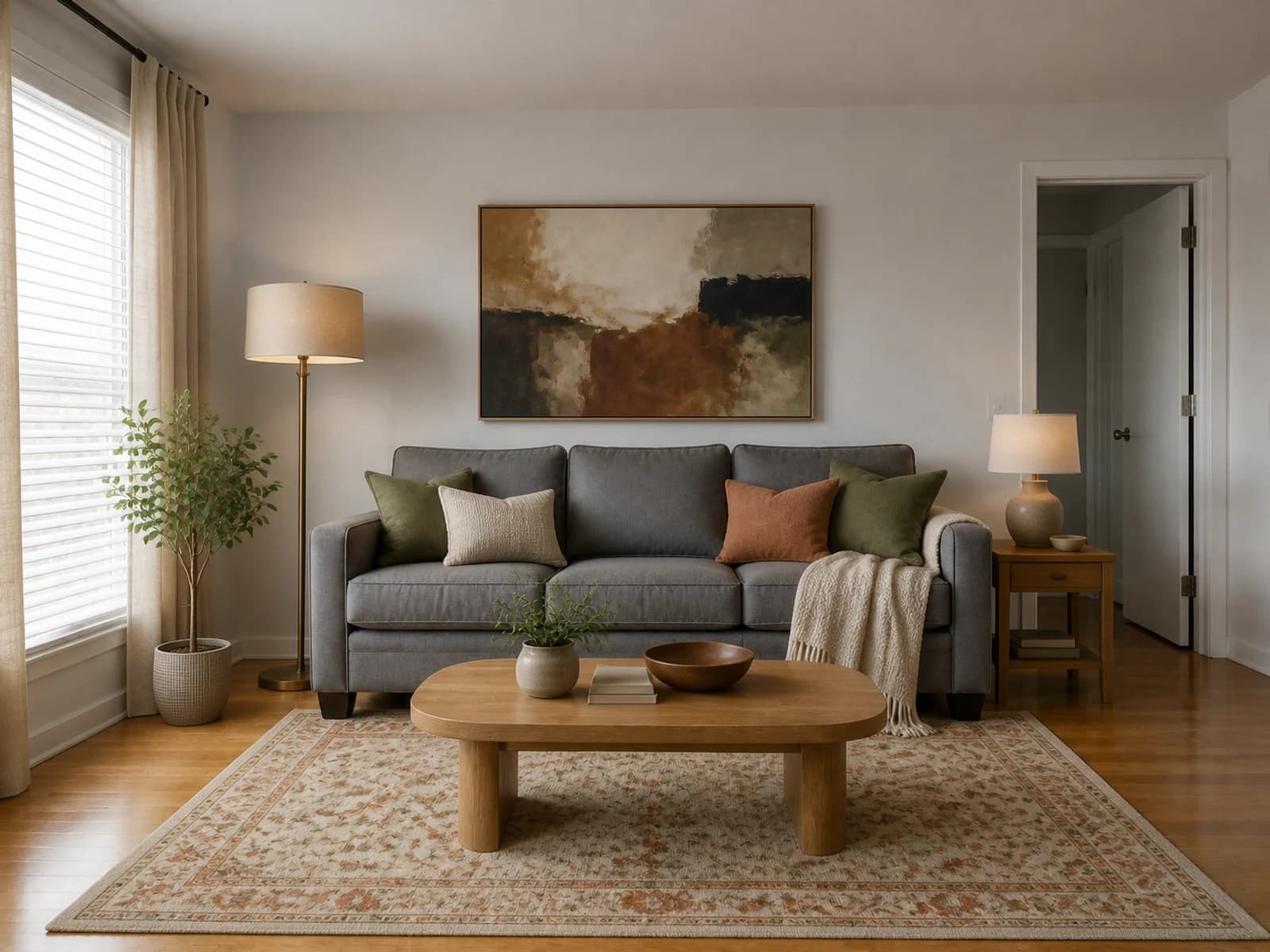 after
afterWhat stayed
The medium-gray three-seat sofa remains the anchor, including its square arms, three seat cushions, three back cushions, woven appearance, position, and orientation. The window, doorway, white walls, oak floor, room proportions, and camera relationship remain recognizable.
What changed
The concept replaces the small cool rug and glass table with a larger warm-patterned rug and oak table. Oatmeal curtains soften the window; brass and ceramic lamps layer the light; olive, rust, and ivory textiles connect the sofa to the rug and art. A modest plant adds organic variation. The sofa itself does not need to become beige for the room to feel warmer.
What to verify
Measure rug and table footprints, walking paths, window operation, outlets, and delivery access. Compare every fabric, wood, metal, artwork, shade, and bulb in the actual daylight and evening light. Confirm current dimensions, care, stock, mounting, stability, and returns. Where children live or visit, follow current CPSC guidance for securing relevant furniture and televisions; an illustration cannot assess walls or anchoring.
Use the AI living room design from a photo guide to structure a real-room preview, then compare every result with the source photo.
A reusable keep-the-gray-sofa prompt
Common mistakes that keep a gray room feeling cold
- Adding only beige pillows while leaving the rug, windows, and lighting cold.
- Using several similar grays with no value contrast.
- Buying a rug for color before measuring the seating zone.
- Mixing many warm woods without repeating any finish relationship.
- Matching curtains to the sofa instead of connecting wall, rug, and floor.
- Relying on one harsh light source or choosing bulbs from Kelvin alone.
- Using many tiny rust, mustard, or orange accents instead of two controlled notes.
- Treating an editorial or AI preview as verified color, product, scale, or installation advice.
Frequently Asked Questions
Make the gray sofa the quiet center
A gray couch feels current when it is part of a layered room, not the only idea in it. Read its undertone, choose one bridge palette, let the rug establish warmth, repeat natural wood, soften the window, layer light, and distribute a few colors through art and textiles. Preview those relationships together, then approve the real room with measurements, samples, current product details, and appropriate installation or safety review.
FAQ
Common questions
- What colors make a gray couch look warmer?
- Warm ivory, camel, muted rust, olive, tobacco, and brown can make a gray couch feel warmer when they relate to the sofa's undertone and repeat across a few larger surfaces. Test physical samples in the room before buying.
- What color rug works with a gray couch?
- Start with a rug that separates the sofa from the floor and includes at least one warm bridge note such as ivory, tan, rust, olive, or brown. Choose the footprint from measurements, then test the real rug color and material beside the sofa.
- Can warm wood work with a cool-gray sofa?
- Yes. Medium oak or walnut can bridge a cool-gray sofa to warmer textiles when the wood repeats in more than one place and the palette keeps one cooler balancing note. Compare real wood and fabric samples together.
- Should curtains match a gray couch?
- They do not need to match. Oatmeal, warm ivory, flax, muted olive, or a controlled pattern can soften the wall and connect the sofa to the rug. Verify color, opacity, length, operation, and mounting in the real room.
- Can a room preview show the exact colors to buy?
- No. A preview can help compare palette distribution and overall direction, but screens and generated images do not verify paint, upholstery, wood, rug, or bulb color. Approve purchases with physical samples and current specifications.
Keep exploring
Related reading
Living Room Ideas
Fall 2026 Living Room Ideas: 9 Warm, Collected Updates to Preview First
Living Room Ideas
How to Redesign a Living Room Around an Existing Sofa
Living Room Ideas
What Size Rug Does Your Living Room Need? A Visual Guide
AI Room Design
AI Living Room Design From a Photo: A Practical Step-by-Step Guide
Interior Design Styles
Organic Modern Style: How to Get the Look Without Replacing Your Room
Try Room Foundry
Keep the gray sofa. Warm up everything around it.
Upload your living room, identify the sofa as a keep item, and compare a warmer rug, wood, curtains, lighting, art, and accents together.
Preview your living room free