How to Redesign a Living Room Around an Existing Sofa
Keep the sofa and redesign everything around it with a practical order for layout, rug, tables, chairs, lighting, art, pillows, and real-world checks.
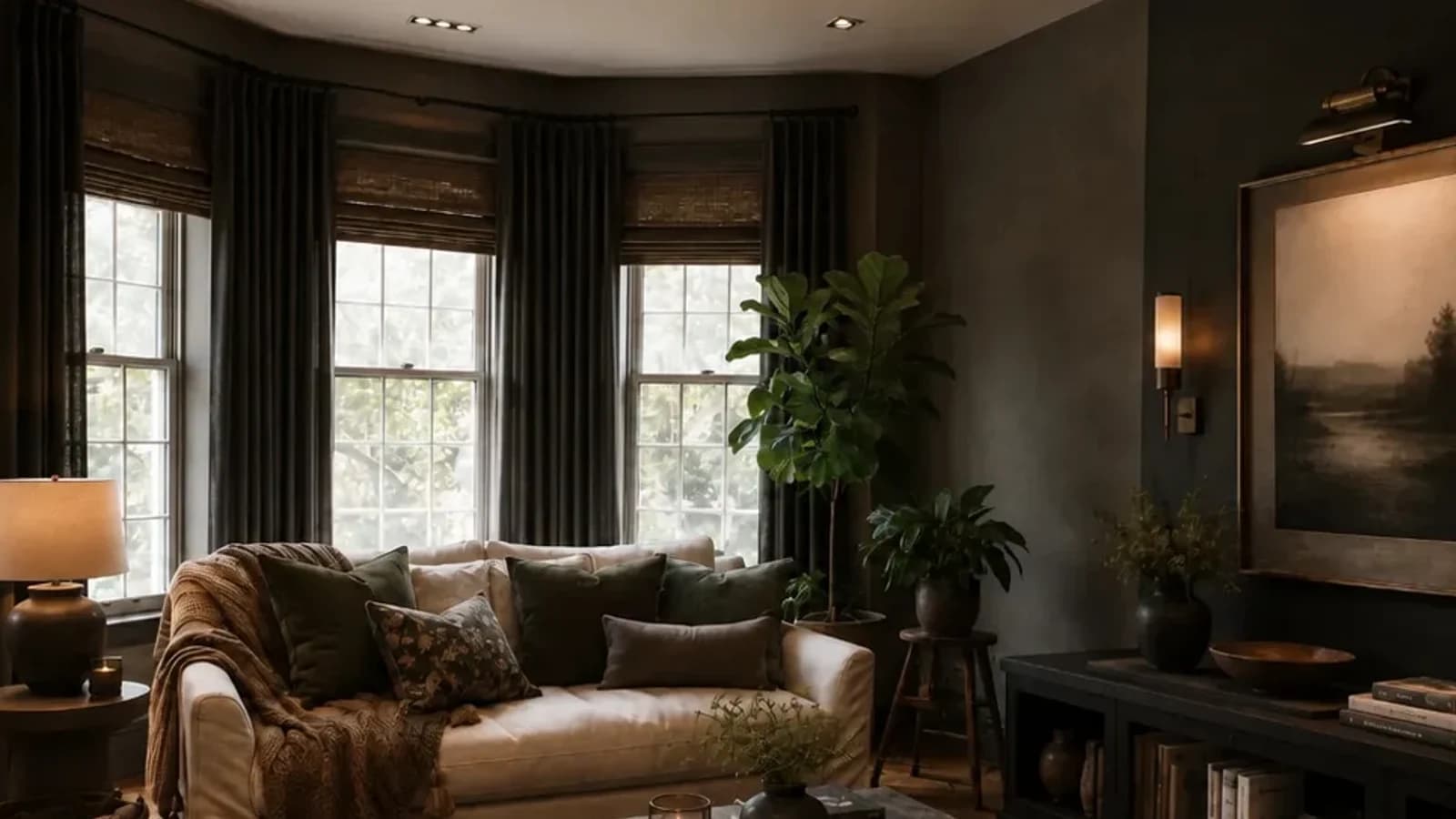
To redesign a living room around an existing sofa, treat the sofa as a fixed anchor rather than a problem to disguise. Record its undertone, material, silhouette, size, and position; solve the layout and rug first; then choose tables, chairs, lighting, art, and pillows that connect back to it. Preview the layers together before buying, but approve the real room with measurements, samples, current product details, and safety checks.
| Layer | Question to answer | What to verify |
|---|---|---|
| Sofa | What color, undertone, material, and visual weight must the room support? | Condition, dimensions, true color in the room |
| Layout | Where does the sofa serve the room best? | Doors, focal point, walking paths, outlets |
| Rug | What grounds the seating group without blending into the sofa? | Measured coverage, pile, care, samples |
| Tables and chairs | What adds function and balance? | Footprints, reach, clearance, delivery |
| Lighting | Where does the room need ambient, task, and accent light? | Outlets, glare, wiring, fixture scale |
| Art and textiles | Which colors and shapes make the sofa feel intentional? | Physical swatches, mounting, care |
1. Read the sofa before choosing a style
Photograph the sofa in daylight and ordinary evening light. Record the upholstery color, undertone, texture, leg finish, arm shape, back height, cushion structure, and overall visual weight. A low, tailored sofa asks for a different balance than a deep slipcovered one. Note wear, fading, pet needs, and cleaning limits too; those practical facts should shape the new materials around it.
Undertone is a relationship, not a label you must diagnose perfectly. Place warm ivory, cool gray, olive, wood, and charcoal samples beside the sofa and look for the combinations that make both materials appear clean. If the upholstery changes character throughout the day, use a bridge palette with one warm neutral, one cooler balancing note, and a repeated natural material instead of forcing the room into a single temperature.
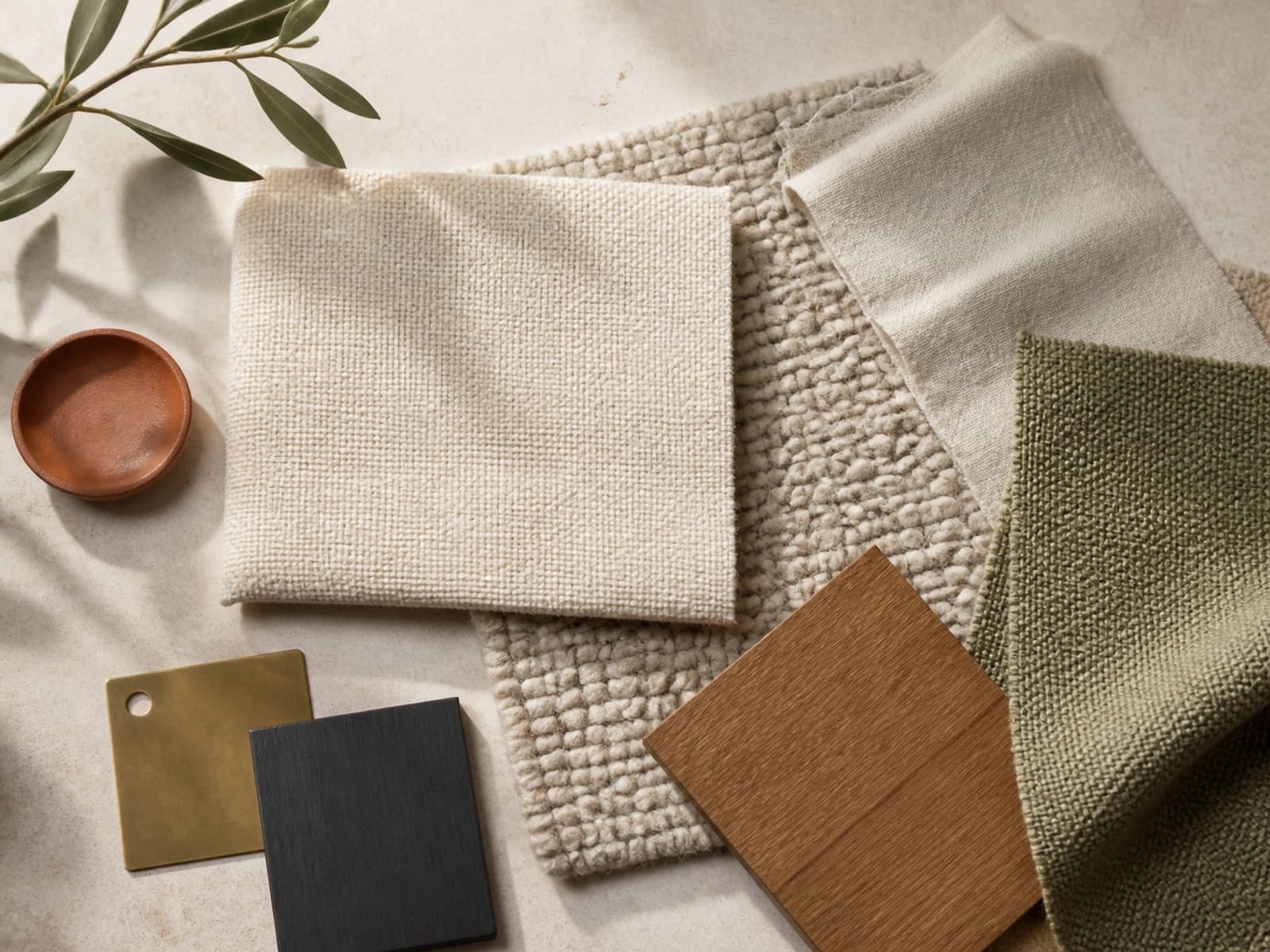
2. Solve the layout around how the room works
Decide whether the sofa should support conversation, television viewing, a fireplace, a window view, or a combination. Mark every doorway, door swing, vent, radiator, outlet, and route through the room. Then test the sofa in the position that best supports the primary use without making people cut through the seating group.
Use painter's tape or paper templates to mark the rug, tables, and proposed chair footprints. Sit in every seat, walk each route, open doors and drawers, and check the sightline to the focal point. A rendering can compare compositions, but it cannot certify a passage or reveal a hidden obstruction.
For the broader photo-to-layout sequence, use the AI living room design from a photo guide. This sofa-first guide assumes the sofa is already the non-negotiable anchor.
3. Choose the rug as the bridge
The rug should connect the sofa to the floor and the rest of the seating group. If the sofa and floor are similar in value, create separation with a lighter, darker, or more clearly patterned rug. If the sofa already has strong color or texture, let the rug carry quieter variation. Repeat a sofa-adjacent tone in a small part of the rug rather than searching for an exact match.
Size the rug for the seating arrangement, not for an empty patch of floor. Tape the likely boundaries and check whether the sofa and chairs feel connected, whether the exposed floor looks intentional, and whether doors can operate. Product photography can shift color, so obtain a sample or use a returnable option before committing.
4. Add tables that contrast with the sofa's shape
Let the sofa suggest the table geometry without dictating it. A long blocky sofa often benefits from an oval or round table that softens the center; a curved sofa may benefit from a quieter rectangular or nested form. Repeat one established finish—perhaps the oak, aged brass, or charcoal from the palette—so the table feels connected rather than randomly introduced.
Check the real table height against the sofa seat and arms, then test the footprint with a template. Make sure seated people can set down a drink without blocking the main path. Confirm weight, edge profile, care, delivery access, assembly, and current return terms rather than trying to identify a generated table.
5. Choose chairs by role and visual weight
Accent chairs do not need to match the sofa. Give each one a job: frequent conversation seat, occasional pull-up seat, reading chair, or compact swivel for two focal points. Then balance the sofa's mass. A deep upholstered sofa can work with airier wood-frame chairs; a visually light sofa can support one more substantial chair.
Connect the chairs by repeating one element already in the room: a rug color, sofa undertone, wood species, metal finish, or rounded line. Avoid repeating everything. A coordinated room usually has controlled variation rather than a purchased-as-a-set look.
6. Layer lighting before finishing the decor
Plan ambient light for the whole room, task light for reading or work, and accent light for art, shelves, or texture. Map existing ceiling points and outlets before choosing fixtures. A plug-in floor or table lamp can solve a dark seat without assuming new wiring; permanent electrical work needs appropriate professional review.
Keep lamp scale in conversation with the sofa, shield bulbs from direct seated sightlines, and test bulb appearance against the upholstery, rug, and wall samples at night. Consistency matters more than chasing a single technical label: the layers should make faces, materials, and pathways comfortable without flattening the room.
7. Use art, curtains, and pillows to distribute the palette
Art above or near the sofa should feel related to its visual width and the wall around it; test the full outline with paper before mounting. Curtains can repeat the wall for quiet continuity or add gentle contrast, but they still need to operate around windows, radiators, and furniture. Check mounting conditions before treating any preview as feasible.
Pillows are the final bridge, not the starting palette. Pull two or three established notes from the rug, art, and chair materials, vary texture and scale, and leave enough usable seat space. If the room only works after adding many small accents, return to the rug, table, or lighting layer—the larger relationships may still be unresolved.
8. Audit a before-and-after with the exact sofa preserved
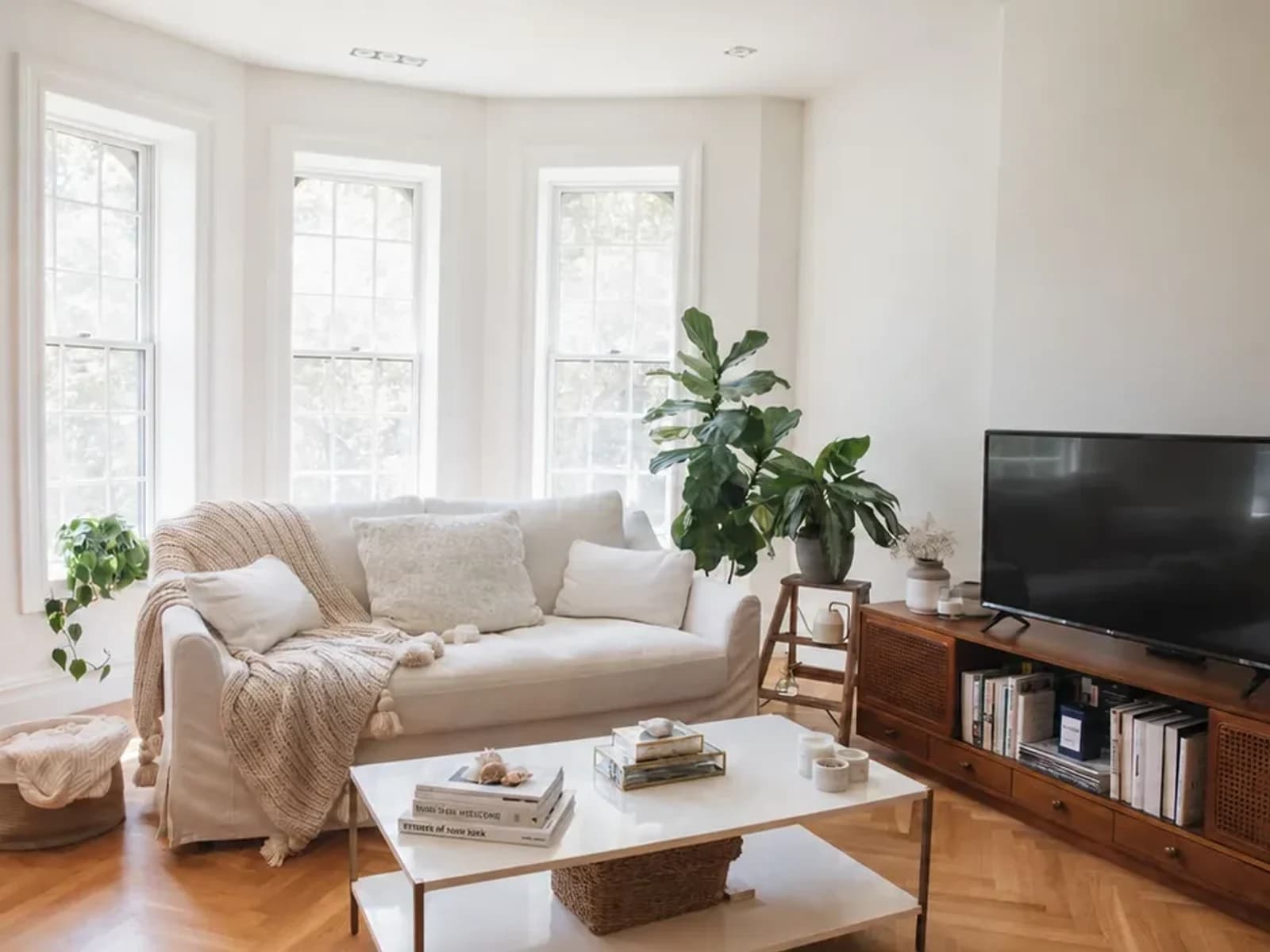 before
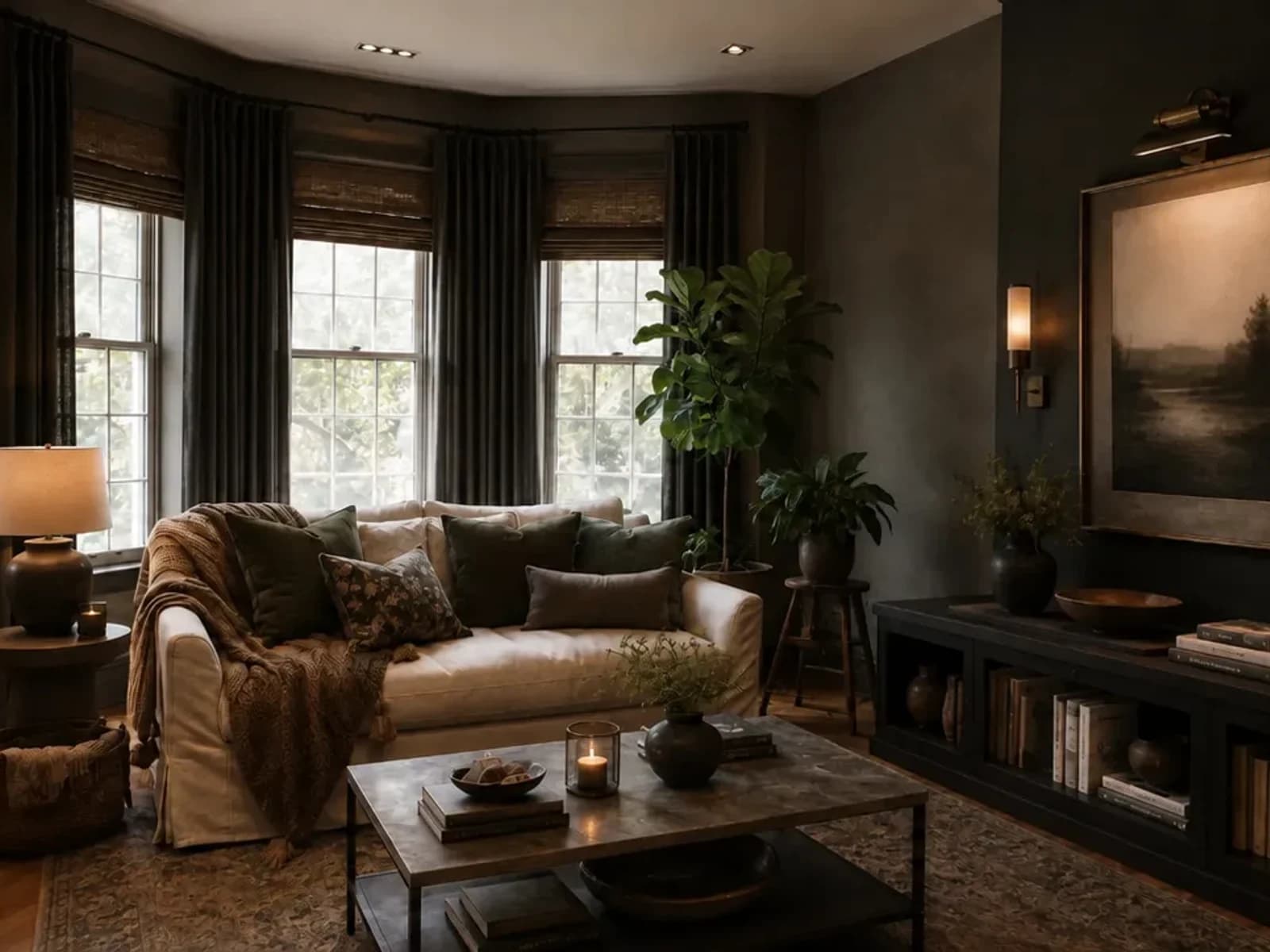 after
afterWhat stayed
The cream slipcovered sofa, bay-window rhythm, wood floor, television-wall relationship, room shell, and viewpoint remain recognizable. Keeping those anchors visible makes this a useful redesign comparison rather than a picture of an unrelated room.
What changed
The concept tests deeper walls and window treatments, a warmer grounding rug, revised tables, layered lighting, art, pillows, and restrained decor. These layers make the same sofa feel more integrated; they are visual proposals rather than evidence of purchased products or finished work.
What to verify
Compare the sofa's visible shape, color, scale, position, and orientation with the source. Then measure rug coverage, table and chair footprints, walking paths, windows, delivery access, and outlet locations. Test paint and material samples in the actual light, confirm current product specifications and returns, and obtain qualified review for mounting, electrical, fireplace, or construction work.
Where children live or visit, follow current U.S. Consumer Product Safety Commission tip-over guidance for televisions and furniture; a generated image cannot assess anchoring or wall construction.
If several pieces—not only the sofa—must remain, use the full workflow for keeping existing furniture in an AI redesign.
A reusable sofa-first prompt
For shorter first-pass and correction language, adapt the AI room design prompt library. Change one category per revision so you can tell what improved.
Shop in dependency order
- Measure and photograph the sofa, room shell, focal point, and circulation constraints.
- Approve the layout and rug footprint with tape or paper templates.
- Test rug, upholstery, paint, wood, metal, and curtain samples beside the sofa.
- Confirm chair and table footprints, heights, comfort, delivery, assembly, and returns.
- Map lighting to actual outlets and qualified electrical options.
- Choose art, curtains, and pillows only after the larger layers are stable.
- Save product pages and receipts; recheck dimensions and stock immediately before ordering.
Use the companion guide on AI interior design accuracy to separate a persuasive image from verified scale, products, materials, and feasibility.
Common sofa-first mistakes
- Choosing pillows before resolving the rug and layout.
- Trying to match the sofa exactly instead of building a related palette.
- Buying matching chairs without considering function or visual weight.
- Using a small rug that leaves the seating pieces visually disconnected.
- Selecting tables from appearance alone without templating the footprint.
- Adding decorative lamps without checking where reading and pathway light are needed.
- Assuming the generated sofa, colors, products, or clearances are exact.
Frequently Asked Questions
Make the sofa look chosen, not tolerated
A successful living-room redesign does not hide the existing sofa. It gives the sofa a clear role, connects it to the rug and seating group, balances its shape with tables and chairs, and repeats its palette through light, art, and textiles. Work from the largest dependency to the smallest, preview the whole direction, then measure and sample every real decision.
FAQ
Common questions
- Where should I start when decorating around an existing sofa?
- Start by recording the sofa's visible color, undertone, material, silhouette, size, position, and orientation. Then solve the room layout and rug before choosing tables, chairs, lighting, art, and pillows.
- Should a living room rug be lighter or darker than the sofa?
- Either can work. Choose enough contrast to separate the sofa from the floor, then repeat one or two related tones elsewhere. Test real samples beside the sofa because screen colors and generated images are not reliable material matches.
- Do accent chairs need to match the sofa?
- No. Chairs can contrast in shape, material, or color while repeating part of the room's palette. Match visual weight and function rather than buying a duplicate set.
- What if I cannot identify the sofa's undertone?
- Compare removable neutral fabric or paint samples beside it in daylight and evening light. If it still shifts, use a bridge palette containing both warm and cool notes, then confirm the combination with physical samples.
- Can an AI living room preview keep my exact sofa?
- It can use the sofa as a preservation constraint, but every result should be compared with the source photo. Verify the sofa's shape, color, scale, position, and orientation, and treat the preview as a concept rather than proof of exact fit or products.
Keep exploring
Related reading
Living Room Ideas
Fall 2026 Living Room Ideas: 9 Warm, Collected Updates to Preview First
Living Room Ideas
Small Living Room Ideas That Do Not Require New Furniture
Living Room Ideas
How to Make a Gray Couch Feel Warm, Intentional, and Current
Living Room Ideas
What Size Rug Does Your Living Room Need? A Visual Guide
AI Room Design
AI Living Room Design From a Photo: A Practical Step-by-Step Guide
AI Room Design
Can AI Redesign a Room While Keeping Your Existing Furniture?
AI Room Design
30 AI Room Design Prompts for More Realistic, Useful Results
AI Room Design
How Accurate Is AI Interior Design? What to Trust and What to Verify
Try Room Foundry
See a new living room without losing the sofa.
Upload your room, identify the sofa as a keep item, and preview the rug, palette, lighting, and surrounding furniture together.
Preview your living room free