Small Living Room Ideas That Do Not Require New Furniture
Make a small living room work better without buying furniture. Use a practical sequence for layout, clutter, lighting, textiles, sightlines, and scale.
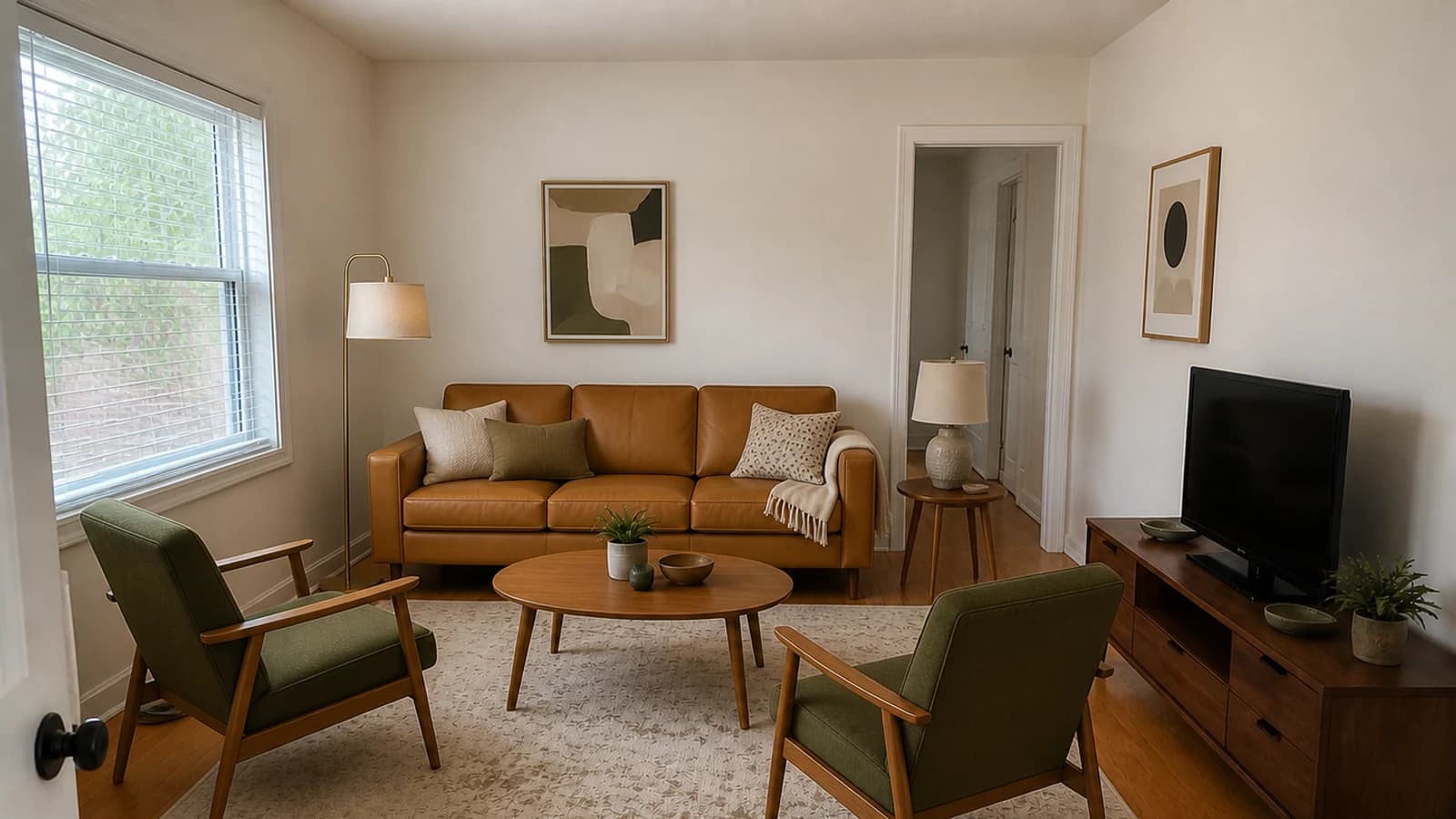
To improve a small living room without buying furniture, solve function and movement before style. Decide the room's primary job, clear the route people actually use, remove temporary clutter, rank every existing piece by usefulness, and test one arrangement at a time. Then restyle the rug, lamps, pillows, throw, art, and plants you already own. A better layout may not create more square footage, but it can make the same room easier to enter, use, see across, and reset.
| Problem | Try first | How to verify |
|---|---|---|
| The room feels blocked | Protect one direct route between openings | Walk it carrying ordinary household items |
| Furniture feels crowded | Change angle or orientation before removing a piece | Open doors, drawers, windows, and recliners |
| The room looks cluttered | Clear surfaces and regroup existing decor | Photograph from each entrance |
| The seating feels disconnected | Bring seats into one shared rug or table relationship | Sit in every seat and test conversation |
| The room feels dim | Move existing lamps to useful seats and dark corners | Use the room in daylight and after dark |
| Everything looks small | Use fewer, larger visual groupings | Check the room from the doorway |
1. Give the room one primary job
A compact room becomes difficult when every possible activity has equal priority. Choose the job that matters most on an ordinary day: conversation, television, reading, play, or a flexible mix. Secondary uses can remain, but they should not control the entire layout. Write down the seats, surfaces, light, screen relationship, and storage access the primary job actually needs.
This prevents decorative rearranging that never improves function. If television viewing is primary, test seated sightlines and controls. If conversation is primary, turn chairs toward people rather than leaving every seat parallel to a wall. If the room is a pass-through, circulation may be the strongest fixed constraint.
2. Map the route before moving the sofa
Sketch the room and mark every entrance, door swing, window, vent, outlet, radiator, fireplace, built-in, and path to an adjacent room. Trace the route people use rather than the route you wish they used. Remove baskets, small tables, cords, or decor from that path before shifting major furniture; a minor obstruction can make the whole arrangement feel wrong.
Do not rely on a universal clearance number. Household needs, mobility devices, door operation, furniture movement, and local conditions differ. Walk the proposed route while carrying laundry, a tray, or another object typical of your home. Measure any tight point and keep exits, heat sources, vents, and controls usable.
3. Edit clutter without confusing editing with shopping
Start with temporary clutter: mail, packaging, cords, empty vessels, old magazines, duplicate remotes, and objects waiting to leave the room. Return items to the places where they are used. Clear the coffee table and media console completely, then restore only what supports a function or one intentional visual group. This shows whether the problem is the furniture or the layer sitting on top of it.
For furniture you are unsure about, run a reversible trial. Move one side table, chair, floor lamp, or basket to another room for several days and note what becomes easier or harder. Do not throw away a useful piece because one arrangement failed. The point is to expose dependencies before making a permanent decision.
4. Inventory the furniture by function and visual weight
List every piece and its job: seat, drink surface, task light, media storage, rug, plant, or display. Record approximate dimensions, door or drawer operation, cord needs, and whether the item is visually solid or open. A dark cabinet and a leggy chair can occupy similar floor area but interrupt the sightline differently. Use this inventory to decide which pieces can trade positions without losing function.
When several exact pieces must remain, use the constraint hierarchy in the guide to keep existing furniture in an AI redesign.
5. Test one variable at a time
Photograph the starting room from every entrance. Move the largest anchor first, usually the sofa, then place the other seats, rug, tables, media console, and lamps in that order. Tape the furniture outline before lifting anything heavy. After each change, take the same photographs again. Comparing stable views is more reliable than trying to remember whether the room felt better two layouts ago.
Avoid changing the layout, rug orientation, art, pillows, and lighting simultaneously. If the new version fails, you will not know why. Solve circulation and seating first, then make a second pass for visual balance.
6. Compare two practical arrangements with the same inventory
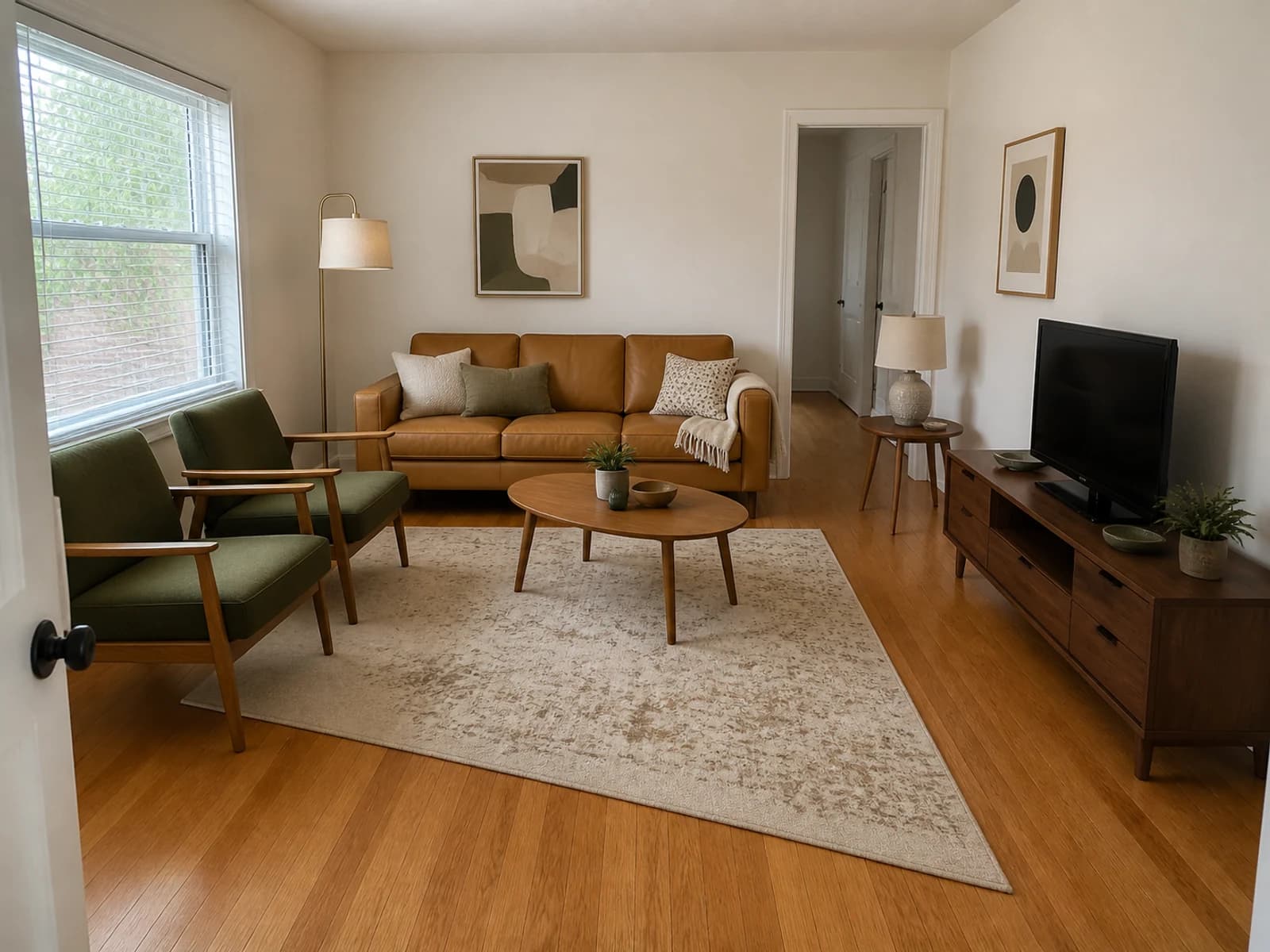
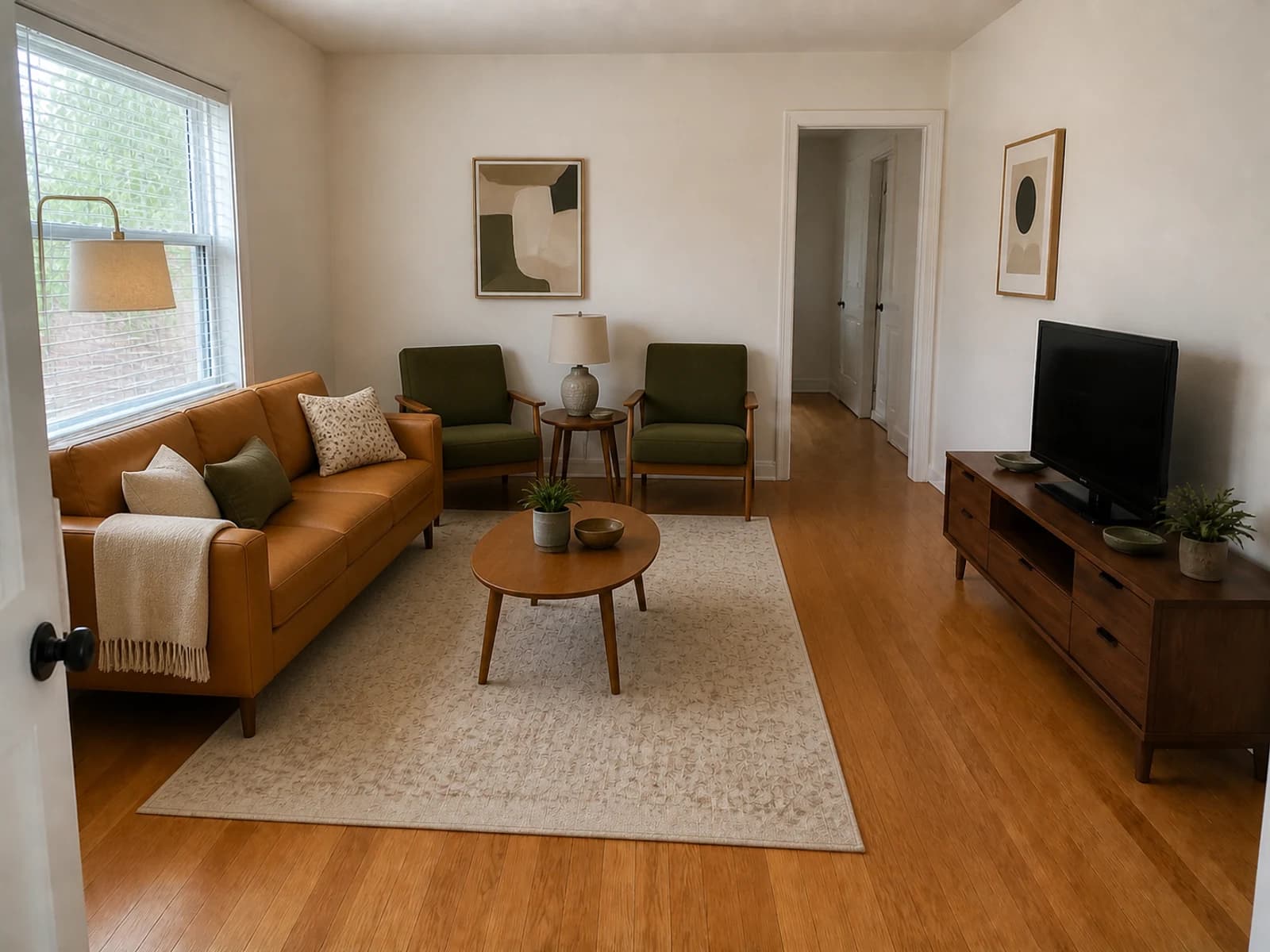
The controlled inventory includes one camel sofa, two matching olive chairs, an oval coffee table, round side table, rug, walnut media console and television, floor and table lamps, two artworks, a plant, four pillows, a throw, and small surface decor. The window, rear doorway, walls, floor, room proportions, and camera remain stable. These are editorial illustrations, not Room Foundry results or measured plans.
Arrangement A: conversation first
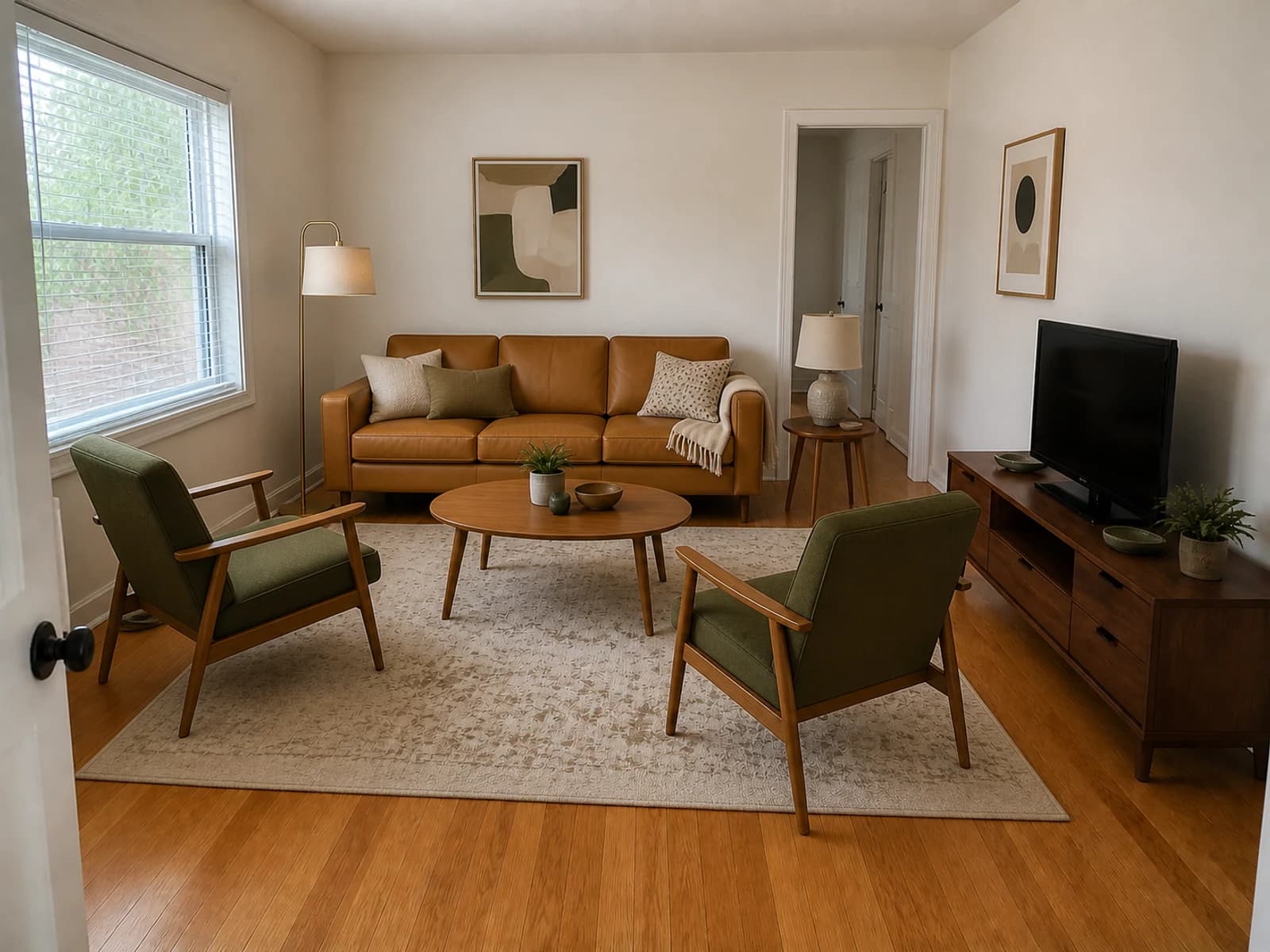
The sofa remains on the rear wall while the chairs turn inward to form a clear group around the existing table and rug. Lamps move to the seats they serve, and small decor is consolidated. This arrangement favors face-to-face use, but the front chair positions and right-side route must be taped and walked in the real room before approval.
Arrangement B: television and open route
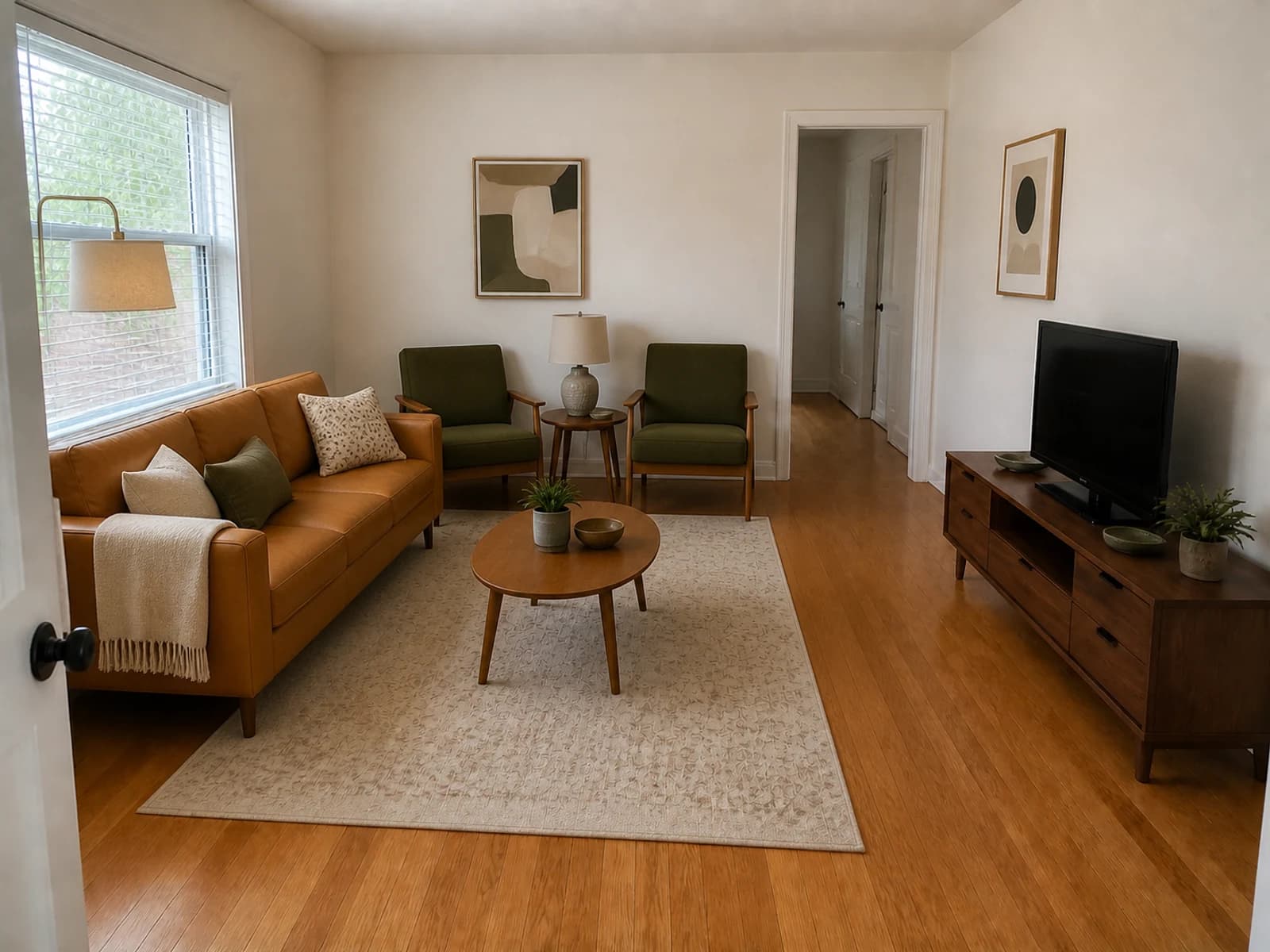
The sofa rotates beneath the window to face the existing television. The two chairs move to the rear wall, and the rug and coffee table turn with the seating group. The right side reads as a more direct passage. In reality, window access, daylight, glare, sofa depth, radiator or vent conditions, door operation, and viewing comfort all require physical testing.
What stayed, changed, and still needs verification
Every named furniture, lighting, textile, art, and decor category stays. Only position, orientation, surface editing, and styling change. Compare the renderings for functional ideas, not exact scale. Measure each footprint; check furniture stability, cords, outlet reach, television safety, window operation, heat sources, paths, and access. Where children live or visit, follow current CPSC guidance for securing relevant furniture and televisions.
7. Reuse the rug to define the seating zone
Before replacing a rug, test its orientation and relationship to the seats. Rotating it may connect more front legs or align the long dimension with the room's useful axis. Center the rug on the furniture group rather than automatically centering it on the walls. If the existing rug cannot support any stable arrangement, record that limitation for a future plan instead of making an unmeasured impulse purchase.
Use the living-room rug size guide to measure all-legs, front-legs, and sectional relationships when the current rug eventually needs review.
8. Move existing lighting to where the room needs it
A lamp can be present and still fail the room. Put the floor lamp beside a seat used for reading, move the table lamp where its pool of light balances the opposite side, and keep shades out of seated sightlines. Use available outlets safely, keep cords out of paths, follow fixture and bulb instructions, and do not improvise permanent electrical work. Evaluate the arrangement after sunset, not only in a bright daytime photograph.
9. Restyle textiles instead of adding more
Collect every pillow and throw already in the room. Remove them, then return only the combination that supports the palette and leaves the seats usable. Move the throw to the chair or sofa where it is actually used. Straighten, rotate, or temporarily remove the rug only after documenting its original position. A small room benefits from a few legible textile relationships more than a large number of disconnected accents.
10. Protect sightlines and group visual weight
Stand at each entrance and look toward the farthest useful point. Keep the tallest or most visually solid existing pieces from stacking in one narrow view when another safe position works. Consolidate art into one clear wall composition and surface decor into a few groups. This does not mean every item must be low or pale; it means the eye can understand the room without reading many isolated objects.
If the sofa is the difficult anchor, coordinate this sequence with the guide to redesign a living room around an existing sofa.
A no-shopping layout prompt
For the complete photo, constraint, refinement, and shopping handoff, use the AI living room design from a photo guide.
A 48-hour test before you shop
- Photograph the starting room from each entrance.
- Define one primary use and mark the route between openings.
- Clear temporary clutter and reset surfaces.
- Inventory every furniture, lighting, textile, art, and decor piece.
- Tape the largest proposed footprints before moving furniture.
- Test one layout variable at a time and repeat the photos.
- Open doors, drawers, windows, and moving furniture parts.
- Sit in every seat and test table reach, conversation, and screen view.
- Use the room in daylight and after dark.
- Live with the best arrangement for 48 hours before writing a shopping list.
Frequently Asked Questions
Make the existing room prove what it needs
A small living room should earn a shopping list through use. Define its job, protect the real route, clear temporary clutter, understand every existing piece, and compare controlled arrangements. Then rebalance the rug, lamps, textiles, art, and decor you already own. After living with the strongest version, any remaining problem becomes specific: a route that still pinches, a lamp that cannot reach, or a rug that cannot connect the seats. That is a better basis for a future purchase than buying first and solving the layout later.
FAQ
Common questions
- How can I make a small living room look better without buying furniture?
- Start by defining the room's primary job and clearing its main route. Remove temporary clutter, rank every existing piece by function, test one arrangement at a time, then restyle the rug, lamps, pillows, throw, art, and plants you already own.
- Should all the furniture in a small living room go against the walls?
- Not automatically. A wall-backed sofa may protect circulation, while a slightly floated chair can improve conversation or define a route. Test both with the exact room and furniture rather than following one universal placement rule.
- What should I remove first from a cramped living room?
- Remove temporary clutter and objects that do not support the room's primary use first. Do not discard furniture immediately. Move questionable pieces to another room for a trial period, then evaluate function, circulation, and storage before deciding.
- How do I know whether a new living room arrangement works?
- Walk every route, open doors and drawers, sit in each seat, reach the tables, view the television if relevant, operate windows, and use the room through an ordinary day. Measure any tight relationship instead of judging it from a rendering.
- Can an AI room preview rearrange my existing furniture exactly?
- A preview can compare layout directions while using existing pieces as constraints, but it may drift in shape, scale, or placement. Compare each item with the source photo and verify the arrangement with measurements and physical testing.
Keep exploring
Related reading
Living Room Ideas
Fall 2026 Living Room Ideas: 9 Warm, Collected Updates to Preview First
Living Room Ideas
A Renter-Friendly Living Room Makeover You Can Undo
Living Room Ideas
How to Redesign a Living Room Around an Existing Sofa
Living Room Ideas
What Size Rug Does Your Living Room Need? A Visual Guide
AI Room Design
AI Living Room Design From a Photo: A Practical Step-by-Step Guide
AI Room Design
Can AI Redesign a Room While Keeping Your Existing Furniture?
Try Room Foundry
Try a new layout before buying anything.
Upload your living room, keep every furniture piece, and compare a clearer arrangement using the room you already have.
Preview your living room free