See the Same Bedroom in Six Interior Design Styles
Compare one real bedroom in six distinct styles while the bed and shell stay fixed, then use the visual differences to choose a direction with confidence.
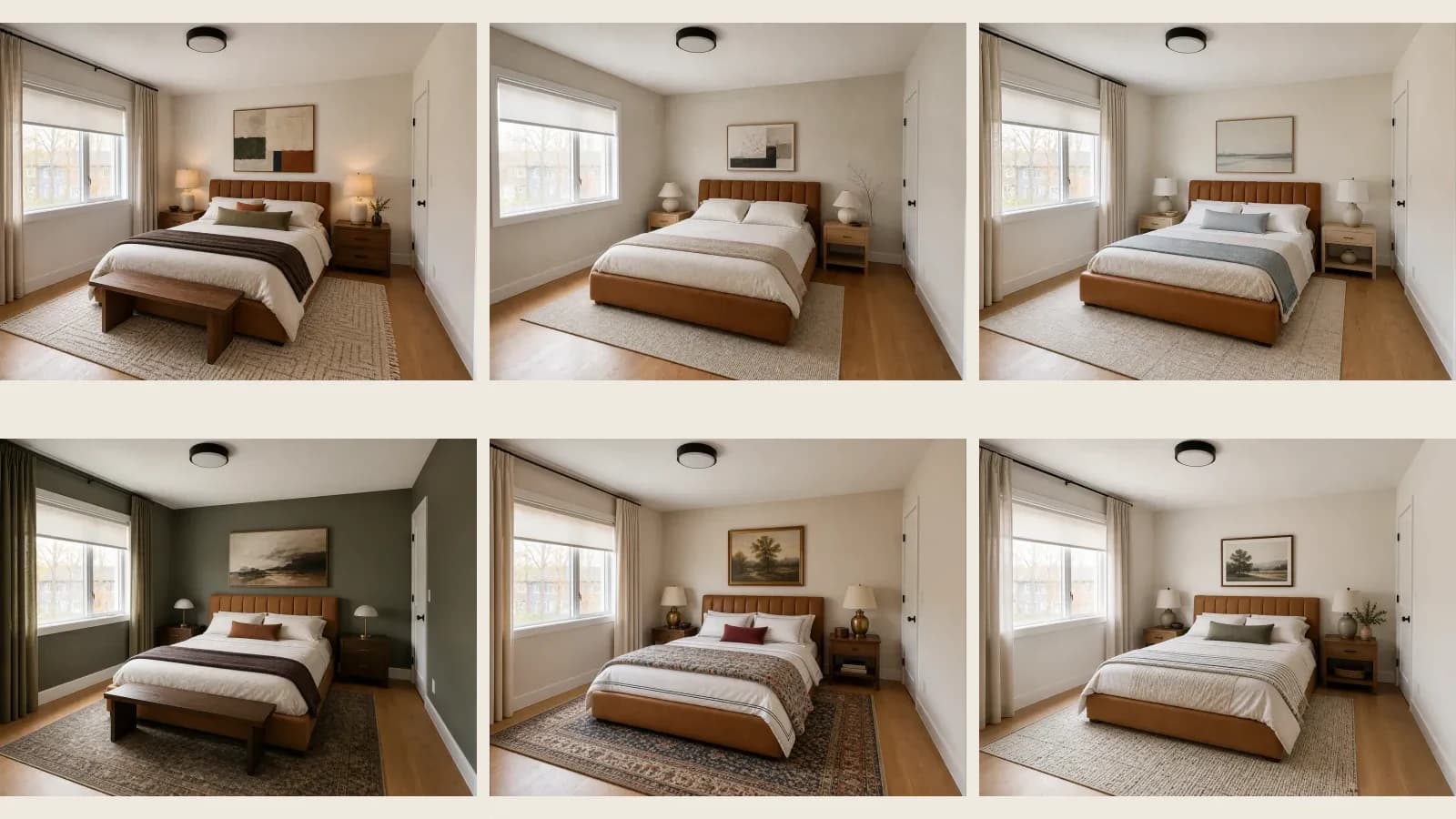
The same bedroom can look Warm Modern, Japandi, Coastal, Moody, Classic Traditional, or Modern Farmhouse without replacing its bed or changing its architecture. The real differences come from color value, wood tone, textile weight, pattern, lighting, art, and how much is left out. This controlled comparison keeps one camel bed and room shell fixed so you can judge the design language instead of being distracted by six unrelated spaces.
Six bedroom styles at a glance
| Style | Palette | Material signal | Pattern level | Best if you want |
|---|---|---|---|---|
| Warm Modern | Ivory, walnut, olive, rust, espresso | Natural grain plus sculptural ceramic | Low | Clean form with visible warmth |
| Japandi | Mushroom, oatmeal, pale oak, muted ink | Quiet grain, linen, handmade matte surfaces | Very low | Calm and reduction |
| Coastal | Shell white, flax, pale oak, mist blue | Airy linen, flatweave, ceramic | Low | Lightness without nautical props |
| Moody | Olive-charcoal, ivory, walnut, plum, rust | Tactile textiles, darker wood, restrained metal | Medium | Depth with readable contrast |
| Classic Traditional | Putty, camel, walnut, navy, oxblood | Polished wood, brass, framed art | Medium to high | Tailored pattern and collected character |
| Modern Farmhouse | Warm white, oatmeal, oak, forest, black | Cotton, linen, honest wood, handmade ceramic | Low to medium | Relaxed comfort with simple lines |
How this same-bedroom comparison was controlled
Every direction starts with the same underfinished bedroom. The camera, crop, wall and ceiling geometry, window and roller shade, rear door, oak floor, black flush ceiling light, camel channel bed, bed size, position, and orientation stay recognizable. The design edits are limited to wall color, curtains, bedding, nightstands, lamps, rug, art, and small accessories.
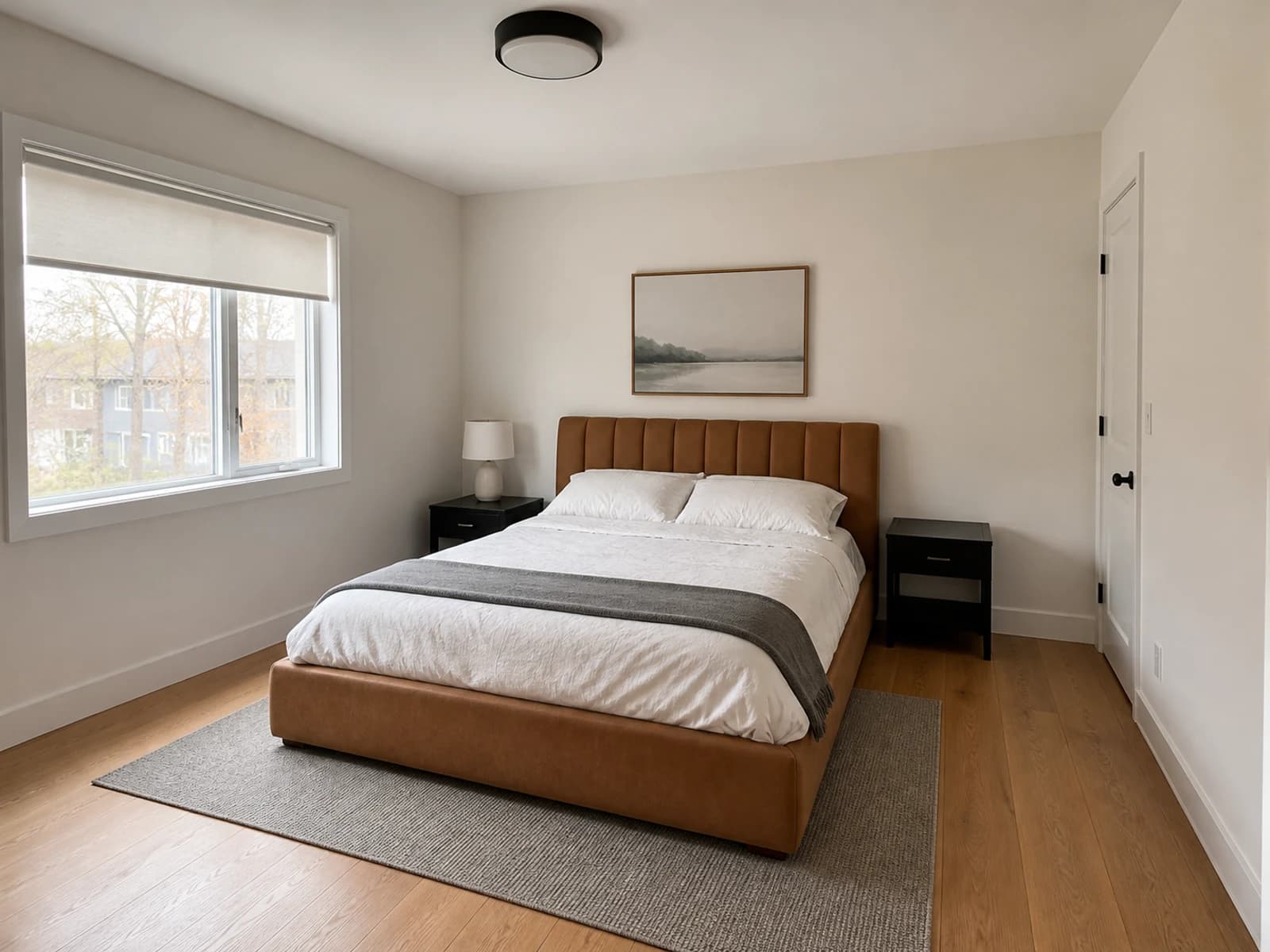
A 2026 Architectural Digest bedroom guide describes style through palette, material, texture, and furnishing choices across categories including modern, traditional, farmhouse, Japandi, and coastal. This comparison makes those distinctions easier to see by holding the room constant.
The same bedroom in six styles
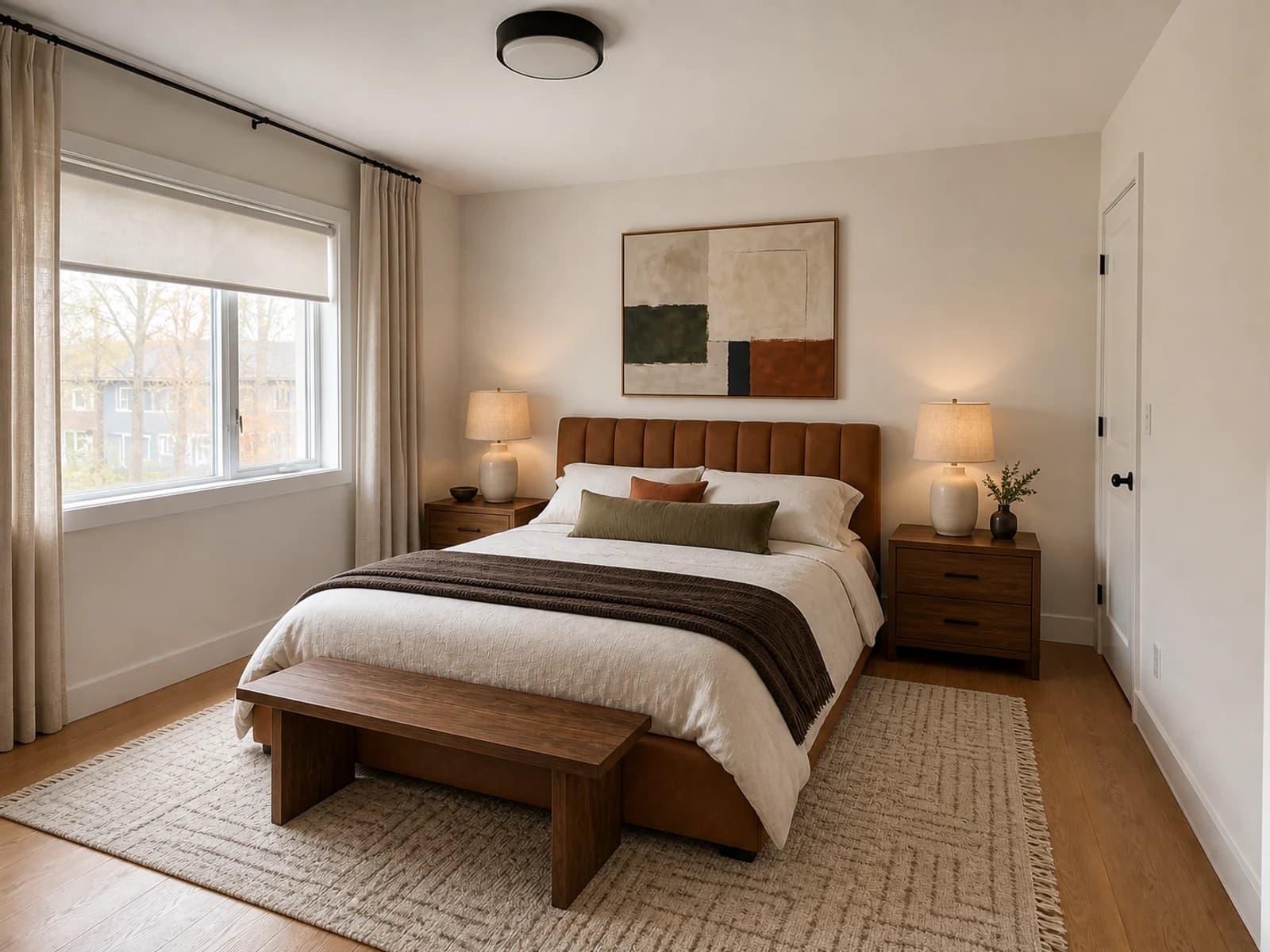
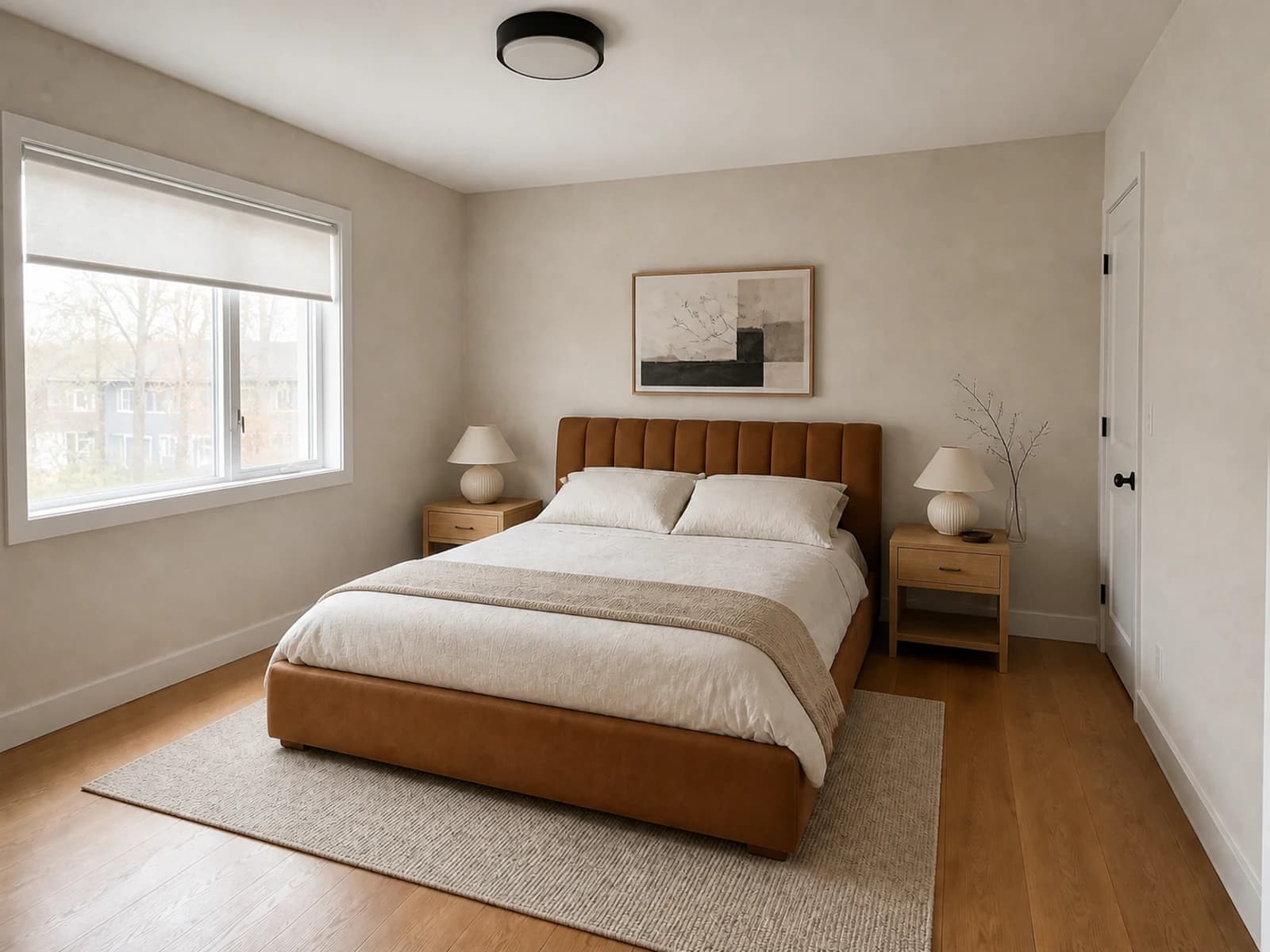
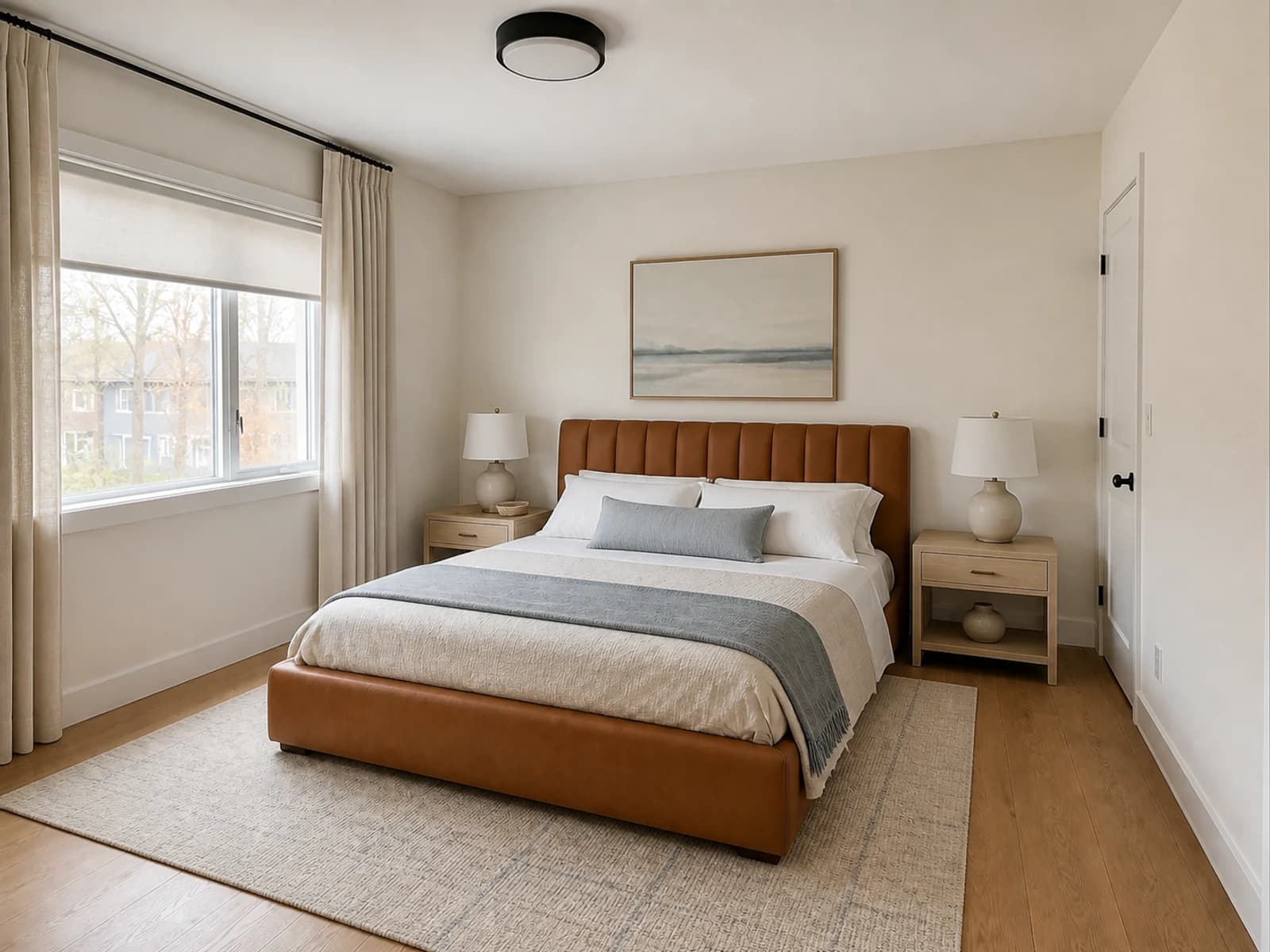
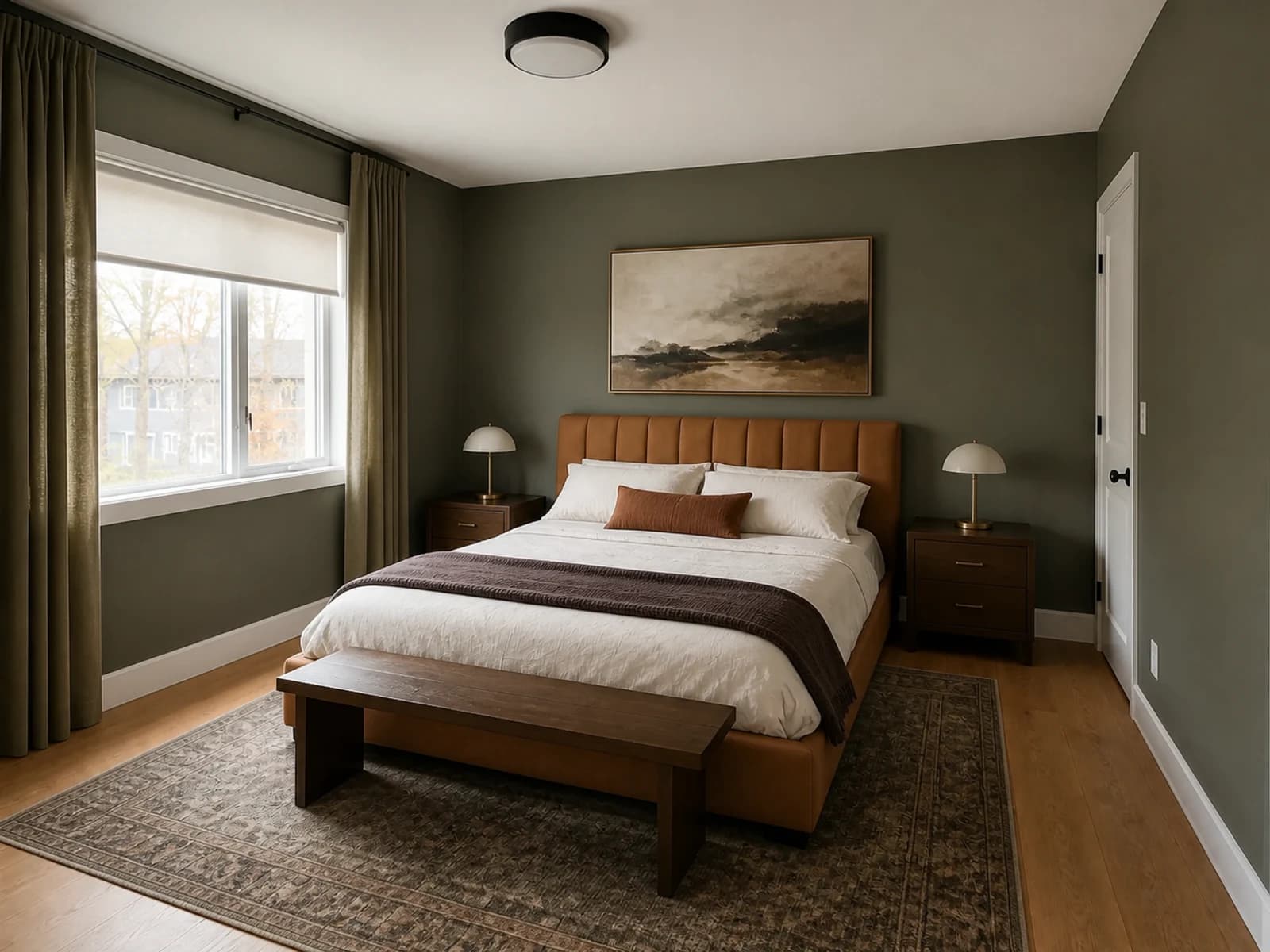
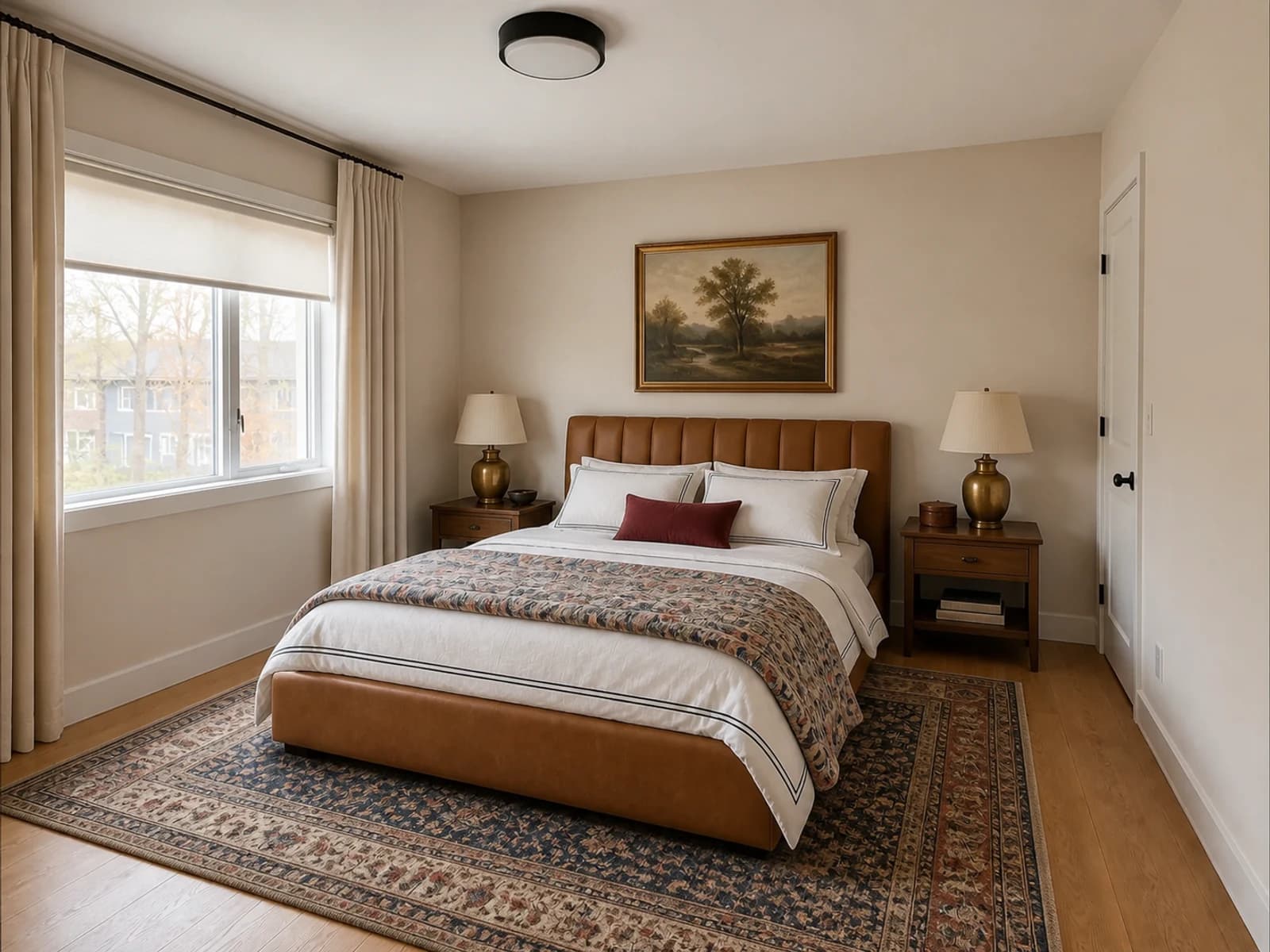
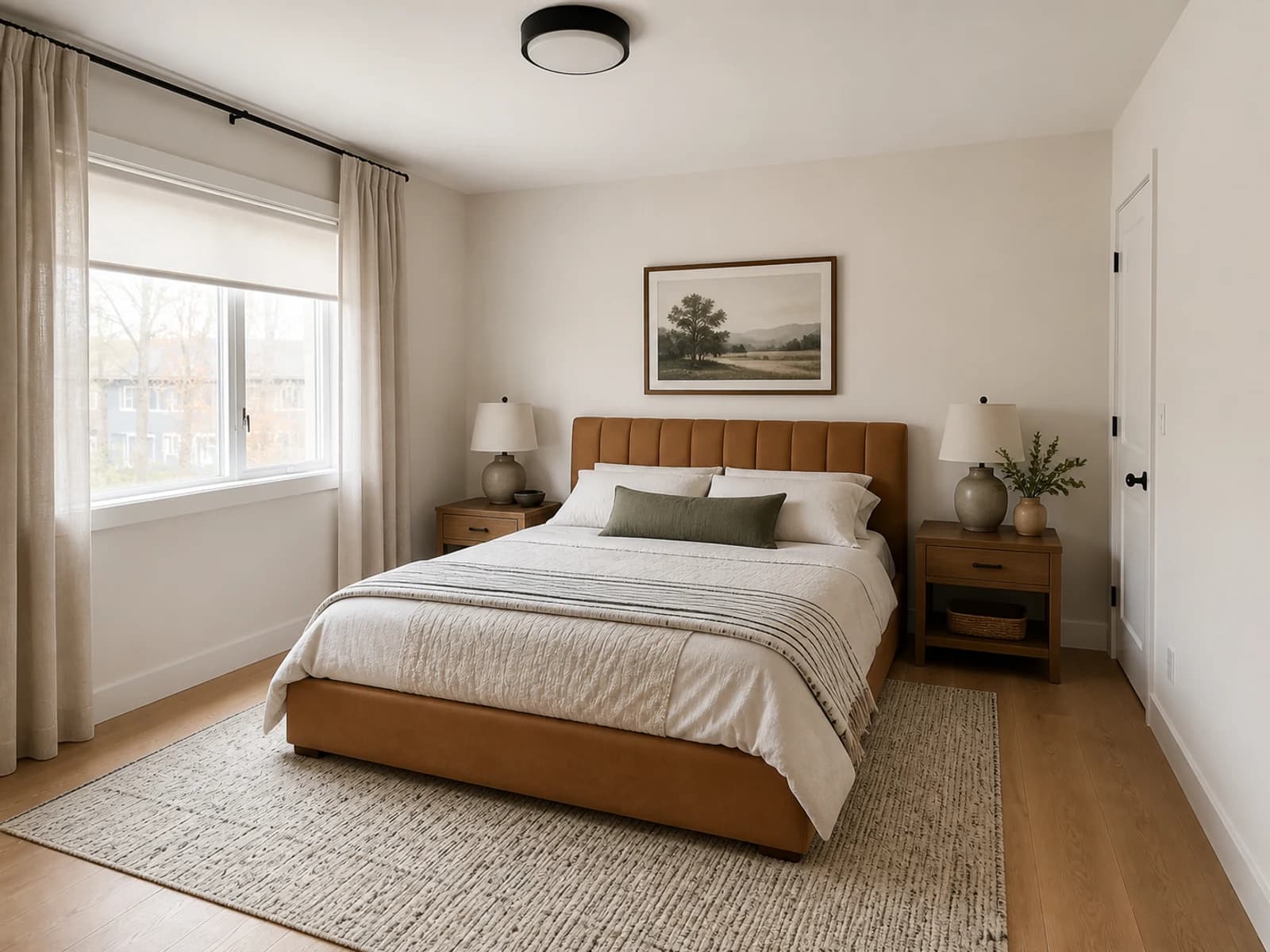
All six images are external editorial AI illustrations created for a controlled comparison. They are not verified Room Foundry-generated previews, identified products, measured plans, or completed installations.
1. Warm Modern: clean form with a stronger contrast structure
Warm Modern keeps the room visually edited but prevents it from becoming pale and flat. Walnut nightstands, an espresso throw, muted olive, one rust note, sculptural lamps, and a larger textured rug give the camel bed clear relationships. The shapes are simple; warmth comes from material and color temperature rather than decoration.
Use the full Warm Modern bedroom guide when you want to build the contrast, material, lighting, and bedding system in detail.
2. Japandi: less contrast, fewer objects, more attention to finish
Japandi reduces the visual range to mushroom, oatmeal, warm white, pale oak, and muted ink. The bed remains the darkest warm mass, while low-contrast linen, an edited rug, handmade-looking ceramic, and one asymmetrical artwork make surface and proportion more important. The danger is buying many beige accessories; restraint is part of the style, not an empty spot waiting to be filled.
The broader Japandi style guide explains its relationship to Japanese minimalism and Scandinavian warmth without treating either tradition as a shopping theme.
3. Coastal: airy texture with one muted water tone
Coastal lightens the bedside wood, keeps bedding tailored and warm white, and repeats mist blue in only a few places. Linen curtains, a quiet flatweave, matte ceramic, and horizon-like art imply openness without shells, anchors, rope, signs, or shiplap. Compared with Japandi, it is cooler, brighter, and slightly more relaxed at the window.
For the material roles and motif budget, use Coastal bedroom ideas without the clichés.
4. Moody: a deeper field with deliberate relief
Moody changes the wall from background to active color. Olive-charcoal surrounds the camel headboard, while ivory bedding preserves a light center and walnut, rust, plum, aged brass, and a darker rug create depth. The open window and readable shadow detail matter: making every layer near-black would erase the bed and make the comparison about darkness rather than design.
Use the light-balance checks in the Moody bedroom guide before committing to a deep paint direction.
5. Classic Traditional: pattern, polish, and a sense of time
Classic Traditional gives the same bed a more formal frame through walnut, aged brass, a vintage-inspired rug, bordered bedding, oxblood, muted navy, and substantial framed art. Pattern appears at more than one scale, but the palette stays controlled. It feels collected because materials and motifs suggest different ages; a glossy matching suite and excessive ornament would make it rigid instead.
6. Modern Farmhouse: relaxed utility without the signs
Modern Farmhouse combines simple case-piece lines with oatmeal textiles, medium oak, warm white, a fine stripe, muted forest green, handmade-looking ceramic, and restrained black hardware. It is softer and more casual than Warm Modern, but cleaner than rustic country. Shiplap, fake beams, barn doors, distressed matching furniture, and word signs are not required—and would be inventions in this fixed shell.
Which bedroom style is closest to yours?
- Choose Warm Modern if you like clean furniture but need stronger warm/cool and light/dark contrast.
- Choose Japandi if reduction, quiet material, and easy visual maintenance matter most.
- Choose Coastal if you want daylight, pale grain, and a soft cool accent without a theme.
- Choose Moody if deep color feels restorative and you can preserve useful light and relief.
- Choose Classic Traditional if pattern, richer wood, framed art, and a collected look feel natural.
- Choose Modern Farmhouse if you prefer relaxed cotton, simple wood, familiar pattern, and restrained rustic character.
If two directions appeal, choose one as the structure and borrow one controlled element from the other. Japandi can take Coastal's mist blue; Warm Modern can take Traditional's vintage rug; Modern Farmhouse can take Moody's forest wall. Connect the mix through a shared undertone, scale, material, or repeated color rather than collecting every recognizable symbol.
What stayed, what changed, and what still needs verification
Stayed: the camel upholstered bed, room shell, window and shade, rear door, ceiling, trim, oak floor, flush ceiling light, camera relationship, bed position, and circulation remain recognizable across all six directions.
Changed: wall value, curtain treatment, bedding palette and pattern, rug weight, nightstand wood and silhouette, lamp shape and finish, art language, and the number and character of small objects.
Verify: measure the bed, rug, nightstands, lamps, curtains, door and window operation, walking paths, outlets, controls, delivery route, and mounting. Test real paint, wood, textile, metal, and rug samples in the room's daylight and evening light. Confirm current products, materials, care, stock, returns, anchoring, electrical work, safety, and installation separately.
When the bed must remain, use the dependency order in how to redesign a bedroom without replacing the bed before styling the flexible layers.
A reusable prompt for comparing bedroom styles
Common comparison mistakes
- Comparing six unrelated rooms instead of holding architecture, camera, and keep-items constant.
- Changing the bed in every image, then mistaking a furniture preference for a style preference.
- Using different lighting and exposure to make one direction look automatically better.
- Reducing a style to a prop: shells for Coastal, slats for Japandi, black paint for Moody, or signs for Farmhouse.
- Assuming a generated nightstand, rug, lamp, or artwork is a real product with confirmed dimensions.
- Buying the whole image instead of extracting a palette, material hierarchy, and two or three useful moves.
Frequently Asked Questions
Choose the system, not the label
A style name is useful only when it helps you make consistent decisions. Look past the label and notice which version gives your existing bed the right contrast, which material weight suits the light, how much pattern you want to maintain, and what you are willing to leave out. Preview the direction in your room, audit every fixed feature, and turn the surviving ideas into a measured, sampled, verified plan.
FAQ
Common questions
- What are the six bedroom styles in this comparison?
- The six directions are Warm Modern, Japandi, Coastal, Moody, Classic Traditional, and Modern Farmhouse. Every version begins with the same room shell, camel upholstered bed, window, door, floor, ceiling fixture, camera angle, and bed position.
- How do I choose an interior design style for my bedroom?
- Compare how each direction handles your fixed bed, floor, daylight, and practical needs. Choose the version whose color contrast, material weight, pattern level, and maintenance feel natural to live with—not merely the most dramatic image.
- Can I mix two bedroom styles?
- Yes. Pick one dominant structure, then borrow one or two compatible elements from another style. Shared color temperature, wood undertone, scale, or material can connect the mix without turning it into a collection of unrelated objects.
- Do I have to replace my bed to change bedroom styles?
- No. Treat the bed's color, material, silhouette, size, position, and orientation as fixed. Bedding, rug, nightstands, lighting, curtains, art, wall color, and editing can change the style around it.
- Can an AI bedroom image confirm what will fit?
- No. A generated concept can help compare visual directions, but it cannot prove dimensions, clearances, product identity, material appearance, stock, cost, delivery, mounting, electrical work, or installation feasibility. Verify each physical decision separately.
Keep exploring
Related reading
Bedroom Ideas
Warm Modern Bedroom Ideas That Feel Elevated, Not Beige
Interior Design Styles
Japandi Style: How to Create a Calm, Minimal, and Warm Home
Bedroom Ideas
Coastal Bedroom Ideas Without the Beach-House Clichés
Bedroom Ideas
Moody Bedroom Ideas That Feel Rich, Not Dark and Heavy
Bedroom Ideas
How to Redesign a Bedroom Without Replacing the Bed
Try Room Foundry
Compare a style in the bedroom you actually have.
Upload your bedroom, identify the bed and fixed features that must stay, then test a direction without losing the room you recognize.
See a style in your bedroom