Coastal Bedroom Ideas Without the Beach-House Clichés
Create a refined coastal bedroom with airy texture, pale wood, muted blue, tailored bedding, and a practical plan that avoids seaside clichés at home.
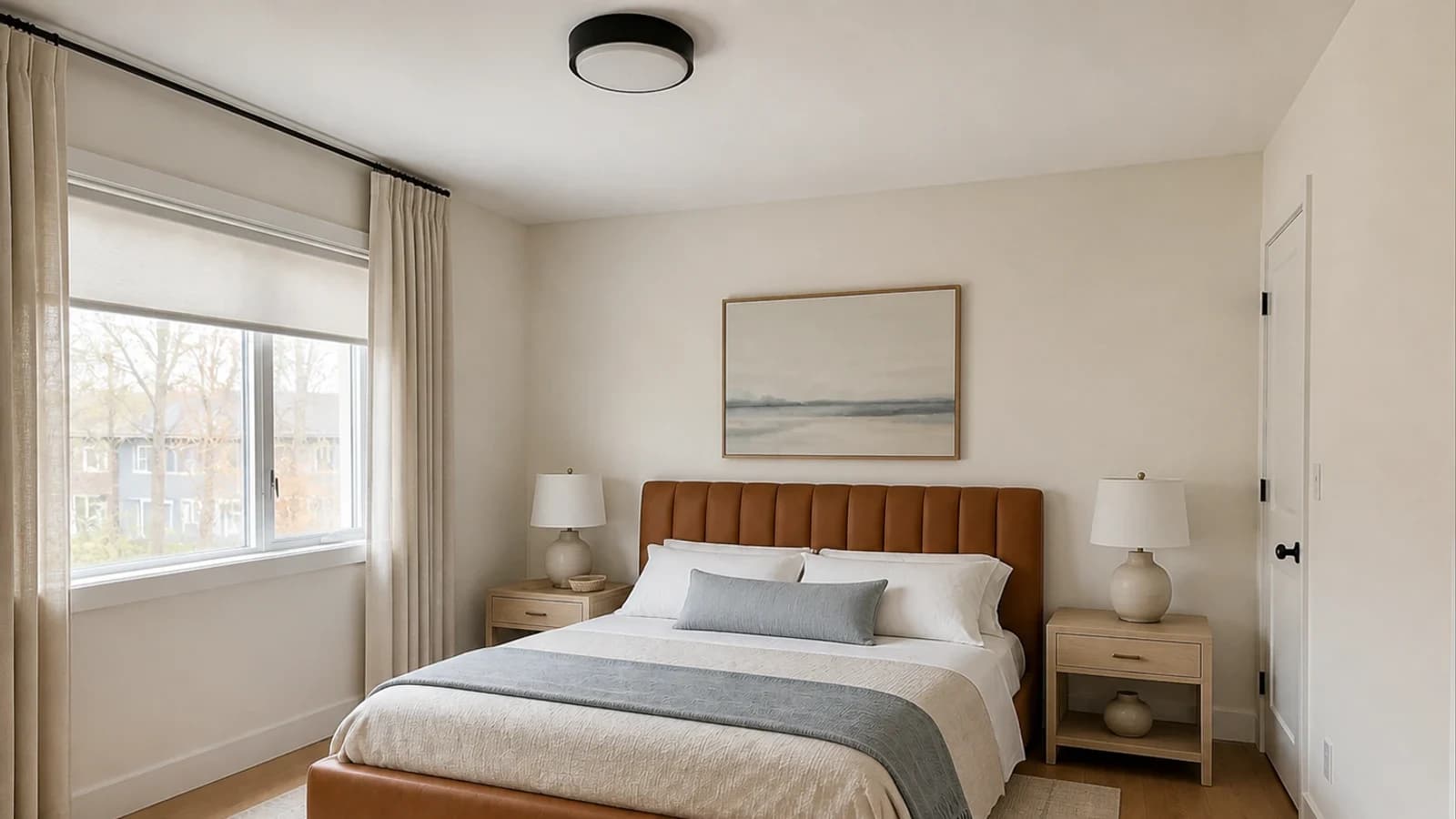
An elevated coastal bedroom suggests the shore through light, texture, and color—not themed objects. Start with warm white or pale mineral walls, visible pale wood, tailored ivory bedding, one muted blue, and woven or stone-like texture. Keep motifs nearly absent, preserve the existing bed, and let daylight do more work than decor. Preview the whole composition, then verify every measurement, material, product, and installation decision in the real room.
Coastal bedroom ideas at a glance
| Layer | Refined choice | Avoid | Verify |
|---|---|---|---|
| Background | Warm white, shell, chalk, pale mineral | Cold blue-white everywhere | Large samples in morning and lamplight |
| Bed | Crisp ivory field with one soft color | A pile of themed pillows | Care, comfort, practical reset |
| Wood | Pale oak or lightly washed visible grain | Matching distressed-white suite | Undertone against floor and bed |
| Texture | Linen, cotton, flatweave, ceramic, stone | Rope and basket overload | Hand feel, cleaning, durability |
| Blue | Mist, blue-gray, faded denim, slate | Saturated nautical navy on every layer | Real sample beside daylight |
| Decor | One abstract or atmospheric work | Signs, shells, anchors, oars | Scale, mounting, object stability |
What is refined coastal bedroom style?
Refined coastal style is an atmosphere rather than a collection of seaside symbols. It borrows the visual conditions people associate with a calm coast: open light, softened color, breathable textiles, weathered-but-not-distressed grain, matte mineral surfaces, and enough empty space to notice them. The result should still make sense far from the water. If removing a shell, sign, or striped cushion makes the entire concept disappear, the material system is not doing enough work.
Current design coverage increasingly frames the look through restraint and texture. Livingetc's 2026 coastal edit recommends staying within a tonal family and building depth with linen and tactile materials. A recent Ideal Home cottage tour similarly describes subtle coastal tones and natural texture balanced with refined elements rather than obvious seaside motifs. Those are useful directions, not universal rules; translate them through the fixed facts of your bedroom.
1. Start with the room's fixed light, floor, and bed
Record what will remain before choosing a palette: wall and ceiling exposure, floor undertone, bed color and material, window direction, trim, doors, and any built-ins. A camel upholstered bed already contributes sand and warmth. A gray carpet may supply the mineral note. Honey oak may call for a cooler blue-gray, while a low-light room may need more contrast instead of more white.
When the bed is non-negotiable, follow the bed-first sequence in how to redesign a bedroom without replacing the bed. Preserve its material, silhouette, size, position, and orientation in every preview.
2. Use pale wood without whitewashing everything
Pale oak, ash, or a softly washed wood can bring visible grain and visual lightness, but an all-white distressed furniture suite turns the room into a theme. Choose wood by role. Nightstands might provide pale structured grain; an existing darker dresser can remain the grounding counterpoint. A woven bench or basket should be an accent, not a requirement repeated in every corner.
Compare wood samples with the floor rather than judging them in isolation. Related undertones are easier to coordinate than near-matches. Check dimensions, drawer and door swings, mattress height, outlet access, and walking space before treating any generated furniture as a real product.
3. Make the bedding tailored, then let one layer relax
Use a crisp warm-white or ivory field to separate the bed from walls and wood. Add a quilt, coverlet, or blanket with visible but quiet weave, then introduce the clearest blue in one lumbar pillow or folded throw. Tailored does not mean hotel-stiff: it means the hierarchy is readable and the bed can be reset without storing a mountain of decorative cushions.
If the bed frame is warm camel, rust, or brown, a mist-blue accent supplies temperature contrast. If the frame is charcoal or navy, use more flax and warm wood so the composition does not drift cold. Confirm fiber content, care, feel, size, and return terms at the current source.
4. Layer texture by job, not by theme
Give every material a distinct job. Cotton percale brings a clean base. Linen softens the window or duvet. A wool-like flatweave grounds the bed. Pale wood supplies grain. Matte ceramic and honed stone add quieter solid surfaces. One natural-fiber accent can introduce a coarser note. The variation should be visible in light and shadow without filling the room with small objects.

5. Keep muted blue in a supporting role
Choose one water-adjacent color family—mist blue, faded denim, blue-gray, sea-glass green, or slate—and repeat it two or three times at different scales. A lumbar pillow, faint rug line, and small passage in art can be enough. Avoid distributing identical saturated navy across curtains, bedding, rug, lamps, and art; repetition that literal makes the palette feel packaged.
For a warmer comparison built from the same camel bed and room shell, see the warm modern bedroom guide. The fixed-room comparison makes the effect of palette and material choices easier to judge.
6. Use window layers to shape light, not stage a resort
Keep useful daylight available, then control privacy and glare with a functional shade, curtain, or both. Full-height off-white panels can soften a window without becoming the room's main event. Confirm how the window opens, where hardware can mount, whether fabric clears a heater or vent, and how the treatment looks closed at night.
For homes with young children, the CPSC window-covering safety guidance recommends cordless coverings where children live or visit. Verify the current product, installation, cords, clearances, and local requirements rather than relying on an illustration.
7. Set a strict motif budget
Use zero or one literal reference, not a category in every object. A restrained abstract with a horizon-like division can imply openness without depicting a beach. A handmade ceramic vessel can carry a chalky mineral surface without being shaped like coral. Remove word signs, anchors, oars, starfish, shell collections, rope-wrapped lamps, and novelty fishing accessories unless one has real personal meaning.
One larger artwork generally creates more calm than a grid of small themed prints. Tape the proposed frame size on the wall and check the mounting method, weight, hardware, headboard clearance, and any rental restrictions.
A same-room coastal bedroom before and after
This styling study keeps the room shell, camera, window, roller shade, door, ceiling light, oak floor, camel channel bed, and bed position recognizable. The change comes from pale oak nightstands, tailored light bedding, mist-blue accents, a larger quiet rug, linen window panels, related lamps, and edited art.
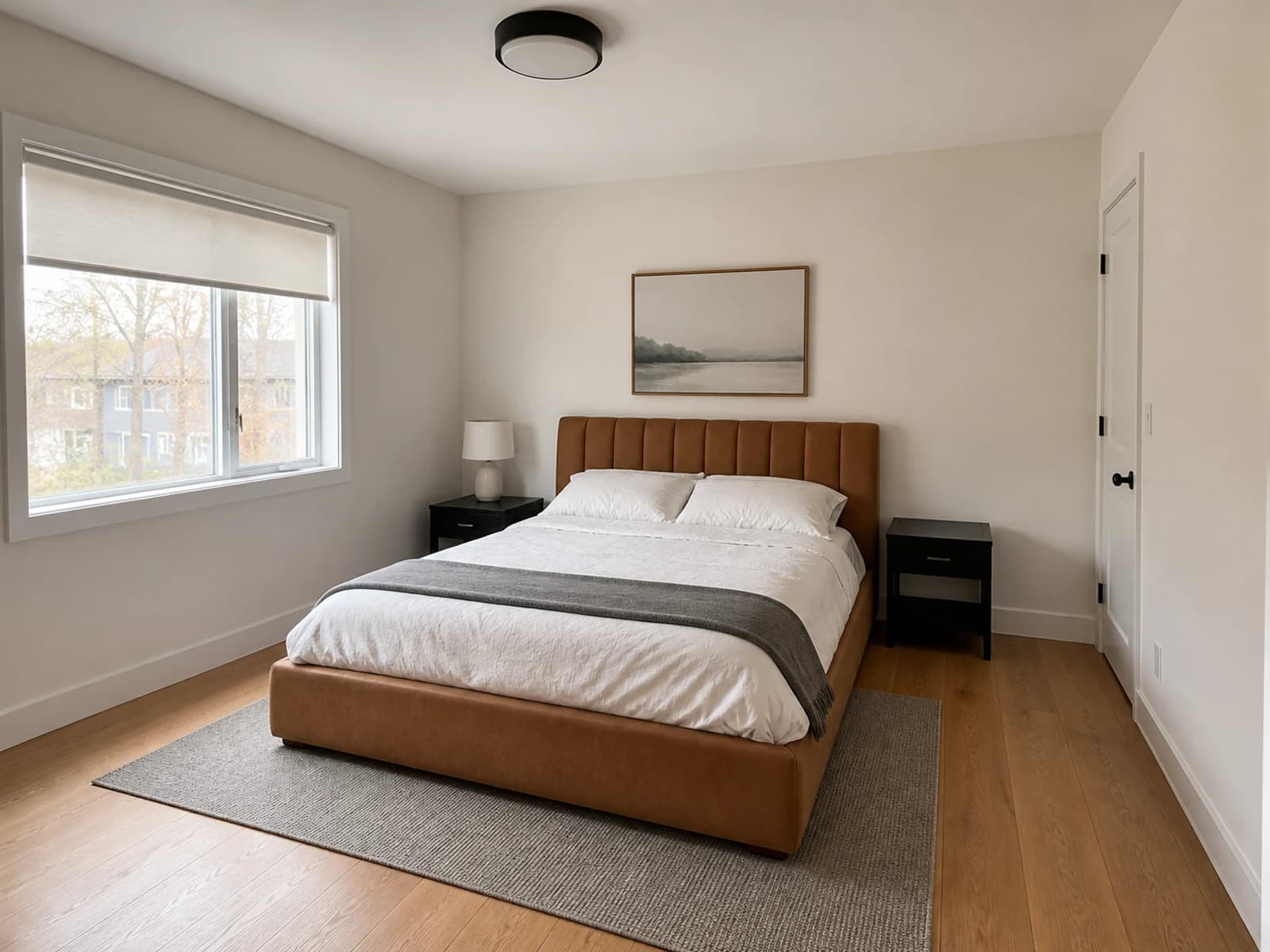 before
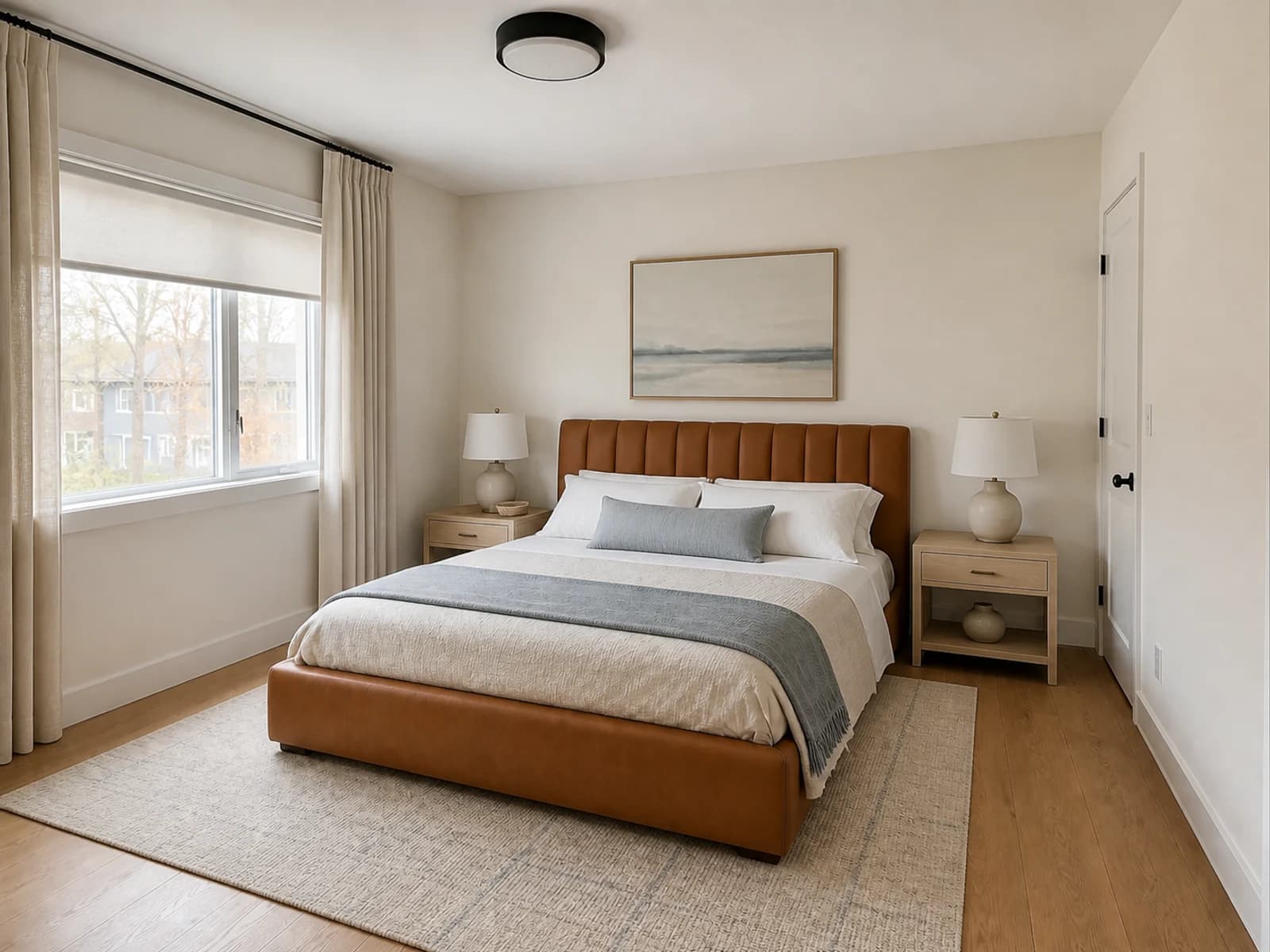 after
afterWhat stayed
The camel bed remains the visual anchor in the same orientation. The shell and fixed elements remain recognizable, so the comparison answers a styling question instead of pretending that a different room proves the idea.
What changed
Dark bedside blocks became pale-grain case pieces; the bedding gained a crisp hierarchy and one muted blue; the rug grew into a lighter grounded field; and linen, ceramic, restrained brass, and edited art created texture without nautical props.
What still needs verification
Measure the rug, nightstands, lamps, shade height, curtain hardware, bed and walking clearances, door and window operation, outlets, controls, delivery route, and mounting. Sample the wood, textile, paint, stone, and blue together in the actual light. The images do not prove product identity, material performance, fit, cost, availability, or feasibility.
A reusable prompt for a refined coastal bedroom
Use the photo, keep-list, and refinement workflow in the AI bedroom design from a photo guide.
For several retained pieces, follow the hierarchy for keeping existing furniture in an AI redesign.
Coastal bedroom clichés and mistakes to avoid
- Using pure blue-white on every large surface without checking the room's real light.
- Replacing all wood with distressed white furniture.
- Repeating navy stripes across bedding, curtains, rug, and accessories.
- Treating baskets, rattan, rope, and jute as mandatory in every corner.
- Adding shells, anchors, oars, signs, starfish, and coral instead of building a material palette.
- Choosing many small themed prints instead of one calm art composition.
- Covering useful daylight for a staged photograph.
- Assuming generated furniture, windows, materials, or clearances are real and measured.
A practical order for the makeover
- Record the bed, architecture, floor, daylight, window operation, and clearances.
- Choose a warm light neutral, wood direction, one muted blue, and one grounding tone.
- Build a physical sample set of bedding, wood, rug, curtain, ceramic, and paint.
- Resolve bedding hierarchy, rug footprint, bedside function, and privacy before decor.
- Add useful ambient and bedside light around real outlets, controls, and cord routes.
- Choose one larger art direction, then remove redundant themed objects.
- Preview the composition, audit every keep-item, and verify products and installation in the room.
Frequently Asked Questions
Let the coast register as a feeling
A convincing coastal bedroom does not need to announce its theme. Let warm light, tailored bedding, pale wood, muted blue, and a few honest textures create the atmosphere. Keep the bed and room facts visible, remove the obvious symbols, and carry forward only ideas that survive sampling, measurement, current product research, safety review, and real installation.
FAQ
Common questions
- How do I make a bedroom look coastal without being beachy?
- Suggest the coast through light, warm white, pale wood, linen, cotton, woven texture, and one muted blue or blue-green. Keep literal motifs nearly absent and let material, proportion, and daylight establish the mood.
- What colors work in a modern coastal bedroom?
- Begin with warm white, shell, sand, flax, or pale mineral gray. Add pale oak and one restrained accent such as mist blue, blue-gray, sea-glass green, or slate. Test physical samples beside the existing floor and bed in the room's real light.
- Can coastal style work with a dark or upholstered bed?
- Yes. Treat the bed as an anchor rather than a problem. Crisp light bedding, a larger quiet rug, pale or medium wood, and a controlled cool accent can connect a darker or warmer bed to the coastal palette without replacing it.
- Should all the wood in a coastal bedroom be whitewashed?
- No. One or two related pale or medium wood finishes with visible grain are usually more convincing than an entire room of distressed white furniture. Coordinate undertones, then allow different pieces to have distinct roles.
- What should I verify before buying from a bedroom preview?
- Verify room and furniture measurements, clearances, window and door operation, curtain mounting, cord safety, outlet access, lamp controls, physical samples, current product details, delivery paths, anchoring, electrical work, and installation requirements.
Keep exploring
Related reading
Bedroom Ideas
See the Same Bedroom in Six Interior Design Styles
Bedroom Ideas
Warm Modern Bedroom Ideas That Feel Elevated, Not Beige
Bedroom Ideas
Moody Bedroom Ideas That Feel Rich, Not Dark and Heavy
Bedroom Ideas
How to Redesign a Bedroom Without Replacing the Bed
Try Room Foundry
See a quieter coastal direction in your bedroom.
Upload your bedroom, identify the bed and fixed features that must stay, then compare pale wood, muted blue, tailored bedding, and natural texture in context.
Preview coastal in your bedroom