Warm Modern Bedroom Ideas That Feel Elevated, Not Beige
Warm modern bedroom ideas for a calm, defined room. Start with the bed, then choose wood, textiles, contrast, layered lighting, and physical samples.
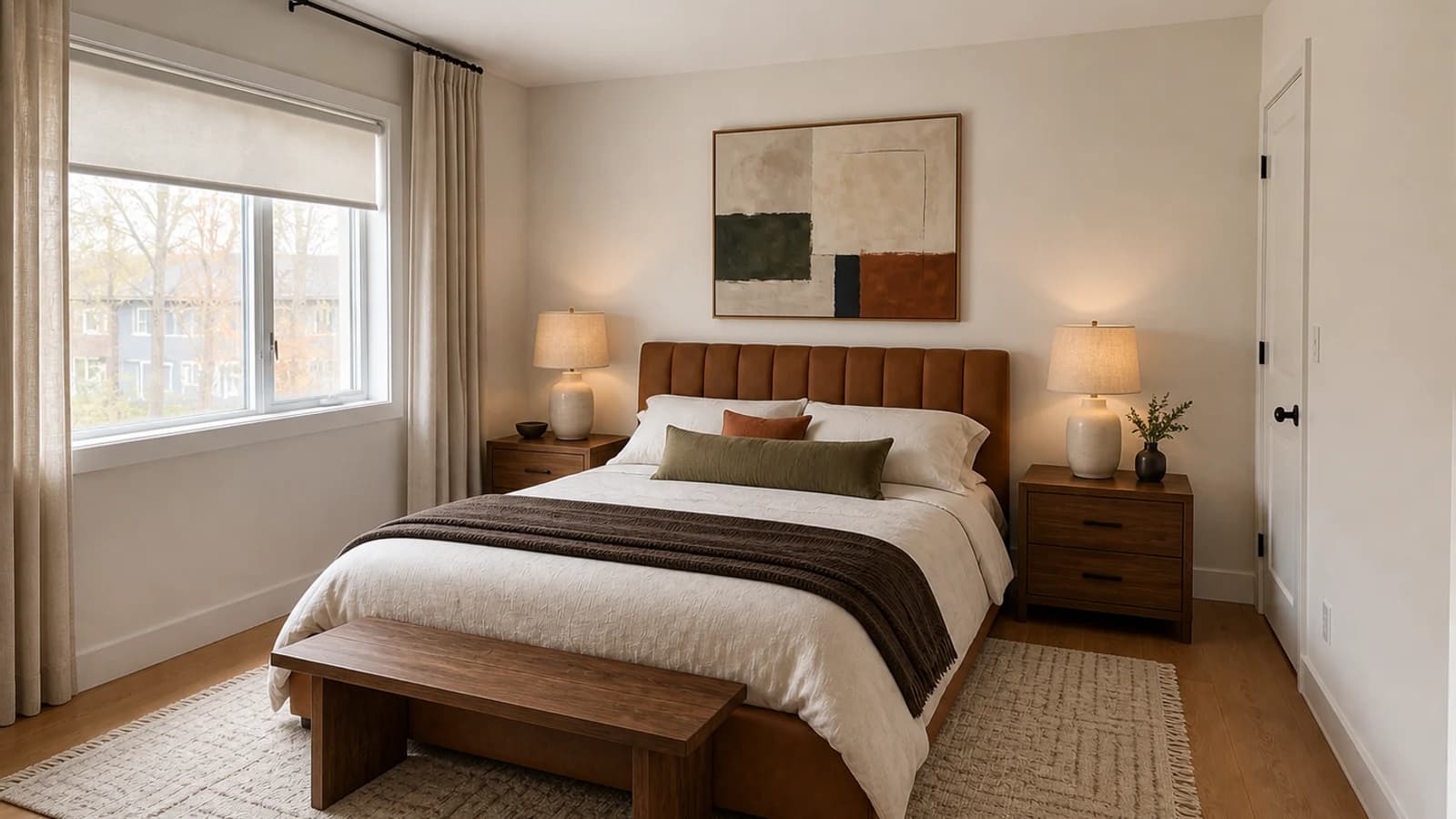
Warm modern bedroom ideas start with your existing bed. Record its color, material, shape, and position, then set it against a quiet background. Add one wood tone, one dark anchor, one muted color, tactile bedding, and three light layers: ambient, bedside, and accent. Compare the whole composition in a preview, then confirm measurements, samples, products, cords, and installation in the real room.
Warm modern bedroom materials, lighting, and keep-bed checklist
| Priority | Decide | Verify in the room |
|---|---|---|
| Keep the bed | Record its color, material, silhouette, size, position, and orientation | Walking clearance, bedside space, doors, and windows |
| Choose materials | Use a quiet background, one wood tone, tactile bedding, one dark anchor, and one muted color | Paint, wood, metal, textile, rug, and care samples in changing light |
| Layer lighting | Combine ambient, bedside task, and accent light | Reachable controls, shade height, outlet access, cords, and qualified hardwired work |
What is warm modern bedroom style?
Warm modern keeps the editing discipline and simple geometry associated with modern rooms, but softens them through color temperature, natural-looking grain, touchable textiles, rounded or sculptural details, and less severe contrast. It is not the same as filling a room with tan furniture. A successful room has edges you can read: the bed against the wall, wood against fabric, soft linen beside metal, and a darker note that gives the lighter layers definition.
1. Build a palette with contrast, not more beige
Start with the surfaces you cannot or do not want to replace: flooring, bed upholstery, wall color, window treatment, and built-ins. Name each undertone in ordinary language—yellow oak, red walnut, pink-beige fabric, blue-gray carpet—then choose a quiet background that does not fight those facts. Add one medium-value material, one dark anchor, and one muted color. That hierarchy keeps every object from landing in the same pale middle.
- Warm white + walnut + olive + matte black for a tailored natural direction.
- Bone + oak + rust-clay + espresso for a brighter room with earthy contrast.
- Mushroom + camel + burgundy + dark bronze for a richer, more enveloping bedroom.
- Putty + medium wood + muted blue + charcoal for warmth with a cooler balancing note.
Test real paint, wood, metal, bedding, and rug samples together in morning, afternoon, and lamplight. A screen image can help compare distribution, but it cannot confirm the final undertone, sheen, weave, or color under your actual light.
2. Let the existing bed set the first material
If the bed stays, treat its upholstery or wood as the first material. A camel bed already supplies warmth, so it benefits from crisp warm-white bedding, walnut or espresso, and a cooler olive accent. A pale oak bed may need a darker bedside piece; a black bed benefits from linen, warmer wood, and softer color.
Use the bed-first sequence in how to redesign a bedroom without replacing the bed when the frame, orientation, and clearance are non-negotiable.
3. Mix materials by role
Assign materials different jobs instead of repeating one finish everywhere. Wood provides grain and structure. Linen and cotton soften the bed and window. Wool-like or woven texture grounds the floor. Ceramic brings a matte sculptural surface. Dark bronze or black defines smaller edges. The room feels layered because the materials react differently to light, not because it contains many decorative objects.
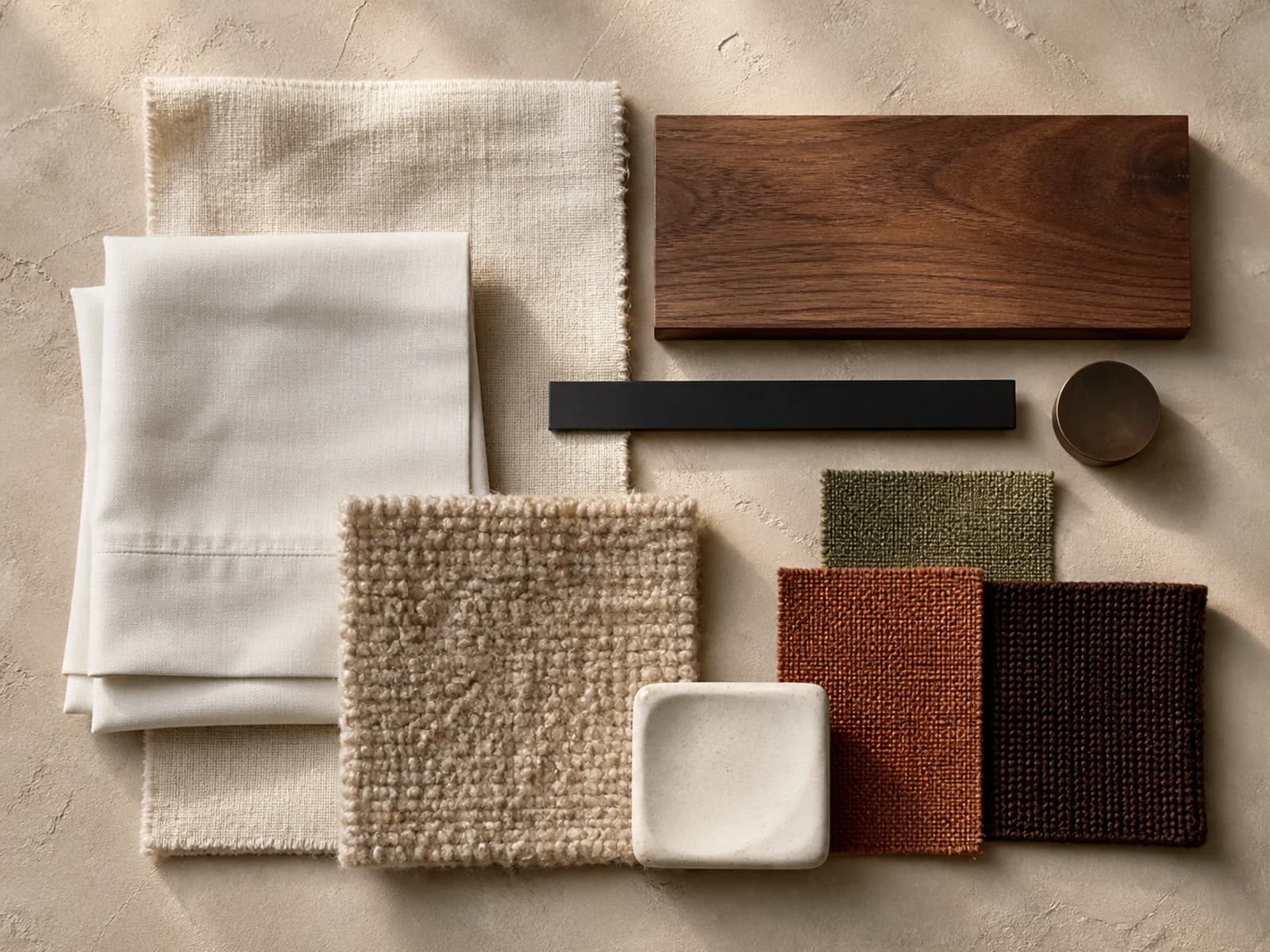
Limit dominant wood finishes, but do not chase an exact factory match. Related undertones and visibly different roles coordinate more easily than almost-matching pieces.
4. Choose furniture with clean shape and human softness
Warm modern furniture should be easy to describe: a simple case piece with a visible grain, a low bench with softened corners, a rounded ceramic lamp, or a nightstand with one strong horizontal line. Avoid filling the room with unrelated curves or turning every piece into a statement. One sculptural form is stronger when the other silhouettes are quiet.
Nightstands need not match. Balance different functions through height, visual weight, and shared material language. Measure drawer swing, bed clearance, outlet access, mattress height, and lamp-shade position.
5. Layer the bed without building a pillow display
Use bedding to separate the bed frame from the rest of the palette. Begin with a warm-white or ivory field, introduce texture through a quilt, coverlet, or woven throw, and reserve the clearest color for one lumbar pillow or folded layer. A deep espresso throw can create more structure than five slightly different beige cushions. Keep the arrangement practical enough to reset every day.
6. Use a rug to ground the composition
Choose a rug texture or restrained pattern that grounds the bed without overpowering it. Tape the exact footprint, check doors and walking paths, and confirm the pad and backing against the floor. A preview can compare coverage; it cannot measure the bedroom.
7. Build three useful layers of light
Use ambient light for general orientation, bedside light for reading and small tasks, and a quieter accent layer to reveal art, curtains, or texture. The fixtures do not need to match, but their finishes and visual weight should relate. Keep shades below the seated sightline when practical, preserve reachable controls, and route cords away from walking paths and pinching.
The CPSC home electrical safety checklist includes checks for damaged cords, overloaded outlets, and cords in foot-traffic paths. Leave hardwired changes to appropriately qualified, authorized professionals.
8. Edit curtains, art, and decor as one composition
Confirm curtain width, radiator or vent relationships, hardware, stack-back, and window operation. Choose art with one dark passage and one color repeated from the textiles. Keep small decor restrained when the large surfaces already carry texture.
A fixed-bed warm modern before-and-after
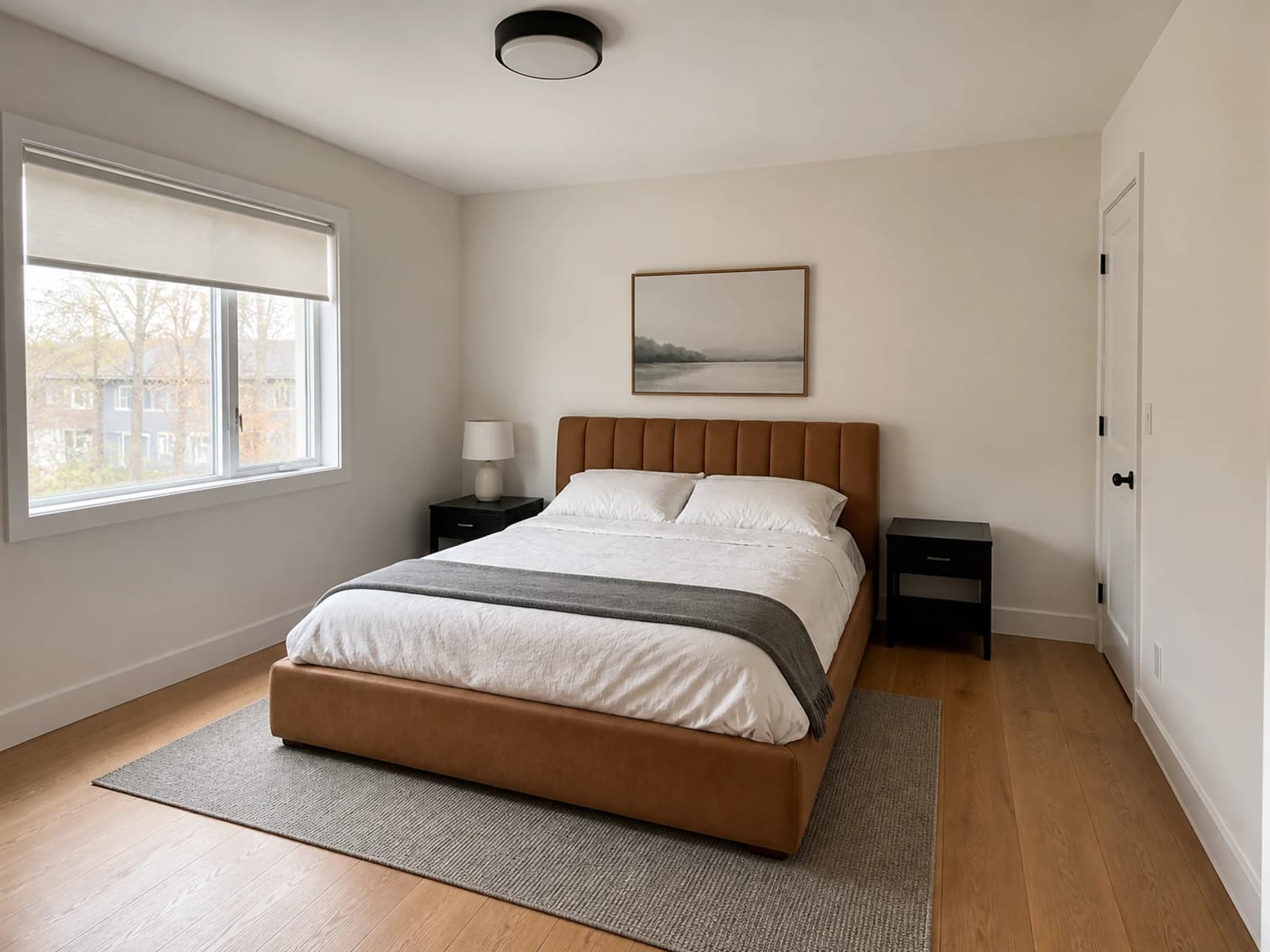 before
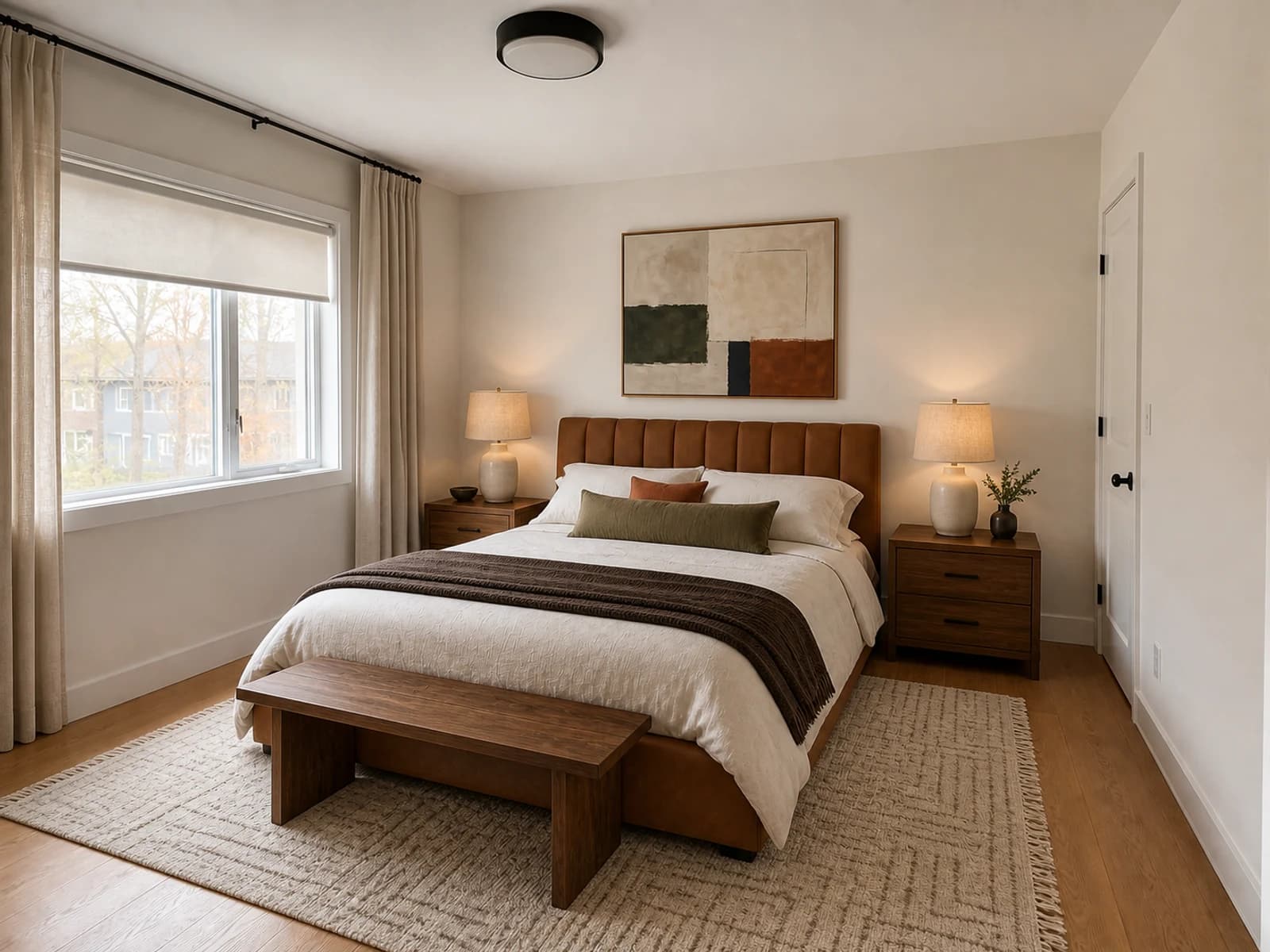 after
afterWhat stayed
The camel-tan channel bed and upholstered frame, bed position and orientation, warm-white walls, left window and roller shade, rear-right door, white trim, oak floor, flush-mount ceiling light, room proportions, camera, and circulation remain recognizable.
What changed
The concept adds walnut nightstands and bench, two ceramic lamps, oatmeal curtains, a larger textured rug, tailored warm-white bedding, olive and rust accents, an espresso throw, restrained abstract art, and small dark metal and ceramic notes. The palette stays quiet, but wood grain and dark/color contrast stop it from becoming an all-beige room.
What to verify
Verify rug coverage, bed and bench clearances, nightstand width and height, lamp scale, cord routing, outlet access, window and door operation, curtain mounting, art size and mounting, material samples, product care, furniture stability, delivery paths, and current installation requirements. The illustration cannot identify products, confirm fit, or prove construction feasibility.
A prompt for applying warm modern around your bed
For the full source-photo, keep-list, refinement, and planning sequence, use the AI bedroom design from a photo guide.
If several furniture pieces and finishes must remain, combine this style prompt with the hierarchy for keeping existing furniture in an AI redesign.
Common warm modern bedroom mistakes
- Making the walls, bed, rug, curtains, nightstands, and bedding the same pale beige.
- Using warm color without a dark anchor, so every edge disappears.
- Buying a matching furniture suite instead of building a material relationship.
- Adding many nubby textiles but no smooth, crisp, or structured surface for contrast.
- Using only the ceiling light and expecting material texture to read at night.
- Overfilling the bed with decorative pillows and the nightstands with small objects.
- Changing the bed in the concept when it must remain in the real room.
- Shopping from a generated image before measuring and sampling.
A practical order for the makeover
- Record the bed, architecture, fixed finishes, and real clearances.
- Choose the quiet background, wood tone, dark anchor, and one muted color.
- Sample the palette beside the bed and floor in changing light.
- Resolve rug coverage and bedside function before decorative objects.
- Layer bedding, curtains, and lighting using the same material hierarchy.
- Choose art after the palette so it connects rather than introduces a second scheme.
- Preview the complete direction, audit every keep-item, then verify real products and installation.
Frequently Asked Questions
Warm modern works when the contrast is intentional
An elevated warm modern bedroom is not defined by beige. It is defined by restraint with enough contrast to show the design: a readable bed, visible wood grain, soft and structured textiles, one dark note, one controlled color, and light placed where the room needs it. Begin with what stays, preview the layers as one composition, and carry only the ideas that survive measurement, sampling, product research, safety review, and installation.
FAQ
Common questions
- What makes a bedroom warm modern?
- A warm modern bedroom combines clean, restrained forms with warmer color temperature, tactile textiles, natural or convincingly natural wood, layered light, and enough dark or colored contrast to keep the room from feeling washed out.
- How do I keep a warm modern bedroom from looking all beige?
- Give the room a clear contrast structure. Keep the largest surfaces quiet, then add a medium wood, one dark anchor such as espresso or matte black, and one muted color such as olive, rust, clay, or burgundy.
- Can warm modern style work with my existing bed?
- Yes. Treat the bed's color, material, silhouette, size, position, and orientation as fixed facts. Coordinate the bedding, rug, nightstands, lamps, curtains, art, and accent colors around those facts rather than forcing the bed into a mismatched palette.
- Do warm modern nightstands need to match?
- No. They can differ when their heights, visual weight, function, and finish relationship feel balanced. Repeating the lamp material, wood undertone, or one dark accent can create continuity without a matching set.
- What should I verify before buying from a bedroom preview?
- Verify the bed and walking clearances, rug footprint, nightstand and lamp dimensions, outlet access, curtain mounting, door and window operation, real samples, current products, delivery paths, anchoring, electrical work, and installation requirements.
Keep exploring
Related reading
Bedroom Ideas
See the Same Bedroom in Six Interior Design Styles
Bedroom Ideas
Coastal Bedroom Ideas Without the Beach-House Clichés
Bedroom Ideas
Moody Bedroom Ideas That Feel Rich, Not Dark and Heavy
Bedroom Ideas
How to Redesign a Bedroom Without Replacing the Bed
AI Room Design
AI Bedroom Design From a Photo: A Practical Step-by-Step Guide
AI Room Design
Can AI Redesign a Room While Keeping Your Existing Furniture?
Try Room Foundry
See warm modern in the bedroom you already have.
Upload your bedroom, identify the bed and fixed features that must stay, then compare a warmer palette, material mix, lighting, and textile direction.
See this style in your bedroom