Moody Bedroom Ideas That Feel Rich, Not Dark and Heavy
Create a rich moody bedroom with balanced light, deep color, warm wood, tactile textiles, metal accents, and a practical plan around the bed you own.
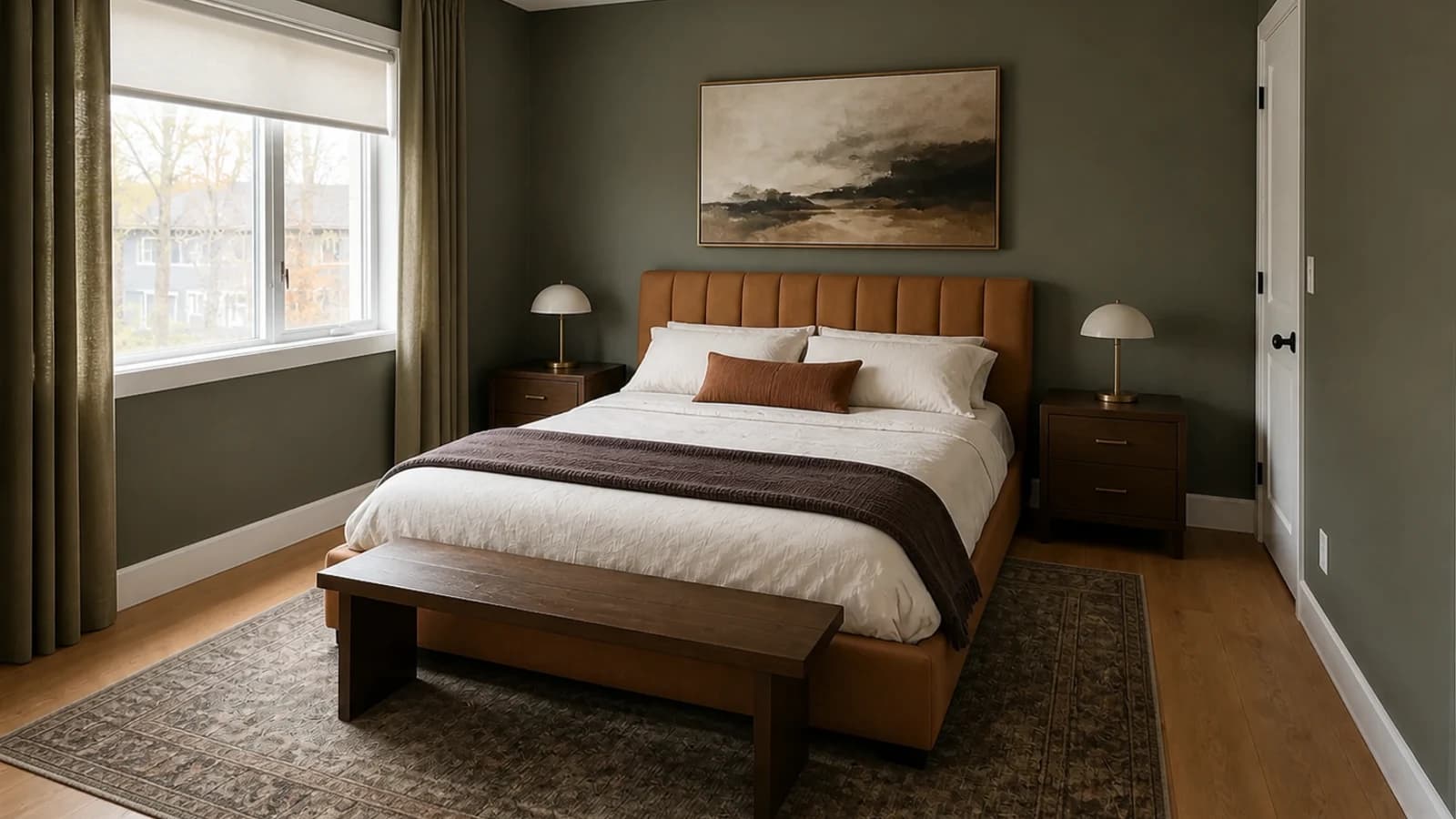
A livable moody bedroom uses darkness selectively. Give one large surface or connected color field enough depth to set the atmosphere, then keep the bed readable with lighter bedding, reveal grain through warm wood, repeat one softened accent color, and place light where the room needs function. Test the scheme in daylight and after dark before buying. Richness comes from contrast and texture—not from turning every surface black.
Moody bedroom ideas at a glance
| Layer | Add depth with | Keep it livable with | Verify in the real room |
|---|---|---|---|
| Walls | Olive-charcoal, tobacco, plum-brown, inky blue | A visible undertone and deliberate trim/ceiling relationship | Large samples in daylight and lamplight |
| Bed | Deep throw or one saturated pillow | Ivory, flax, or warm-white sleeping layers | Exact frame color, comfort, and care |
| Wood | Walnut, smoked oak, dark-stained vintage piece | Visible grain and warm undertone | Relationship to the floor and bed |
| Textiles | Wool-like rug, velvet accent, linen curtain | Mix matte, slubby, crisp, and smooth surfaces | Weave, pile, cleaning, and true color |
| Metal | Aged brass, dark bronze, blackened steel | Use on small edges rather than every object | Sheen, glare, wiring, and stability |
| Lighting | Low pools of warm-looking light | General orientation plus bedside tasks | Controls, bulb appearance, cords, outlets |
What makes a bedroom moody rather than simply dark?
A moody bedroom has a controlled value range: deep color creates the field, medium tones connect the furniture, and lighter or reflective details reveal the composition. A merely dark room repeats near-black surfaces until the bed, art, wood, and textiles lose their edges. Moody design still lets you see why each material is there.
Current inspiration often treats black paint as the whole idea. A more useful approach begins with light and the existing bed. The June 19, 2026 Houzz feature on four moody bedrooms shows deep hues combined with warm wood, soft neutrals, texture, and considered daylight. Test those relationships rather than copying a product.
1. Map daylight and lamplight before choosing the deepest color
Photograph the room in morning, midday, late afternoon, and evening light. Mark the brightest and darkest walls and the places where you read, dress, or walk. A nuanced color beside the window can look almost black in a recessed corner.
The Benjamin Moore Color Handbook recommends observing samples as daylight gives way to artificial light. Move a large painted board around the room and check it beside the floor, bed, curtains, and lamps; a preview cannot confirm color or sheen.
2. Choose a depth band, not a random dark paint
Select a deep hue with an undertone you can name. Olive-charcoal contains green; tobacco brown carries warmth; plum-brown has a red-violet direction; inky blue can lean green or violet. Then choose a lighter relief tone, a wood, and one softened accent. This prevents the palette from becoming a stack of unrelated dark objects.
- Olive-charcoal + camel + walnut + warm ivory + muted rust.
- Tobacco + flax + dark oak + faded blue + aged brass.
- Plum-brown + mushroom + walnut + dusty rose + dark bronze.
- Inky blue + parchment + medium oak + oxblood + blackened steel.
A deep wall field with lighter ceiling and trim preserves crisp boundaries; related wall and trim colors create a quieter envelope. Sample both around fixed finishes.
3. Let the existing bed decide where the relief belongs
Use the retained bed's color and material as a fixed value. Ivory bedding separates a camel bed from an olive wall while walnut and rust connect it to the room. A black bed may need a lighter wall passage; a pale wood bed may need a rug that bridges wood and color.
Use the constraint sequence in how to redesign a bedroom without replacing the bed before changing the layers around a non-negotiable frame.
4. Use warm wood as structure, not generic brown filler
Wood grain keeps a moody room from reading as a painted box. Choose one dominant direction, such as walnut or smoked oak. A bench and nightstands need not match, but should share warmth or visual weight.
Keep grain visible in a path of daylight or lamplight, then test the real finish beside the floor. A generated image cannot confirm that two woods coordinate.
5. Mix textiles by reflectance and hand
Velvet, matte linen, crisp cotton, brushed wool, and a patterned rug handle light differently. Put the lightest useful textile on the bed, then add depth through one throw, one lumbar, curtains, and the rug.
Confirm fabric care, allergies, pets, blackout needs, rug pile, floor compatibility, and how much bedding you will reset. Rich-looking layers still need to be comfortable and maintainable.
6. Let metal catch light in small doses
Aged brass warms olive, blue, and plum; dark bronze sharpens tobacco and burgundy; blackened steel adds a cooler edge. Use metal where it has a job—a lamp, frame, pull, or tray.
7. Use art to open the wall visually
Art can open a deep wall visually. Choose one composition with pale, middle, and dark passages connected to the palette. Scale and contrast matter more than subject label.
Template the frame before mounting. Headboard height, wall condition, and mounting decide feasibility.
8. Build three lighting layers with separate jobs
Use ambient light for orientation, bedside task light for reading, and an accent layer to reveal art or grain. Avoid one bright ceiling source surrounded by dead corners. Relate fixture scale and finish without requiring a matching set.
The CPSC home electrical safety checklist includes checks for damaged cords, overloaded outlets, and cords in foot-traffic paths. Keep controls reachable, route plug-in cords away from pinching and walking paths, and leave hardwired work to appropriately qualified, authorized professionals.
Can a small bedroom handle a moody palette?
Yes, but edit visual weight. Keep the path clear, reduce small objects, use closed storage where clutter competes with wall color, and keep the bed readable. Preserve daylight access.
A small room does not require pale walls; it requires deliberate contrast and furniture scale. Compare a full deep field with a limited bed-wall application. Choose the one that keeps the bed, openings, and path legible.
One bedroom, tested in daylight and evening
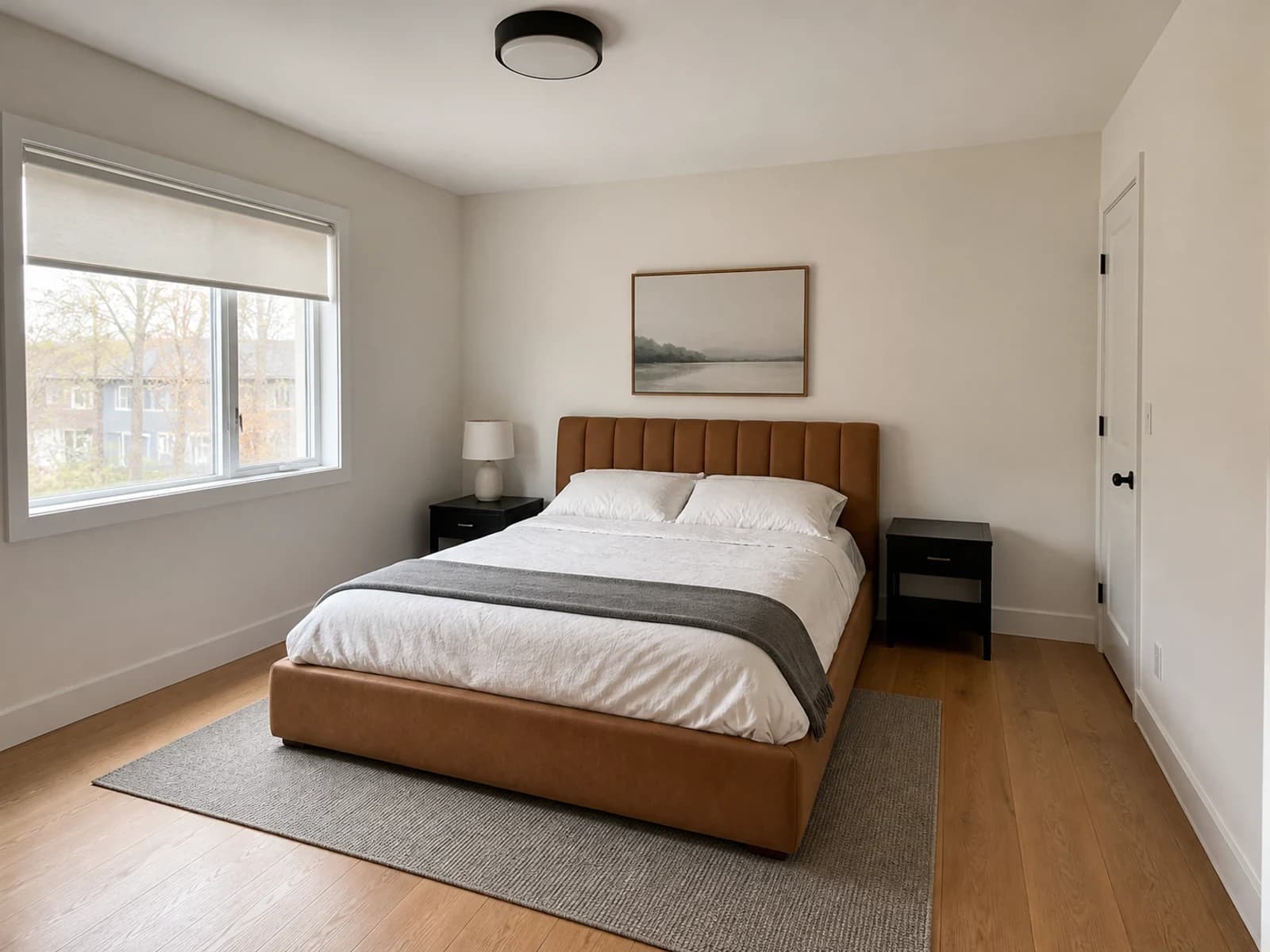 before
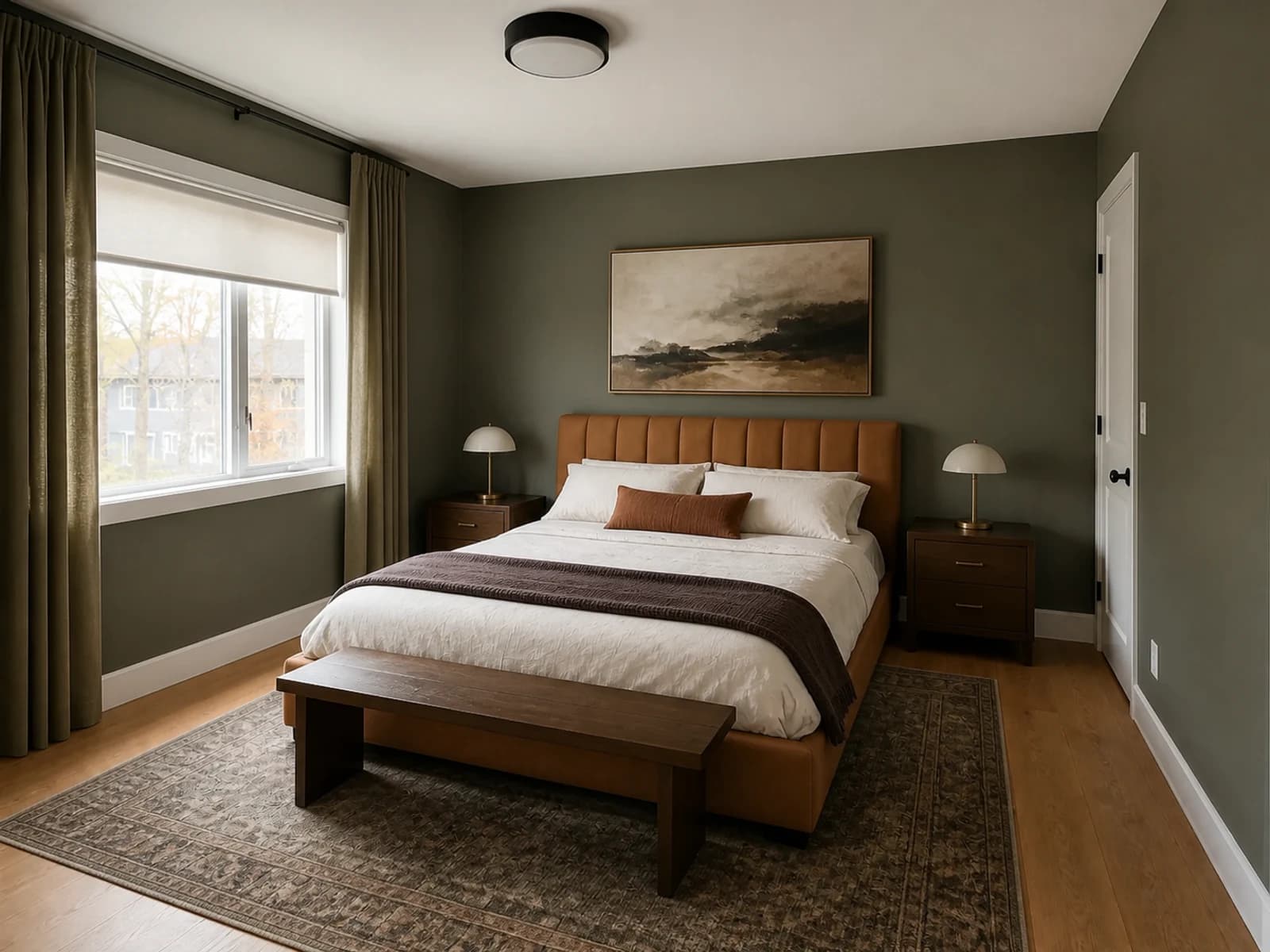 after
after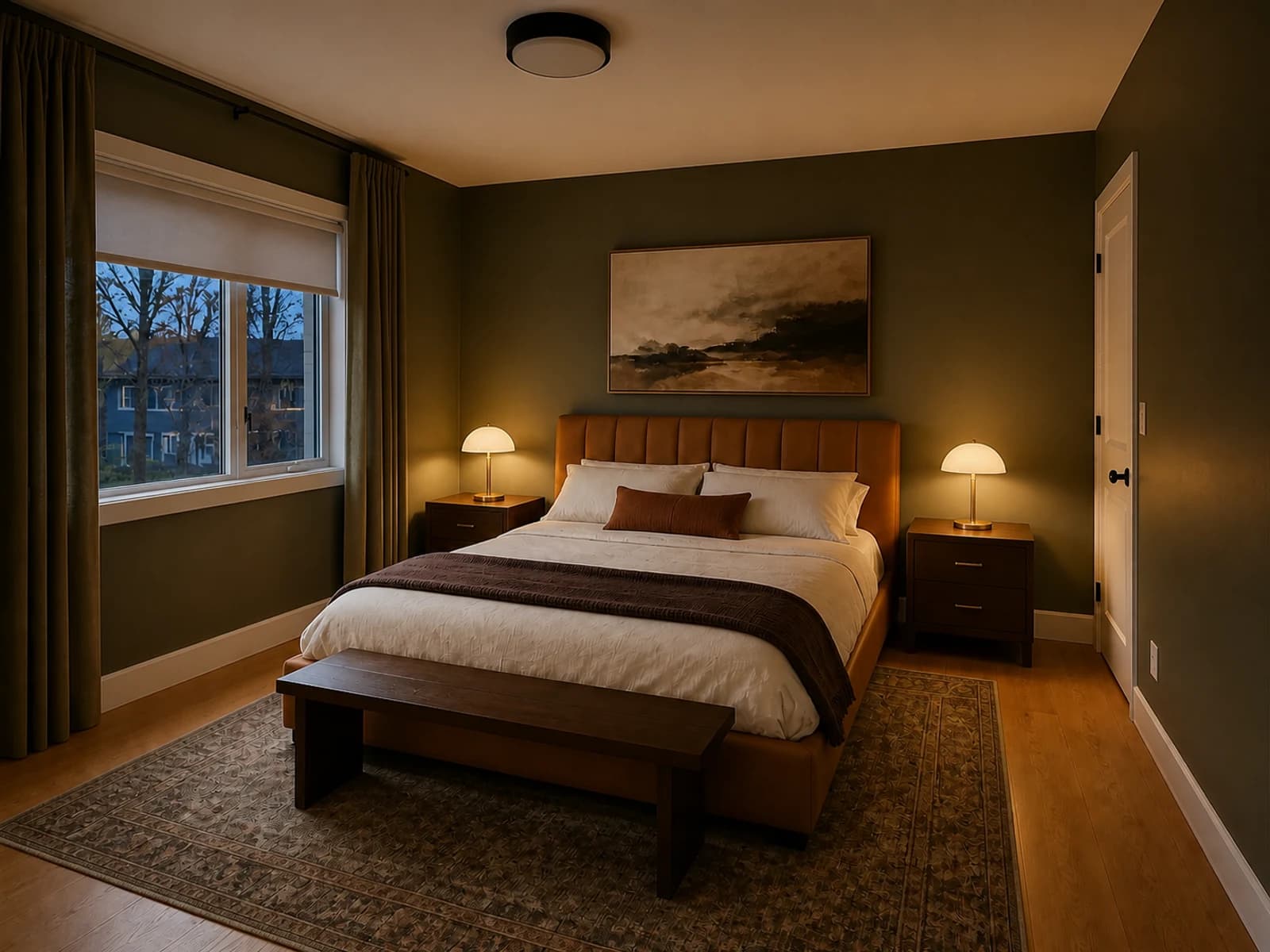
What stayed
The camel channel bed, its position and orientation, window and shade, rear-right door, ceiling and trim, oak floor, ceiling light, room proportions, camera, and circulation remain recognizable.
What changed
The concept adds olive-charcoal walls, open olive curtains, walnut furniture, brass-and-cream lamps, ivory bedding, rust and plum accents, a larger faded rug, and abstract art. The evening version changes only the outside light and lamps.
What to verify
Test large samples through the day and evening. Measure bed, bench, nightstand, rug, curtain, door, and walking clearances. Confirm window operation, outlets, cords, lamp controls, bulb appearance, mounting, stability, materials, products, delivery, and installation. The illustrations cannot prove fit, color, brightness, or feasibility.
A reusable prompt for a moody bedroom that keeps the bed
For the upload, keep-list, refinement, and planning process, use the AI bedroom design from a photo guide.
With several keep-items, use the hierarchy for keeping existing furniture in an AI redesign.
Common moody bedroom mistakes
- Choosing the deepest paint before observing the room throughout the day.
- Making the wall, headboard, bedding, rug, curtains, and furniture the same near-black value.
- Using cool gray as the only relief in a warm wood room.
- Closing off useful daylight with unnecessarily dense decorative curtains.
- Relying on one bright ceiling fixture instead of ambient, task, and accent layers.
- Adding velvet everywhere without crisp cotton, visible grain, matte paint, or smoother contrast.
- Scattering small shiny metal decor across every surface.
- Filling a compact room with small furniture and many small frames.
- Treating a generated evening image as proof of paint color, bulb performance, or product fit.
A practical order for the makeover
- Record the existing bed, fixed finishes, daylight pattern, evening tasks, and clearances.
- Choose a deep hue, relief tone, wood direction, muted accent, and metal finish.
- Test large color and material samples around the room from morning through night.
- Resolve bed readability, bedside function, rug coverage, and window operation.
- Build ambient, task, and accent light around real outlets and controls.
- Add one strong art composition and edit small objects.
- Preview daylight and evening versions, audit every keep-item, then verify real products and installation.
Frequently Asked Questions
Richness comes from what the dark color reveals
A moody bedroom succeeds when the deep field reveals the bed, wood, textiles, art, and light. Start with daylight and the fixed bed, build a value hierarchy, and compare it at night. Carry forward only ideas that survive sampling, measurement, research, safety review, and installation.
FAQ
Common questions
- What colors make a bedroom feel moody without looking black?
- Deep colors with readable undertones—olive-charcoal, tobacco, plum-brown, burgundy, forest, or inky blue—can create depth without defaulting to black. Pair the field with a lighter relief tone, visible warm wood, and one muted accent.
- Should a moody bedroom have light bedding?
- Not always, but lighter bedding is an effective way to keep the bed readable against a deep wall or dark frame. Warm ivory, flax, parchment, or muted pattern can provide relief without creating a harsh white-and-black split.
- How many light sources does a moody bedroom need?
- Plan by function rather than a universal fixture count: general orientation, bedside tasks, and an accent layer where useful. One fixture can sometimes serve more than one job, but controls, brightness, glare, cords, outlets, and hardwiring must be checked in the real room.
- Can I make a small bedroom moody?
- Yes. Keep the path and window readable, limit small objects, use correctly scaled furniture, and create clear value separation around the bed. Test a full deep field against a more limited application in the room's real daylight and evening light.
- What should I verify after previewing a moody bedroom?
- Verify paint and material samples, measurements, walking and door clearances, window operation, rug and furniture fit, lamp controls, outlet and cord safety, bulb appearance, mounting, stability, current products, delivery, and installation requirements.
Keep exploring
Related reading
Bedroom Ideas
See the Same Bedroom in Six Interior Design Styles
Bedroom Ideas
Coastal Bedroom Ideas Without the Beach-House Clichés
Bedroom Ideas
Warm Modern Bedroom Ideas That Feel Elevated, Not Beige
Bedroom Ideas
How to Redesign a Bedroom Without Replacing the Bed
AI Room Design
AI Bedroom Design From a Photo: A Practical Step-by-Step Guide
Try Room Foundry
See a moodier direction in the bedroom you own.
Upload your bedroom, identify the bed and fixed features that must stay, and compare a deeper palette, warmer materials, and layered lighting.
See this style in your bedroom