What to Buy First for a Dorm Room—and What to Wait On
Learn what to buy before dorm move-in, what to coordinate with a roommate, and what should wait until you measure the real room and check its rules.
Buy confirmed-size bedding, personal care items, laundry basics, essential chargers, medication, necessary documents, and first-week study supplies before dorm move-in. Coordinate shared items with your roommate. Wait to buy storage bins, a rug, curtains, extra furniture, and most decor until you measure the actual room and read its rules. Skip unapproved appliances and anything that duplicates supplied furniture.
This guide owns purchase order. For the broader room plan, rental-safe ideas, and decorating sequence, use the modern dorm room ideas guide.
Use This Six-Question Test Before Buying Anything
A dorm shopping list becomes easier when every item must pass the same test. The question is not whether an object appears on a popular checklist. It is whether the object is allowed, missing from the room, useful to this student, sized for this space, and worth moving again at the end of the year.
- Is it allowed under the current residence hall policy?
- Does the school already provide it, and must the provided version remain?
- Could a roommate already be bringing the shared item?
- Does it require an exact room, closet, bed, window, or outlet measurement?
- Will it support a weekly routine rather than a hypothetical use?
- Can it be returned, stored, or carried home if the plan changes?
The University of New Hampshire's current what-to-bring and prohibited-items guidance illustrates why school-specific checking comes first: it lists supplied furniture, encourages roommate coordination, and separates suggested items from prohibited ones. Your own residence hall is the authority for your room.
Dorm Shopping Priority Checklist
1. Buy or Pack Before Move-In
Choose confirmed essentials that do not depend on the room's exact dimensions.
- BeddingBuy sheets in the school-confirmed mattress size, plus a pillow, mattress protection if desired, and the minimum blanket or comforter needed to sleep the first night.
- Personal carePack toiletries, towels, shower shoes or a caddy when the bathroom setup calls for them, and everyday health items already used.
- LaundryBring detergent and one easy-to-carry soft bag or basket; the route to the laundry room can determine whether a rigid hamper is practical.
- First-week study kitBring the computer, approved chargers, notebook, writing tools, and course-specific supplies already known to be necessary.
- Documents and medicationBring the identification, campus information, prescriptions, and personal records actually required, stored securely.
2. Coordinate With Your Roommate
Confirm the room assignment, school limits, ownership, cost, and end-of-year plan before either person buys.
- Permitted appliancesCheck what is supplied or rentable and whether the room is limited to one refrigerator, microwave, coffee maker, or similar item.
- Cleaning toolsOne approved vacuum, broom, or compact cleaning kit may serve the room; do not create two bulky sets by accident.
- Shared food basicsAgree on a small amount of dishware, food storage, and cleaning supplies based on the actual kitchen or common-area setup.
- Shared lighting or decorDecide whether either roommate wants a shared lamp, rug, or visual direction, but delay exact products until measurements are available.
3. Buy After Measuring the Room
Measure the real object and the clearance needed to open, remove, or use it—not only the empty footprint.
- Under-bed storageMeasure bed-frame clearance at its approved setting and the space needed to pull containers out without colliding with a desk or another bin.
- Closet organizersMeasure interior width, depth, rod height, shelf position, door type, and any policy limits before choosing rigid components.
- RugMeasure the usable floor after furniture is placed and keep the door, drawers, vents, and required path clear.
- CurtainsConfirm permission, hanging method, window width and height, radiator or HVAC clearance, and whether blinds must remain accessible.
- Lighting and power accessLocate outlets and read the policy before selecting lamps, power strips, cords, bulbs, or mounting methods.
- Extra seating or furnitureAdd only after both students can reach their beds, desks, storage, and exit without moving the new piece.
4. Optional or Skip for Now
Let the first one or two weeks reveal a recurring need before adding another object.
- Decorative pillows and throwsKeep the bed usable first; add a small finishing layer only if it will be used and stored daily.
- Large art packagesWait until the roommate plan, approved hanging method, and available wall area are clear.
- Single-purpose organizersSkip novelty holders and tiny bins until a repeated clutter problem identifies the shape and size actually needed.
- Duplicate or unapproved appliancesDo not buy items the school supplies, the roommate is bringing, or the policy does not permit.
- Bulky lounge furnitureSkip for now unless the measured room has a safe, genuinely useful place for it after all core zones work.
What Belongs in the First Purchase
Start With Sleep, Not a Finished Look
Confirm the mattress size through the student's current housing information before buying sheets. Then choose the smallest complete sleep setup: sheets, pillow, a suitable blanket or comforter, and any personally needed mattress protection. A color direction can begin here because the bed is visually large, but matching bins, art, a rug, and extra pillows do not need to follow before move-in.
Pack the First Week of Daily Life
Prioritize the items the student already uses to get ready, take medication, shower, do laundry, charge devices, and begin class. Pack for the assigned bathroom type and climate rather than a generic dorm. A soft laundry bag, compact toiletry kit, reusable water bottle, and familiar first-week study supplies usually adapt more easily than rigid room organizers.
What Should Roommates Decide Together?
Shared purchases need an owner, not just a yes. Decide who buys or brings the item, who keeps it, what happens if the room assignment changes, and how it leaves campus. Check whether the school provides or rents the item and whether only one is allowed. A quick written list prevents two refrigerators, two vacuums, or two floor lamps from consuming the same limited space.
Valdosta State University's current college packing guidance explicitly recommends focusing on essentials, discussing shared items with a roommate, and waiting to purchase curtains because window sizes vary. It is one useful model, not a substitute for another school's rules.
What Must Wait for Real Measurements?
Rigid storage is the clearest wait-until-move-in category. Measure under the bed at the permitted height, inside the closet, beside the desk, and anywhere a drawer or bin must slide. Include handles, lid clearance, baseboards, desk-chair movement, and the route used to remove the container. A bin that fits the cavity but cannot open is not useful storage.
Use the three diagrams and access checks in the dorm room layout ideas guide before adding a rug, seat, cart, or organizer to the floor plan.
Rugs and curtains also depend on more than width and length. A rug must work around the door, furniture, vents, and circulation. Curtains need an approved hanging method and safe clearance from HVAC equipment or radiators. Lamps and power accessories depend on current electrical rules and actual outlet placement. Waiting turns these purchases from guesses into responses to the real room.
Once the room and furniture plan are known, use the dorm room color schemes guide to coordinate bedding, storage, and decor with the fixed walls, floor, and school furniture.
A Verified Room Foundry Dorm Example
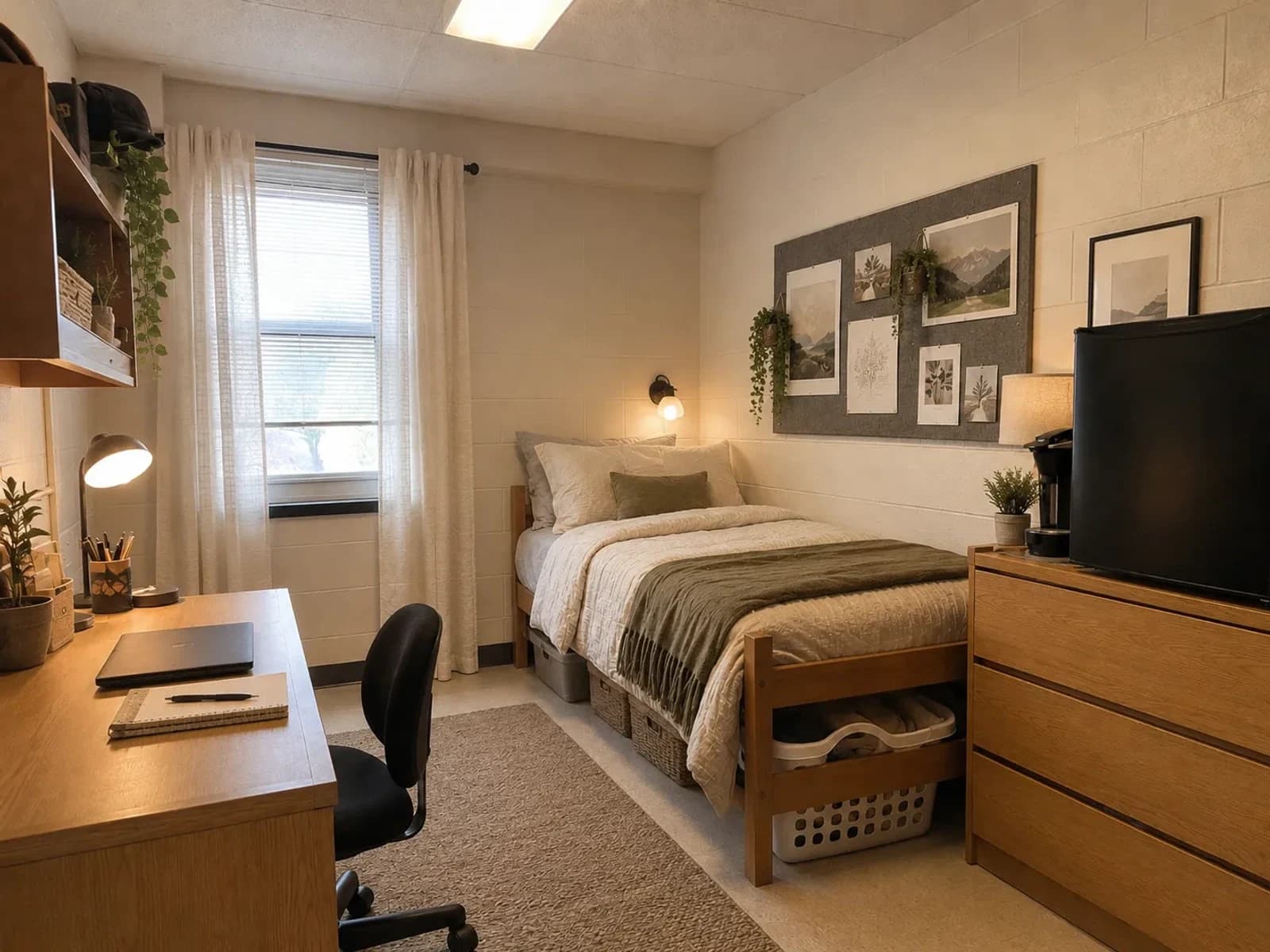
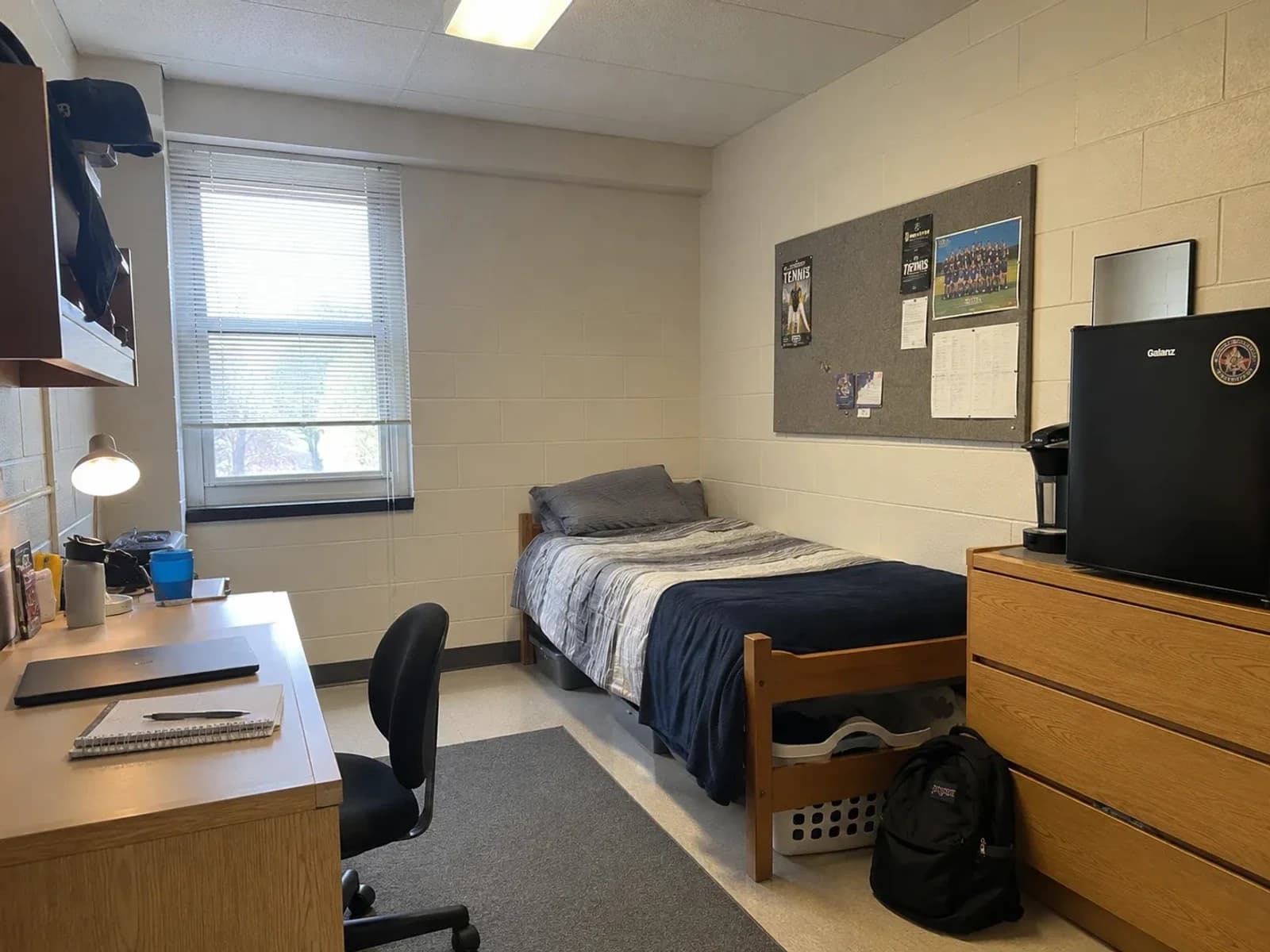
This example begins with a real single-occupancy dorm photo and a verified Room Foundry-generated preview. It does not prove that a pictured bin, curtain, lamp, or rug will fit. Its value is showing a restrained shopping direction around the recognizable room rather than replacing the room with a fantasy shell.
 beforeafter
Stayed: the room shell, window, floor, bed location, desk, dresser, refrigerator, appliance zone, and circulation. Changed: bedding, storage presentation, task-light direction, art, curtain concept, and surface organization. Still verify: mattress size, under-bed clearance, window and HVAC clearance, outlet and lighting rules, hanging method, material quality, and whether any visually similar product fits and is currently available.
A preview is most useful when it preserves the room's constraints. See how to redesign around existing furniture before using a concept to narrow a shopping list.
Final Thoughts
The best dorm shopping list is intentionally unfinished on move-in day. Buy the confirmed essentials that support sleeping, daily care, laundry, charging, and the first week of class. Coordinate anything shared. Measure the room before committing to storage, rugs, curtains, lighting, or furniture. Then let real routines—not a retailer's master list—decide whether optional objects earn their space.
Dorm room planner
Turn a saved idea into a plan for your real dorm.
Start with the full dorm guide, then compare color, layout, shopping order, and style before committing to exact products. Check your hall rules and real measurements first.
FAQ
Common questions
- What should I buy first for a dorm room?
- Start with confirmed-size bedding, personal care items, medication and necessary documents, towels, laundry basics, chargers, and the study supplies needed for the first week. These support daily life without depending on exact room dimensions.
- What dorm items should wait until after move-in?
- Wait on under-bed containers, closet systems, rugs, curtains, extra furniture, most lamps, and exact-fit organizers until you measure the actual room, see the supplied furniture, locate outlets, and check the residence hall rules.
- What should roommates coordinate before buying?
- Coordinate any permitted refrigerator or microwave, cleaning tools, shared floor lighting, basic food storage, and shared decor. Confirm what the school provides and whether it limits an appliance or item to one per room.
- How many dorm decorations should I buy before move-in?
- Buy very little decor before move-in. One bedding direction or a small piece with personal meaning is enough to establish a palette. Add art, a rug, pillows, and other decorative pieces only after the sleep, study, and storage zones work.
- Should I buy dorm storage before seeing the room?
- Only buy flexible storage that does not require a precise fit, such as a soft laundry bag or collapsible tote. Wait to buy rigid under-bed bins, drawer units, over-door pieces, and closet organizers until you have real measurements and policy confirmation.
Keep exploring
Related reading
Try Room Foundry
Preview the room before finishing the shopping list.
Upload one dorm photo and explore an organized bedroom direction around the furniture and fixed features already there.
Preview your dorm room free