17 Coastal Dorm Room Ideas for a Bright, Rental-Safe Space
Use 17 coastal dorm room ideas, a matched real-room example, and rental-safe tips to create a bright, practical college space without beach-house clichés.
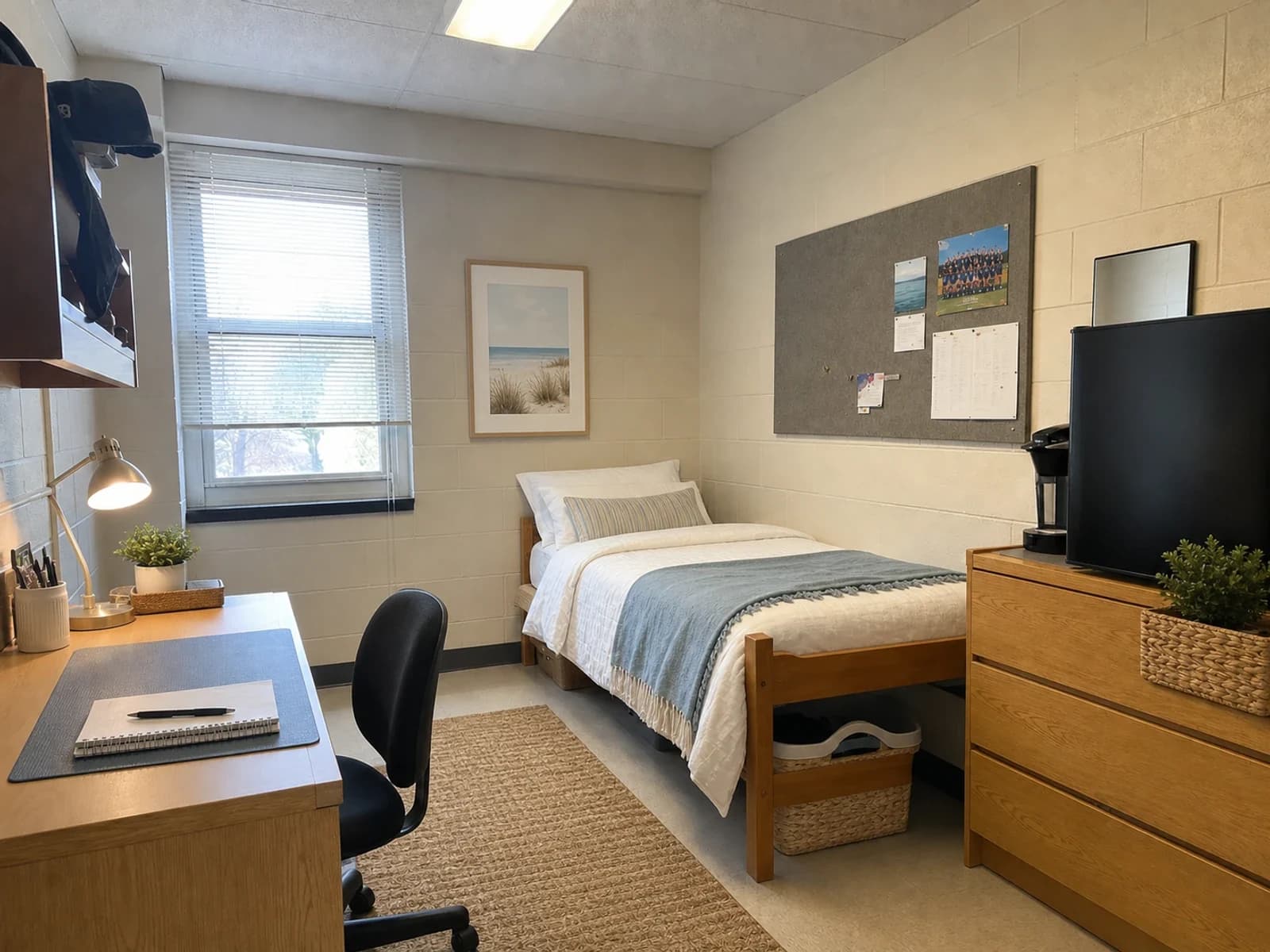
The best coastal dorm room ideas make a small college bedroom feel lighter, calmer, and easier to use—not like a souvenir shop. Start with ivory, sand, and sunwashed blue; add simple stripes and natural texture; then organize the storage and study zones already in the room. Because a dorm is temporary, every recommendation below is reversible and still needs to pass your own residence hall's rules.
If you are still solving the room's layout, storage, and study needs, begin with the broader modern dorm room ideas guide, then use this coastal palette as the decorative layer.
A Real Dorm, Reworked in a Restrained Coastal Direction
The matched example below starts with an ordinary furnished dorm: cinder-block walls, a raised twin bed, built-in desk and shelving, compact appliances, and very little open floor area. The direction changes textiles, organization, lighting, and removable art while leaving the architecture, furniture locations, and circulation intact.
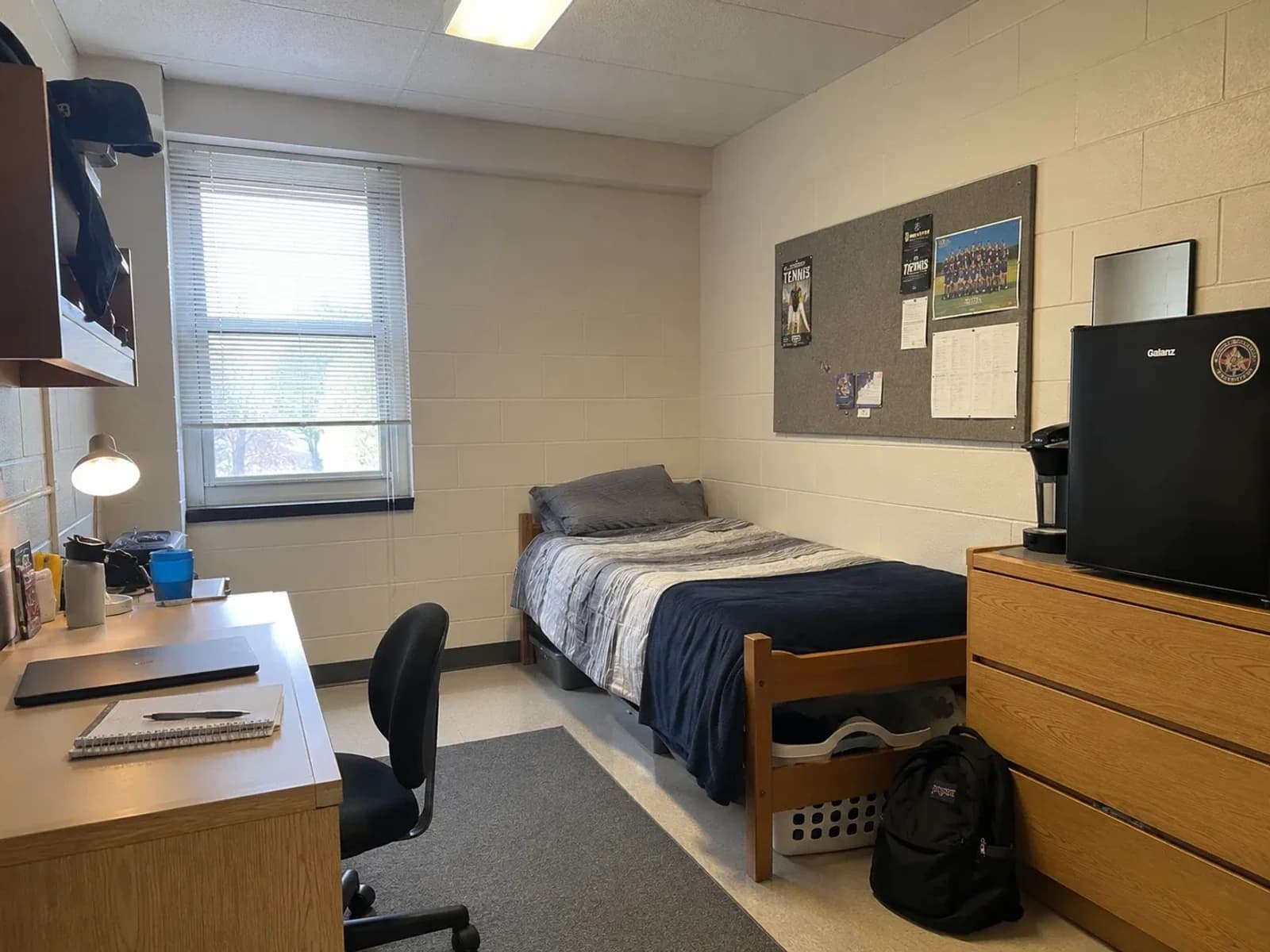 beforeafter
What stayed: the room shell, floor, window and blinds, bed frame and location, desk, chair, shelving, dresser, refrigerator, coffee maker, pinboard, and walking path. What changed: ivory bedding, a faded-blue throw, one narrow stripe, pale woven storage, a warmer desk light, a tidier work surface, and a small removable art layer. Verify the mattress size, under-bed clearance, outlet locations, hanging rules, appliance rules, and allowed lighting before copying any part of the concept.
17 Coastal Dorm Room Ideas That Stay Practical
1. Start With Sunwashed Blue, Ivory, and Sand
Use ivory as the visual background, sand or oatmeal to warm it up, and a muted blue as the recognizable coastal note. This is easier to live with than bright turquoise and makes a dim dorm feel less busy. Repeat the blue only three or four times—perhaps in a throw, art, desk cup, and one pillow—so the palette reads as intentional.
2. Match the Blue to the Room's Fixed Finishes
A gray floor and cool wall color can support a dusty blue; orange-toned wood furniture usually looks better beside a slightly warmer, green-gray blue. Bring a fabric swatch into the room or compare it in daylight before committing. The goal is harmony with the finishes you cannot change, not a perfect paint-chip formula.
3. Let Crisp Bedding Be the Anchor
The bed occupies a large share of the view, so a simple ivory, warm-white, or very pale blue comforter does more work than a dozen accessories. Confirm whether the mattress is Twin XL and choose washable layers. Two useful pillows and one decorative cushion usually look more finished than a pile that must be moved every night.
4. Use One Tailored Stripe
A narrow ticking, cabana, or pinstripe suggests coastal style without turning the room nautical. Put it on one pillowcase, a small lumbar cushion, or the edge of a throw. Keep the surrounding bedding solid so the stripe has room to register.
5. Bring In Woven Texture Through Storage
Natural-looking baskets connect the room to beach grass and woven fibers while solving a real need. Use them for shelf overflow, towels, or supplies, but choose smooth, lightweight options that fit exact openings. In a fire-conscious residence hall, avoid placing loose natural fibers against heat sources or over vents.
6. Keep Wood Tones Pale and Consistent
If the supplied desk and bed are light oak or maple, treat that finish as part of the design. Echo it with one tray, frame, or lamp detail instead of adding several competing wood stains. When the furniture is darker, use light textiles and baskets to create contrast rather than trying to disguise it.
7. Add a Pale, Low-Profile Rug After Measuring
A flatweave or low-pile rug in sand, faded blue, or a subtle stripe can soften a hard floor without catching a rolling chair. Measure the door swing, desk chair path, and exposed floor first. A washable runner beside the bed is often more practical than a room-size rug.
8. Layer Warm Task Light With Daylight
Keep the window clear enough to use available daylight, then add a permitted desk lamp for evening study. A warm or neutral bulb is generally calmer than a cold blue-white one. Confirm lamp and bulb restrictions, and never overload an outlet to create a decorative lighting effect.
9. Keep the Window Treatment Simple
Existing blinds may be the only treatment allowed. If your housing policy permits an additional tension-rod panel, use lightweight ivory fabric and keep the radiator, HVAC unit, and egress clear. Skip complicated canopy treatments: they add visual weight, collect dust, and are often prohibited.
10. Turn the Existing Pinboard Into a Coastal Gallery
Use the provided pinboard for a small grid of personal photos, one abstract blue print, and a useful calendar. Repeating one paper size or frame color makes inexpensive pieces feel coherent. This approach avoids attaching a large installation to the wall.
11. Use One Seascape, Not a Collection of Beach Motifs
A quiet horizon photograph or abstract study of water can establish the mood by itself. Pair it with personal photography or typography rather than anchors, shells, surfboards, rope, and beach signs. One authentic visual reference feels more adult and leaves room for the student who lives there.
12. Repeat the Palette in Useful Desk Accessories
A sand-colored catchall, muted-blue pencil cup, and clear file holder can carry the palette into the study zone. Choose items that contain something rather than decorative objects that consume work space. Leave a clear landing area for a laptop and notebook.
13. Make Open Shelving Look Quieter With Matching Bins
Two or three identical bins reduce visual noise more effectively than many small containers. Reserve the easiest shelf for daily items and place occasional supplies higher up. Labels can face inward for a calmer look while still keeping categories easy to find.
14. Let the School Furniture Stay Visible
Trying to cover every desk, dresser, or bed frame usually creates bulk and can interfere with ventilation or access. Work with their straight lines and repeat their finish. A fitted bed skirt may hide storage if permitted, but it should not block airflow, outlets, or inspection access.
15. Add Greenery Only if It Fits Real Life
One small, easy-care plant can reinforce the natural palette when light, breaks, and housing rules make it practical. Otherwise, skip it. An uncluttered desk and a good lamp contribute more to the room than an artificial plant added only to fill a corner.
16. Coordinate Roommate Sides Without Matching Them
Agree on ivory, muted blue, and one shared natural texture, then let each roommate interpret them differently. One side might use a blue throw and the other a striped pillow. Coordinate shared purchases such as the rug, refrigerator area, or lamp plan before move-in to avoid duplicates.
17. Preview the Palette Before Buying
A preview can reveal whether a blue is too saturated, a rug is visually heavy, or the room is drifting into a theme. It is a direction-setting tool, not a measurement or policy check. Preserve the fixed room features in the prompt and use the result to narrow a shopping list.
A Simple Coastal Dorm Palette
| Element | Practical direction | What to avoid |
|---|---|---|
| Base | Ivory, warm white, or oatmeal bedding | Several competing whites or high-maintenance layers |
| Coastal color | Dusty, sunwashed, or green-gray blue | Saturated turquoise across every surface |
| Texture | One stripe plus pale woven storage | Shell, rope, anchor, and sign collections |
| Contrast | A little charcoal, faded navy, or dark metal | Heavy navy blocks that darken a small room |
| Wood | Repeat the supplied furniture tone | Mixing many unrelated wood finishes |
What Room Foundry Preservation Looks Like
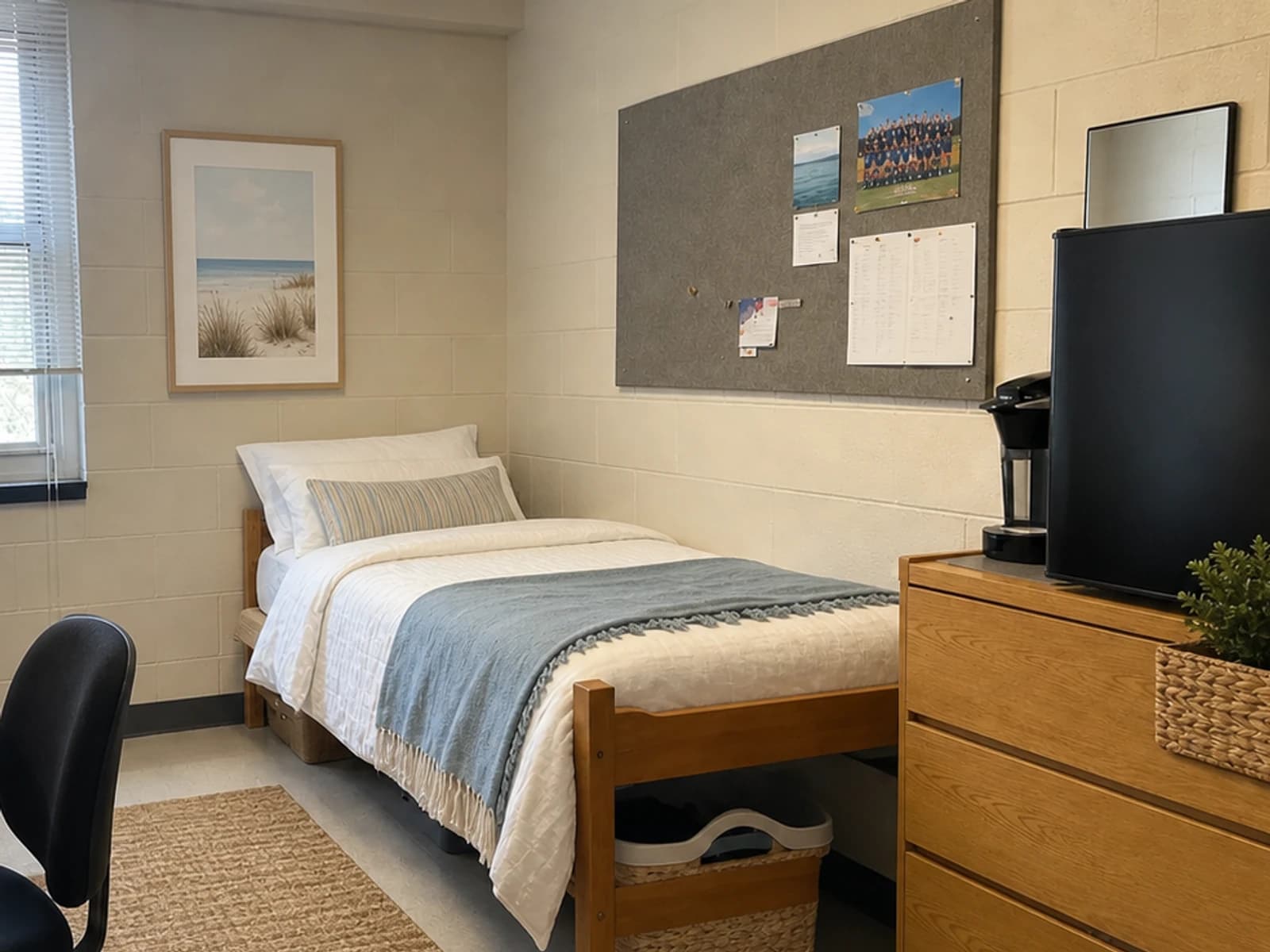
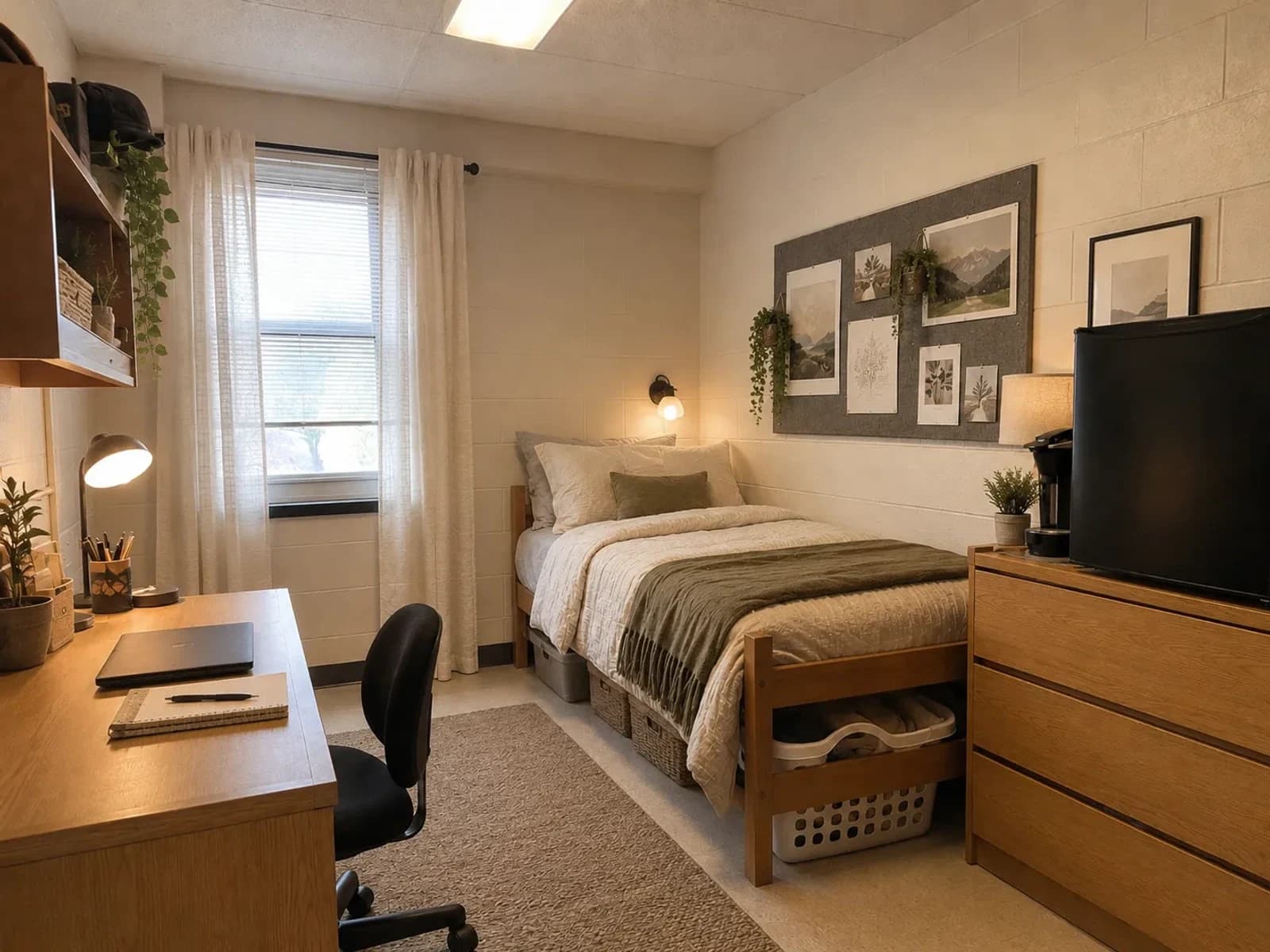
The verified Room Foundry example below comes from the same base room in the modern dorm transformation. It demonstrates preservation behavior; it is not presented as the coastal concept above.
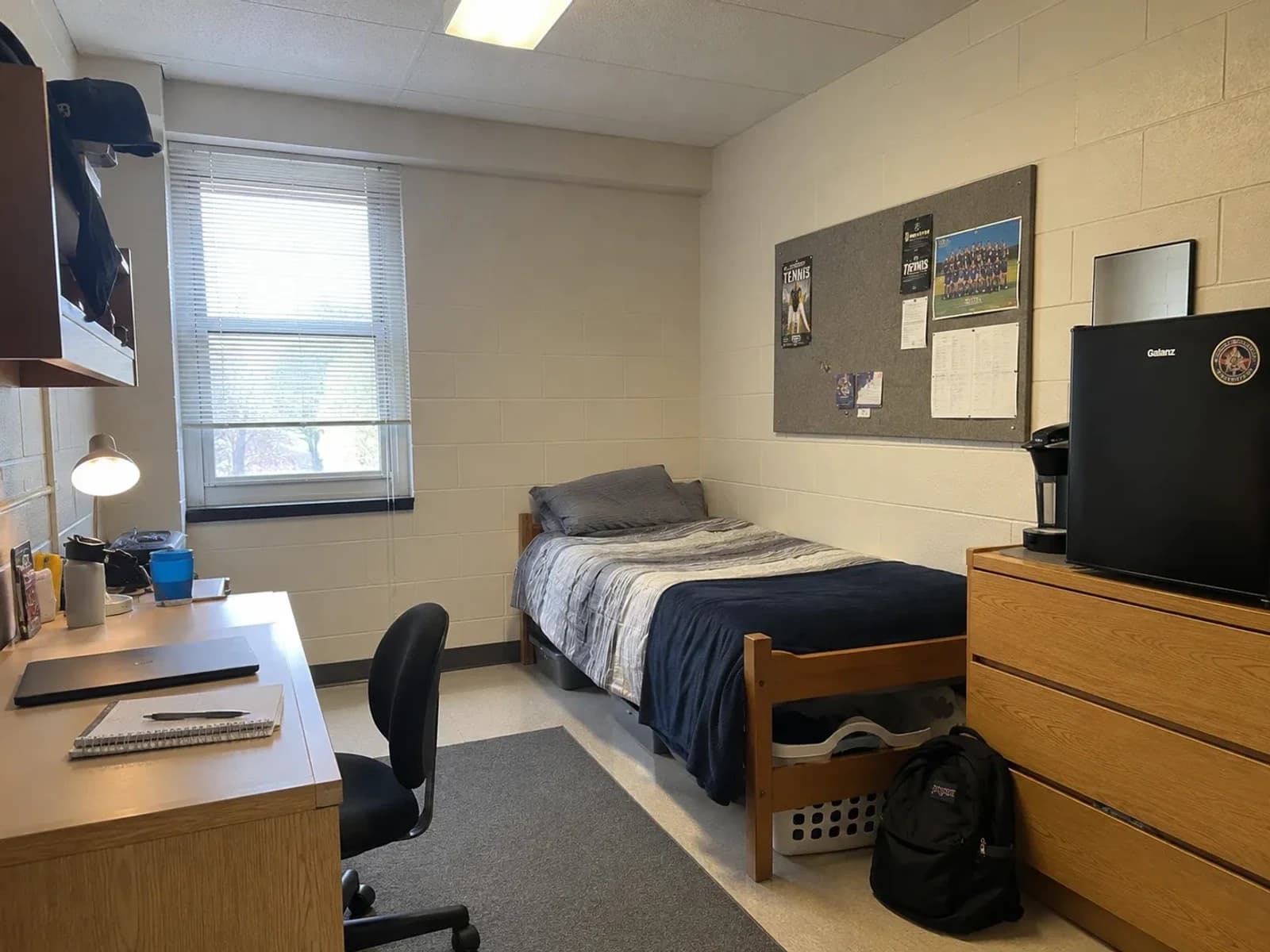 before
 after
afterStayed: the base room, fixed openings, major school furniture, appliance zone, and overall circulation. Changed: the bedding direction, storage presentation, lighting mood, art, and surface organization. Still verify: scale, clearance, residence hall policy, materials, and any visually similar product before purchase.
For more detail on writing preservation instructions, read how to redesign a room while keeping existing furniture.
Coastal Dorm Mistakes to Avoid
- Buying every blue item before seeing the room's fixed finishes in person
- Using so many beach symbols that the room feels themed instead of personal
- Covering vents, outlets, windows, or inspection access with fabric and storage
- Ordering under-bed bins, rugs, or carts without confirmed measurements
- Adding decorative lighting or hanging systems before checking residence hall rules
- Filling the desk and shelves with accessories that reduce useful space
For a warmer, less explicitly coastal variation, borrow the natural materials and soft neutrals in the organic modern style guide.
Check the Rules Before You Decorate
Residence hall policies vary. As one current example, the University of Michigan Housing move-in packing guidance updated May 6, 2026 asks roommates to coordinate and gives specific rules for lamps, cords, power strips, adhesives, and other room items. Use your own school's current policy as the authority.
Before ordering, confirm mattress dimensions, permitted appliances, electrical limits, approved hanging methods, curtain rules, furniture-lofting rules, and whether every item can leave exits, vents, detectors, and access panels unobstructed.
When you are ready to test the whole direction in context, open the bedroom makeover preview with a clear photo of the actual room.
Final Thoughts
A convincing coastal dorm room is bright, restrained, and useful. Let light neutrals do most of the work, repeat one weathered blue, bring in a stripe and natural texture, and resist filling scarce space with beach-themed objects. The result can feel connected to the coast while still looking like a real student's room.
FAQ
Common questions
- How do I make a dorm room look coastal without making it themed?
- Build the room from color, light, and texture: ivory, sand, sunwashed blue, simple stripes, pale wood, and woven storage. Skip collections of shells, anchors, signs, rope, and other literal beach motifs.
- What colors work best for a coastal dorm room?
- Start with warm white or ivory, add a muted blue that suits the room's fixed flooring and furniture, and use sand, oatmeal, or pale wood as the bridge. A small amount of charcoal or muted navy can add definition.
- What coastal dorm decor is rental-safe?
- Bedding, rugs, permitted lamps, approved removable hanging methods, pinboard art, freestanding storage, and desk accessories are generally reversible. Your residence hall's rules control what is allowed, so check them before purchasing or installing anything.
- How can roommates coordinate a coastal dorm room?
- Agree on two or three shared colors and one repeated texture, then let each person choose their own bedding and art within that framework. The two sides can coordinate without matching exactly.
- Should I buy dorm storage before move-in?
- Buy only storage tied to confirmed dimensions. Under-bed clearances, closet widths, and furniture layouts can vary, so measure the actual room before ordering bins, rolling carts, or a large rug.
Keep exploring
Related reading
Small Spaces & Dorm Rooms
15 Modern Dorm Room Ideas for a Small College Bedroom
Interior Design Styles
Organic Modern Style: How to Get the Look Without Replacing Your Room
AI Room Design
Can AI Redesign a Room While Keeping Your Existing Furniture?
Small Spaces & Dorm Rooms
12 Dorm Room Color Schemes That Make a Small Space Feel Pulled Together
Try Room Foundry
See a coastal direction in your own dorm room.
Upload one room photo and preview a brighter, more coordinated bedroom direction around the space you actually have.
Preview your dorm room free